
UK biotech financing 2026
January – March 2026
 Overall figures
Venture capital
Public markets
Finance Report 2022
Finance Report 2025
Finance Report 2024
Finance Report 2023

 Overview
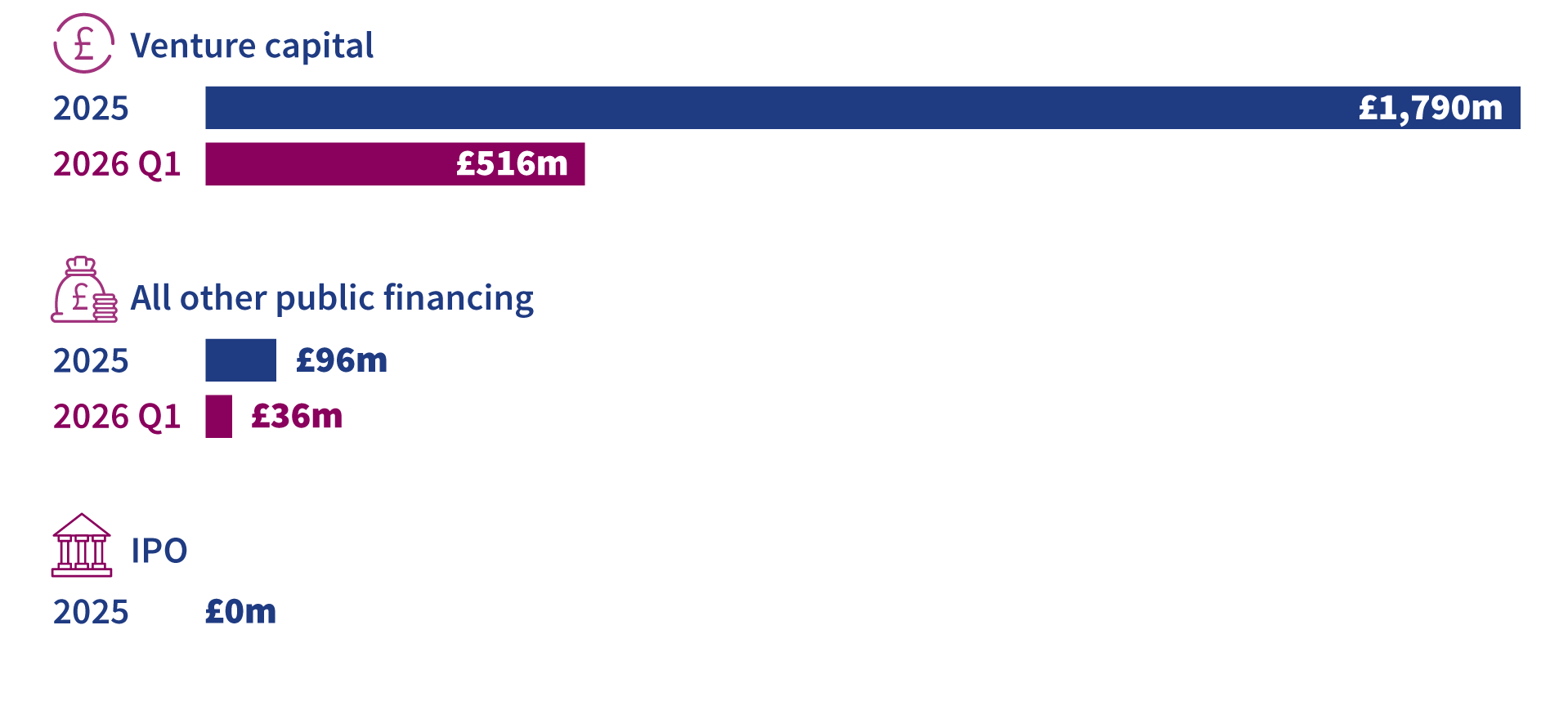
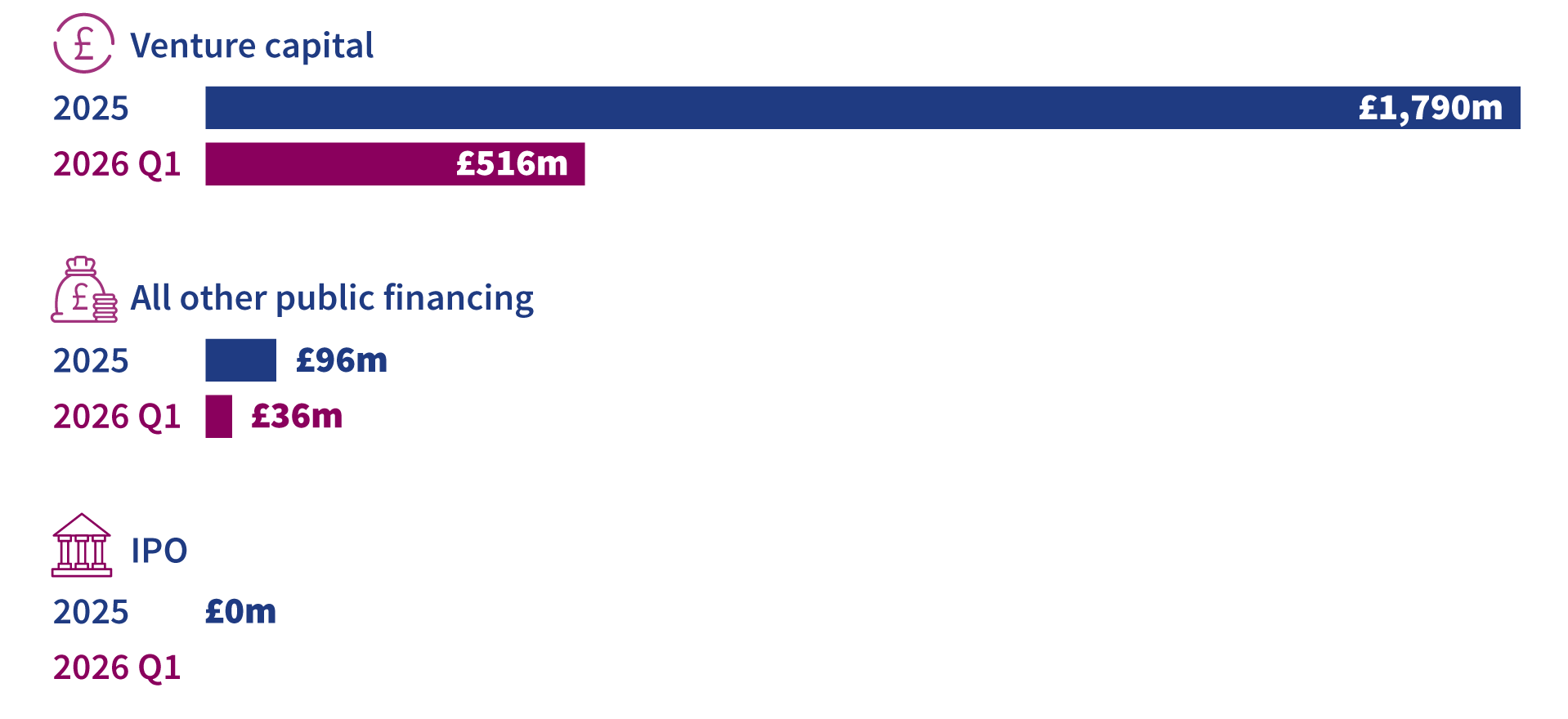
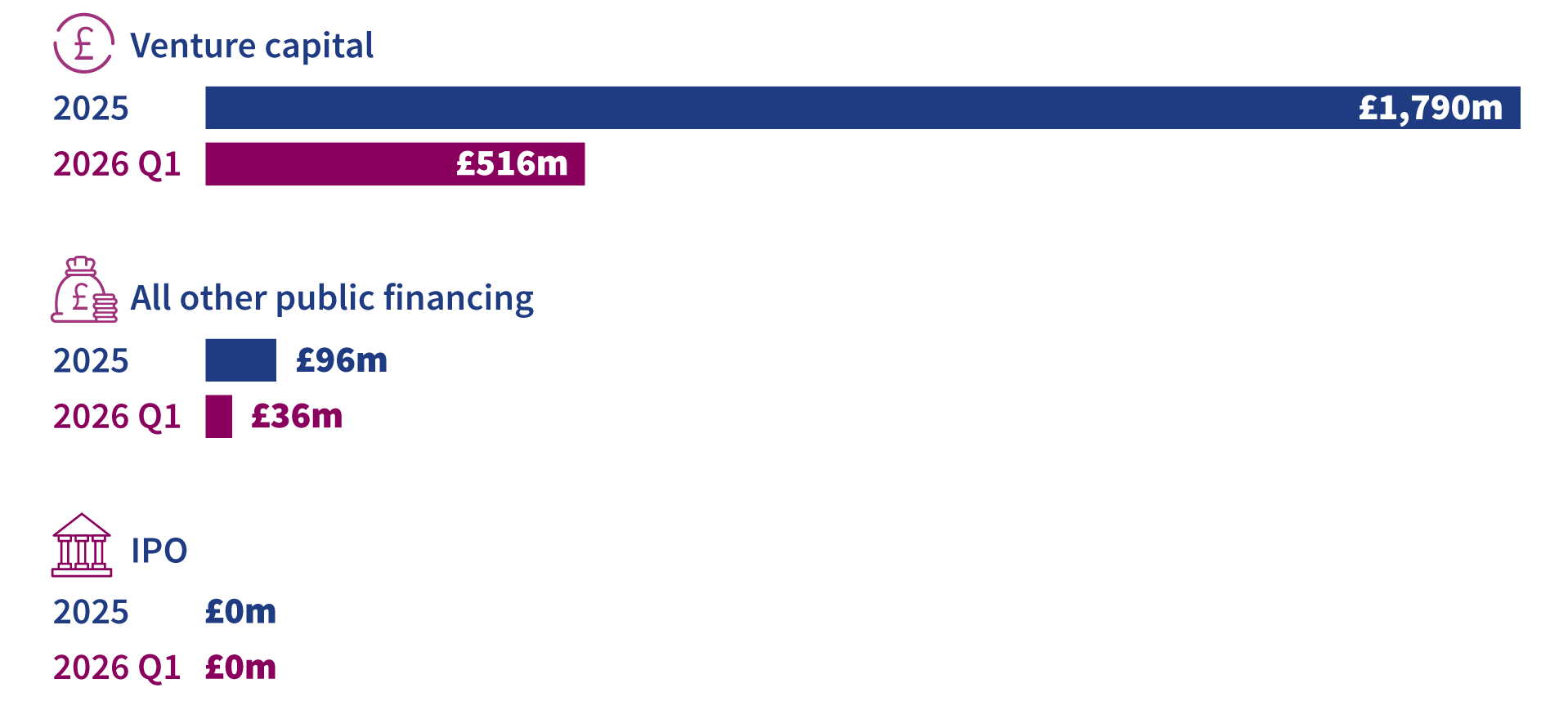
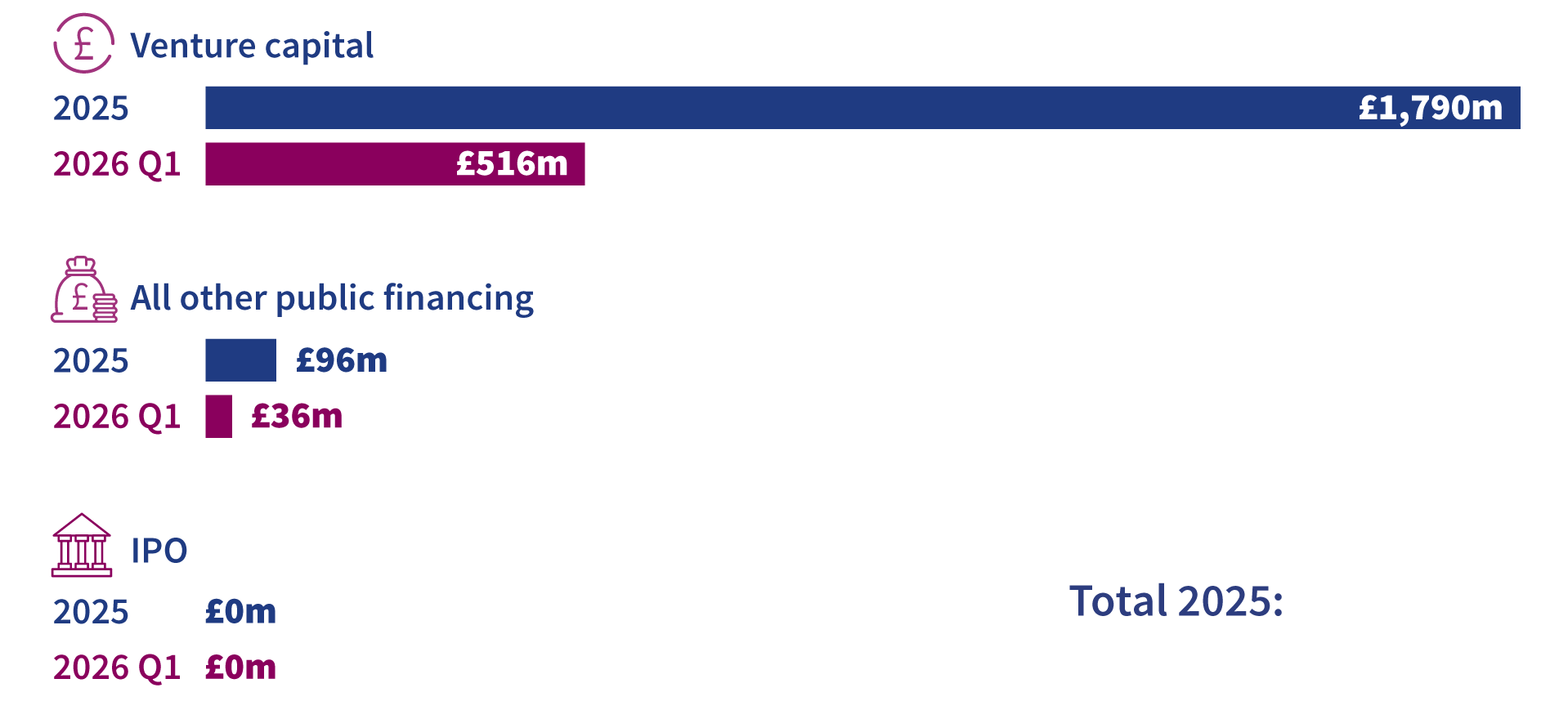
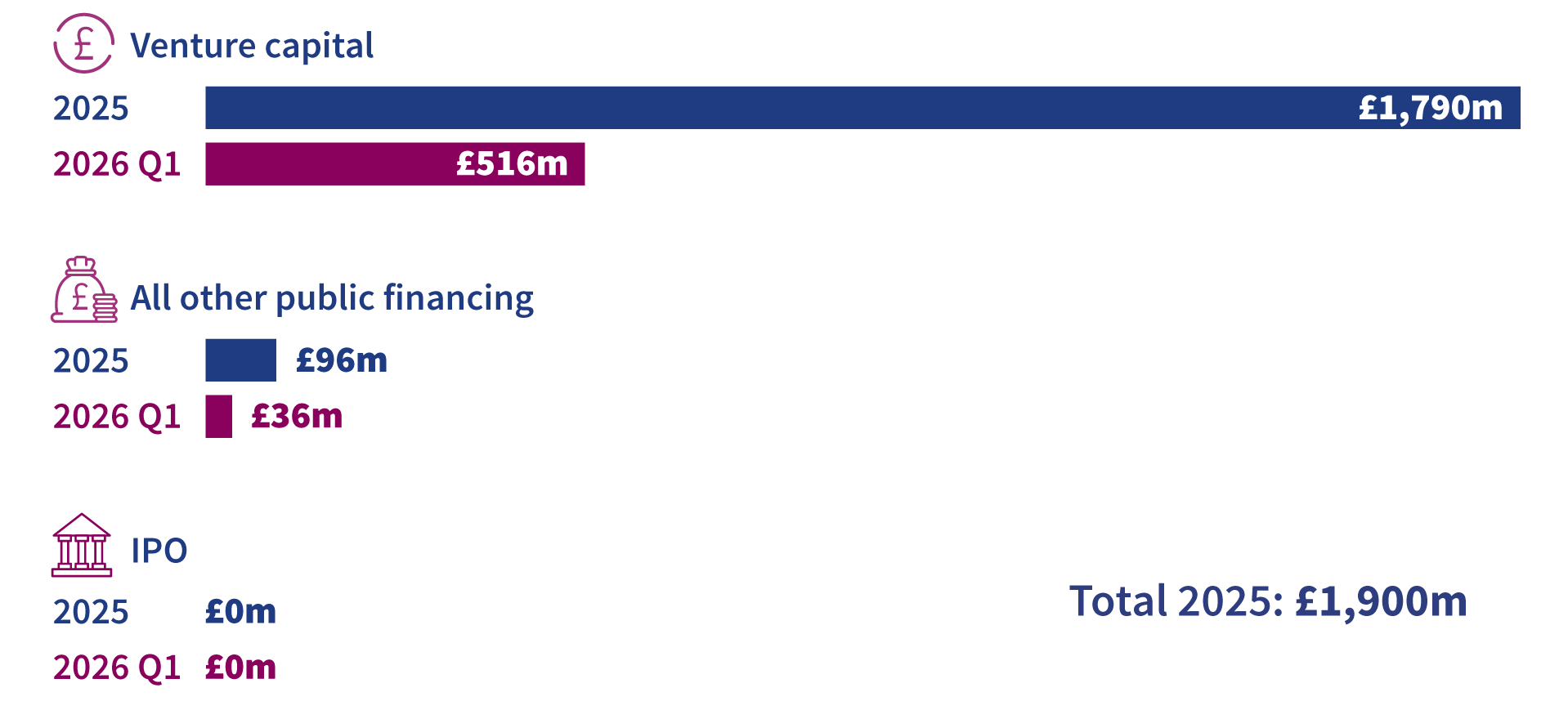
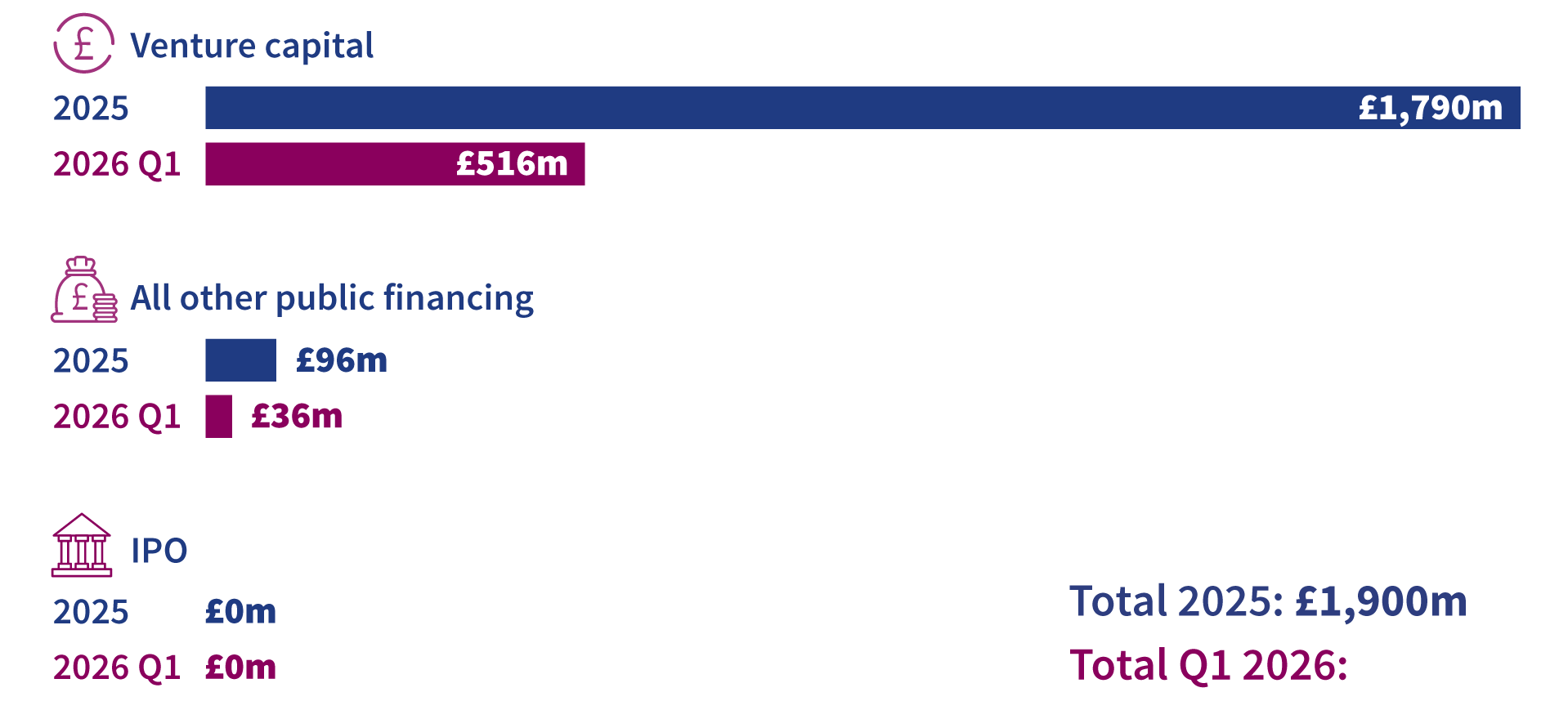
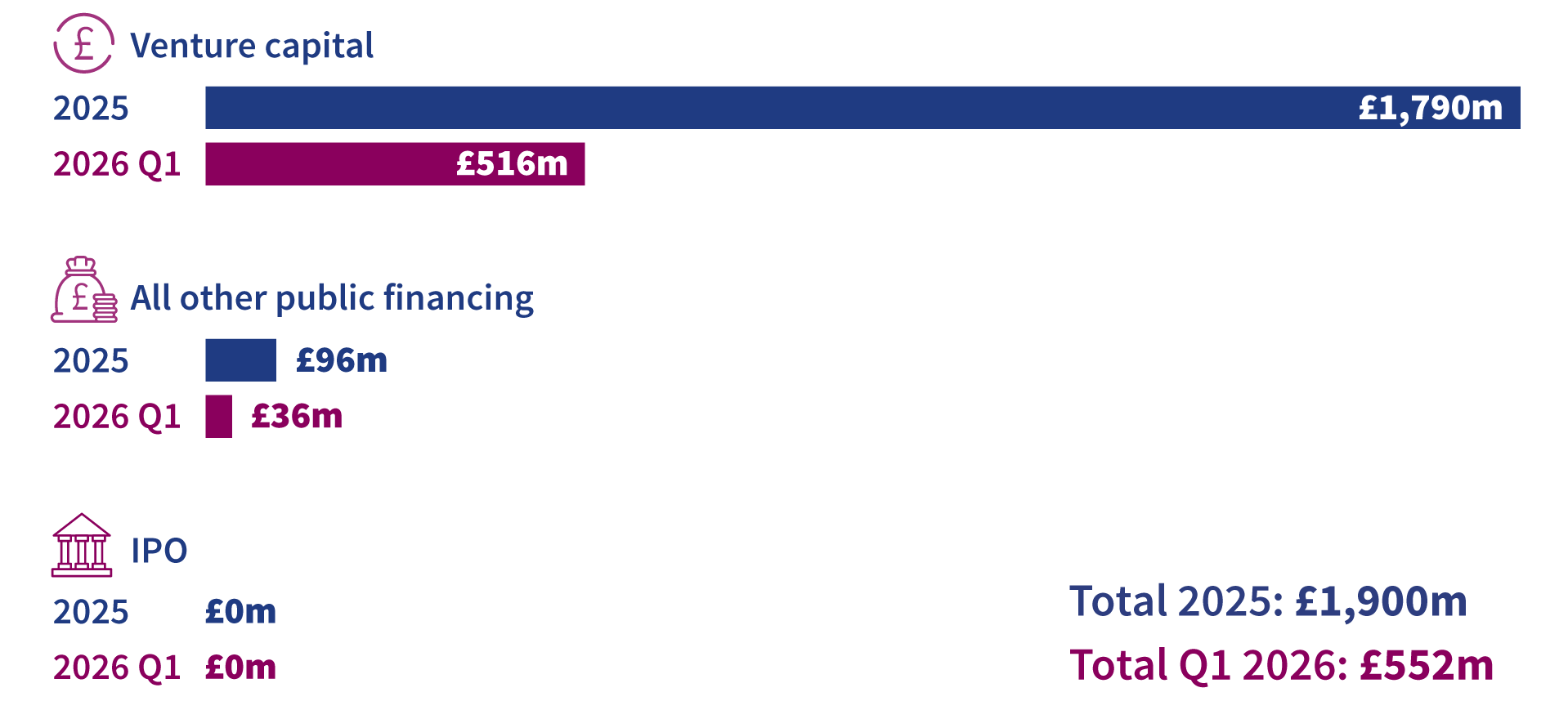
UK biotech financing in Q1 2026 showed signs of recovery, with total equity financing reaching £552 million, up from £466 million in Q4 2025. This increase was accompanied by a broader distribution of investment across funding stages, indicating a more active and diversified funding environment for innovative UK biotechs at the start of the year.
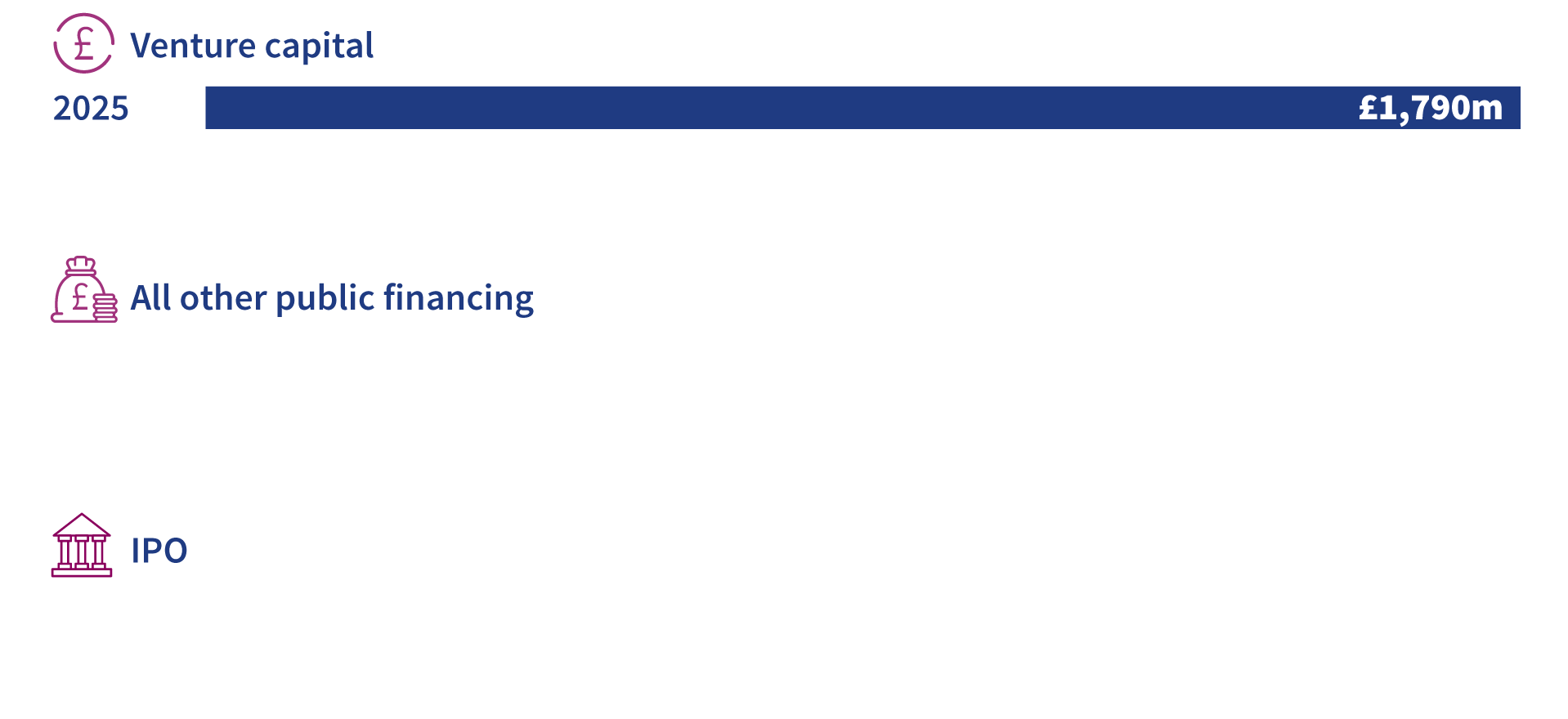
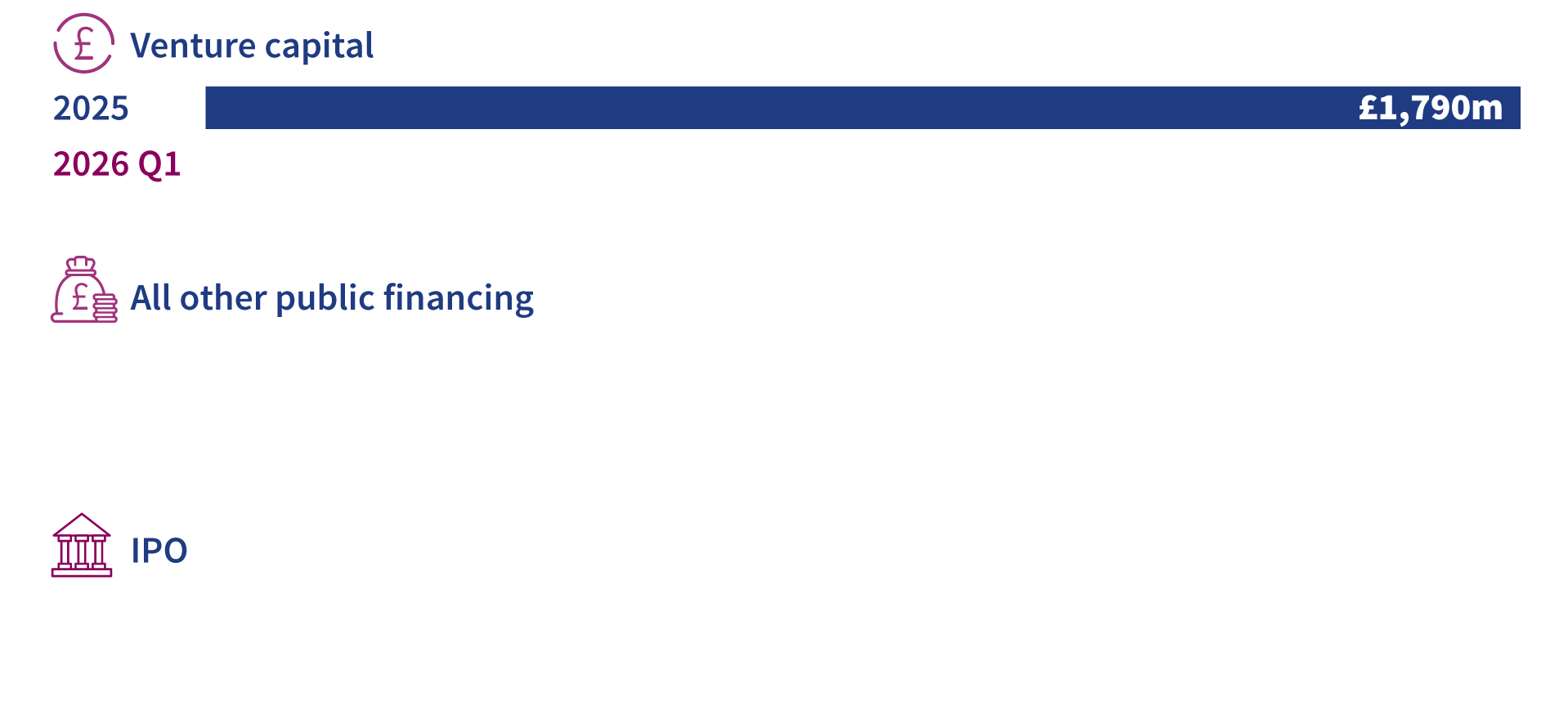
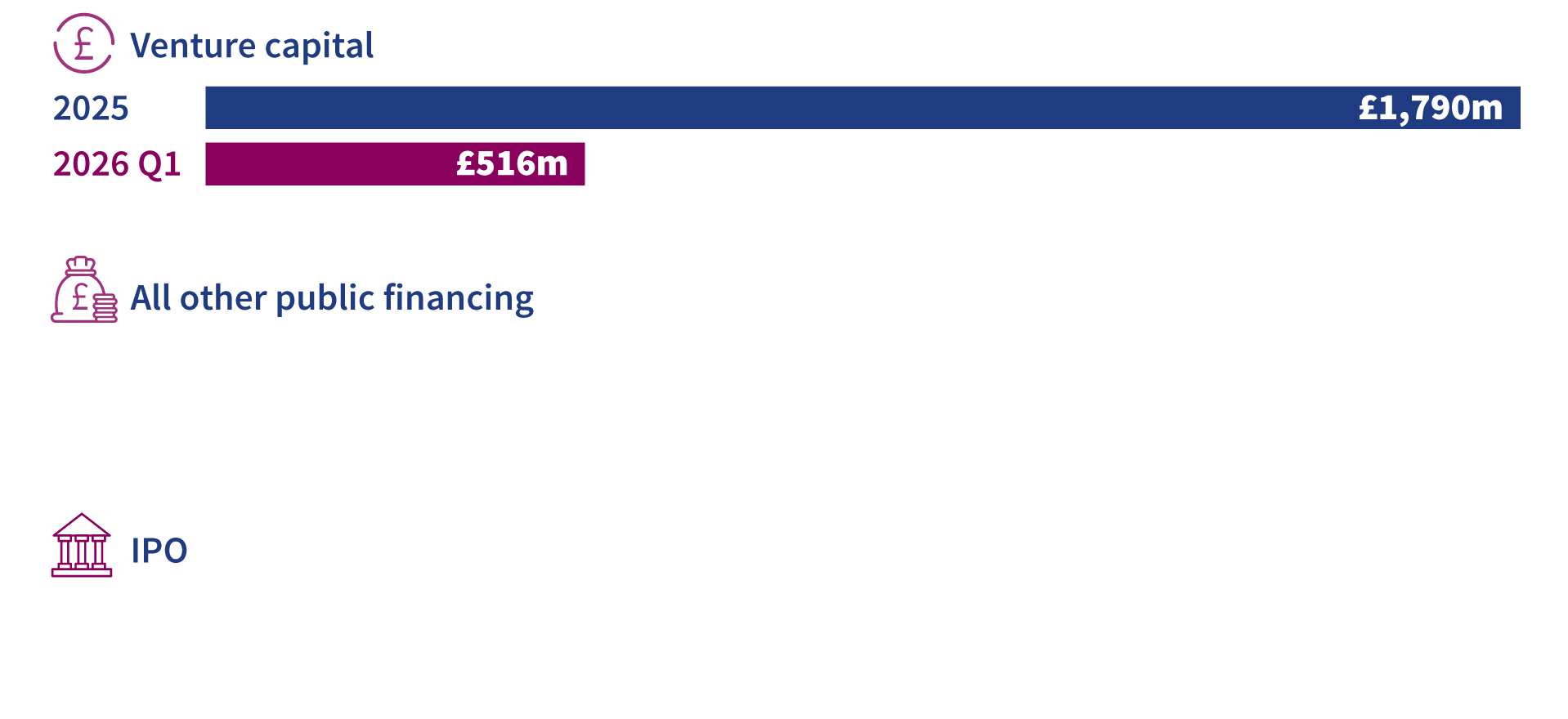
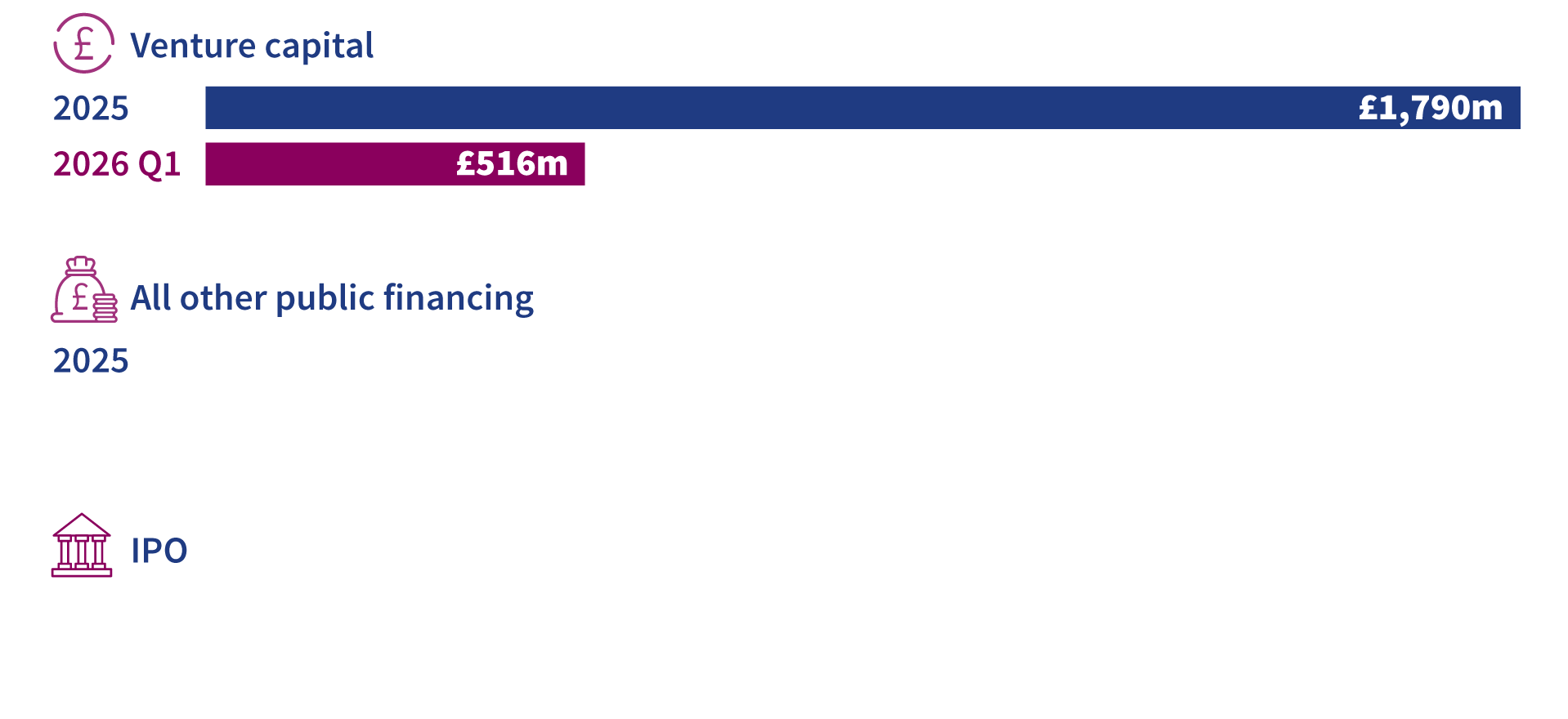
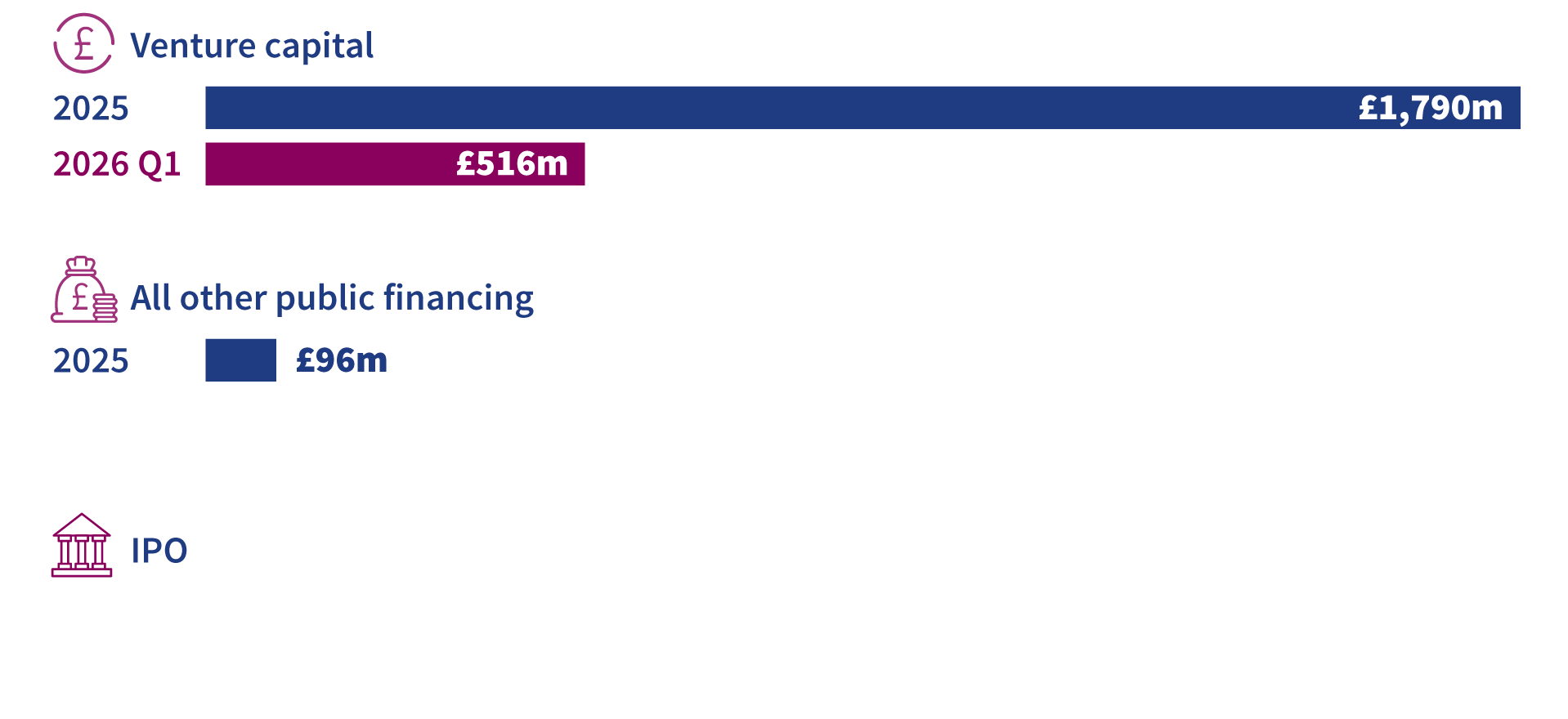
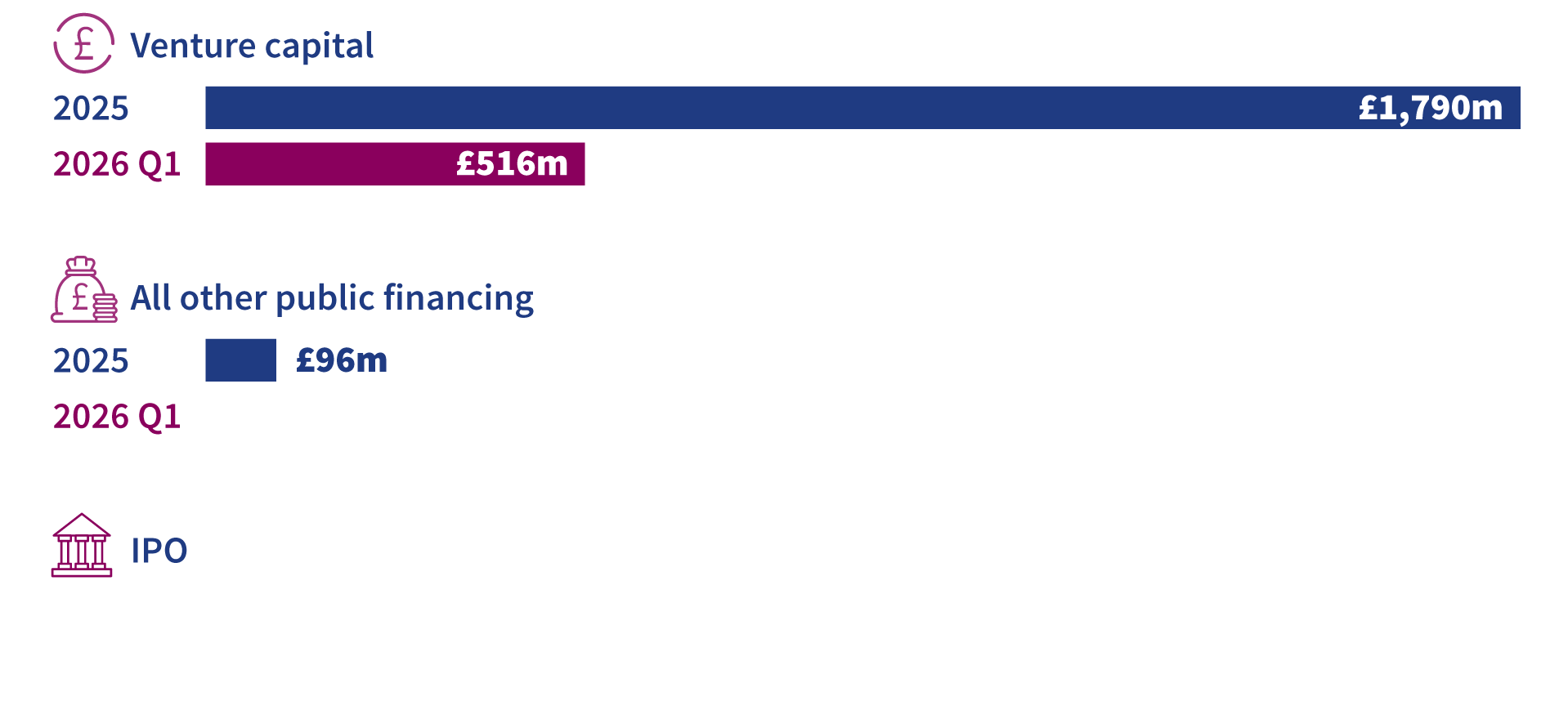
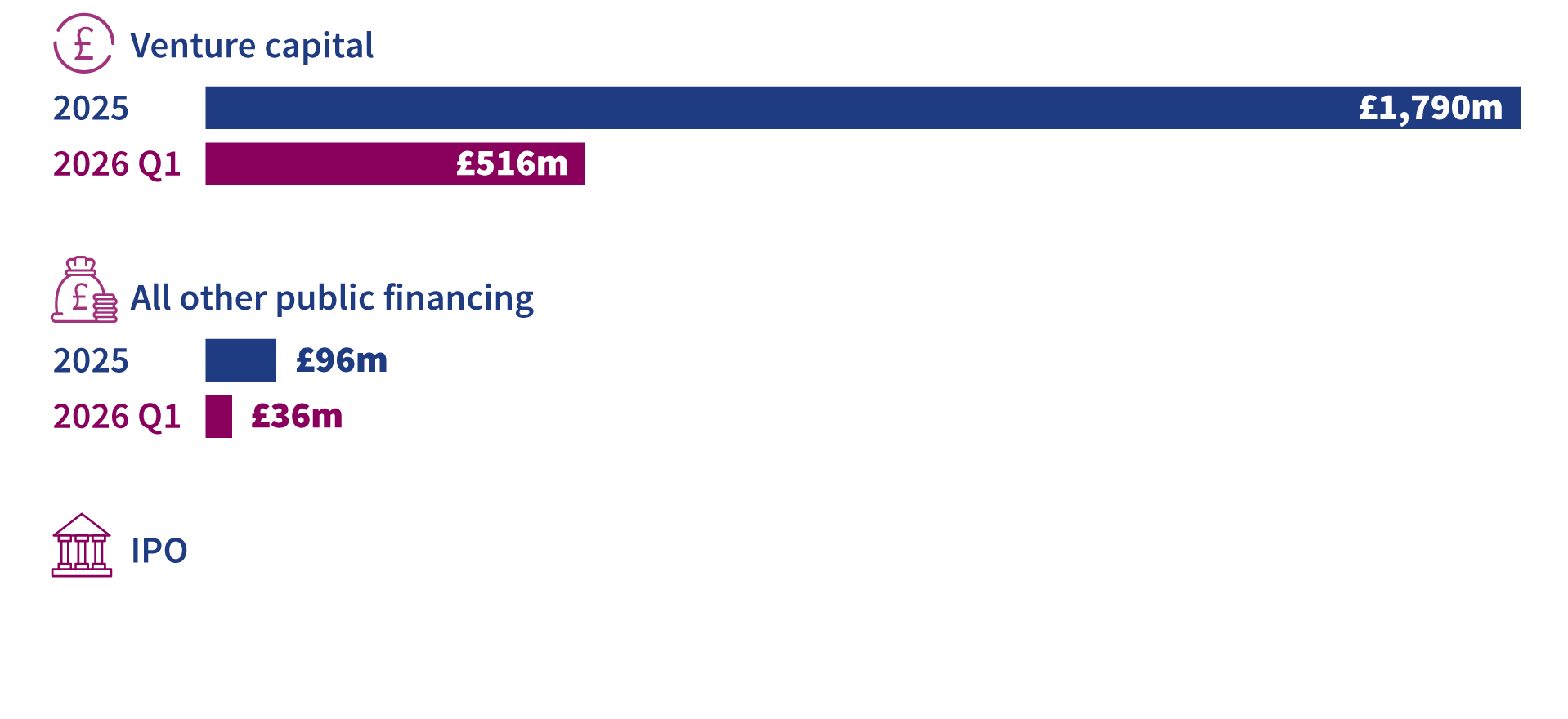
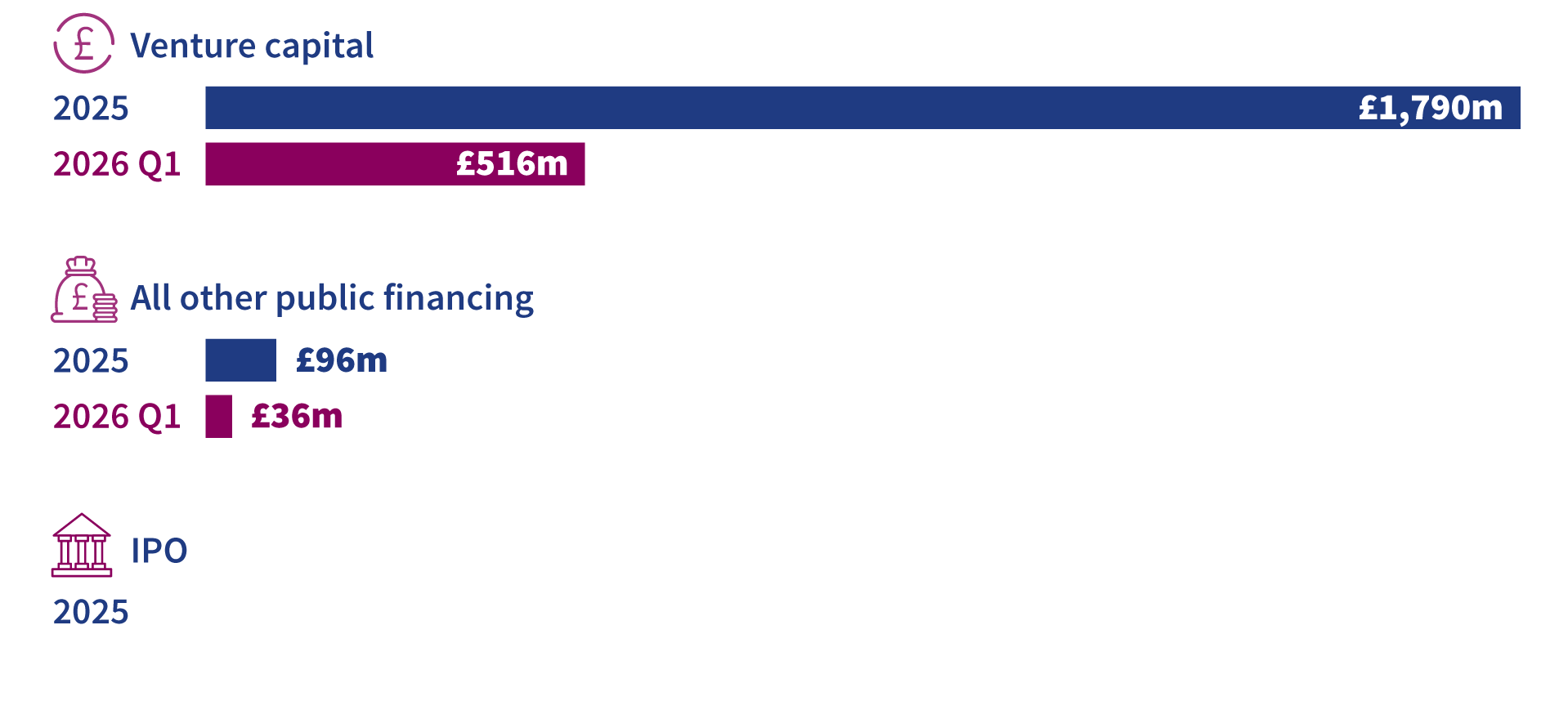
Venture capital totalled £516 million, representing a 17% increase from £442 million in Q4 2025, suggesting a sustained recovery could be taking hold. Unlike Q1 2025, where a small number of very large rounds dominated, Q1 2026 saw a broader distribution of capital across companies. Notably, deal count increased significantly to 24 transactions, up 60% from 15 deals in Q1 2025, indicating a more active but lower-value investment environment.
While total funding remains below the £924 million recorded in Q1 2025, this comparison is heavily influenced by a small number of megadeals in the previous year. Excluding these, underlying investment levels in Q1 2026 are significantly higher, pointing to a strengthening base of investor activity.
However, the recovery is not yet seen in the public markets. Follow-on financing totalled £36 million, up from £24 million in Q4 2025.IPO activity remained stagnant, with no UK biotech IPOs recorded in Q1 2026, extending the prolonged period of inactivity in public listings.
However, the quarter did see significant M&A activity. Centessa Pharmaceuticals was acquired by Eli Lilly for £4.6 billion, while Dark Blue Therapeutics was acquired by Amgen for £626 million. These transactions highlight continued strong international demand for UK biotech assets, even as public and private financing conditions remain challenging.
2025 and 2026 Q1 figures at a glance


Jane Wall
Managing Director, BIA
It has been an extremely challenging time for biotech – in the UK and beyond, small and large. So it comes as great relief to see those green shoots that started showing end of 2025 grow into a more sustained and healthier shift in market dynamics in the first quarter of 2026. While headline figures often fluctuate based on the presence of a few megadeals, the underlying story of Q1 is one of accelerating momentum and a broader distribution of capital across the UK’s innovative ecosystem.
Building directly on the positive trend seen at the end of last year, total venture capital raised in the UK increased by 17% quarter-on-quarter, rising from £442 million in Q4 2025 to £516 million in the opening months of 2026. This trajectory is matched by a remarkable surge in activity levels; we recorded 25 venture transactions this quarter, a 67% increase in deal volume compared to the same period last year.
We see capital being deployed across a more diverse array of companies and therapeutic areas. From Tenpoint Therapeutics’ significant Series B to a strengthening base of seed-stage activity, the UK is demonstrating that its investment foundations are not just deep, but increasingly wide.
The strength of UK science also continues to act as a magnet for global pharmaceutical leaders. The standout £4.6 billion acquisition of Centessa Pharmaceuticals by Eli Lilly, alongside Amgen’s acquisition of Dark Blue Therapeutics, reinforces the fact that UK-originated assets remain must-haves for international pipelines. Even while the public market window remains narrow, the strategic value of our companies is being validated.
As we move further into 2026, the architecture for growth is building with strong political support. With deal flow broadening and international interest in our world-class ecosystem high, now is the time to ensure that domestic capital follows the lead of our global peers to fully unlock the value of UK innovation and that the government delivers its broader commitments through the Life Sciences Sector Plan.
 Venture capital
In Q1 2026, UK biotech companies raised £516 million in venture capital, representing a 17% increase from £442 million in Q4 2025. Deal activity also increased from 17 to 24 transactions quarter on quarter and was up 60% from 15 deals in Q1 2025.
This divergence between capital raised and deal volume marks a clear shift in investment dynamics. While Q1 2025 was characterised by a small number of exceptionally large rounds, Q1 2026 reflects a broader but more moderate funding environment, with capital distributed across a larger number of companies.
This shift toward fewer large financings and more selective capital deployment is consistent with broader global biopharma trends, where investors are increasingly favouring a higher volume of smaller deals over concentrated megadeals.
The distribution of capital across funding stages further reinforces this trend. Later-stage rounds (Series B+) accounted for the largest share of funding at £276 million, across three deals, resulting in an average deal size of £92 million, highlighting continued investor preference for more mature assets. This marks a clear increase in later-stage concentration compared to Q4 2025, where only one late-stage deal was recorded, raising £87 million.
Meanwhile, early-stage activity strengthened in volume terms, with 10 Seed deals raising £42 million, with an average deal size of £4.2 million. This represents an increase from eight Seed deals in Q4 2025, again indicating a broader base of early-stage investment, although average deal sizes remain relatively small compared to previous quarters.
Series A activity was more moderate, with five deals raising £154 million, corresponding to an average deal size of £30 million. This compares to four deals raising £201 million in Q4 2025.
Top five UK biotech venture capital deals
| Company | Date | Round | Value (£m) |
|---|---|---|---|
| Tenpoint Therapeutics | 28/01/2026 | Series B | 174.2 |
| Immutrin | 24/03/2026 | Series A | 65 |
| Nuclera | 13/01/2026 | Series C | 64.7 |
| R1 Therapeutics | 17/03/2026 | Series A | 57.7 |
| bit.bio | 09/01/2026 | Series C | 37.2 |
The largest deal of the quarter was Tenpoint Therapeutics, raising £174 million in a Series B round. The company intends to use the funds to accelerate the commercialisation of its product YUVEZZI™ following US FDA approval.
Other notable deals included Immutrin, Nuclera, R1 Therapeutics and bit.bio reflecting a mix of mid- and late-stage investments.
VC financing in Europe and the US
The US continues to dominate the global landscape, raising £3.8 billion in Q1 2026. However, investment activity declined 28% from £5.3 billion in Q4 2025, reflecting a broader shift toward fewer large financings and increased investor selectivity.
The UK raised £516 million in venture capital in Q1 2026, maintaining its position as the largest biotech VC market in Europe. European funding totalled £893 million, down from £1.8 billion in Q4 2025, indicating a slowdown in investment activity at the start of the year. This indicates a general slowdown in investment activity across the continent at the start of the year, further highlighting the UK’s resilience and its significant 58% share of the total European market.
 Public markets
IPOs
There were no UK biotech IPOs in Q1 2026, extending into another year a prolonged period of inactivity in public listings that has persisted since 2022.
Anecdotal feedback from the sector has suggested companies are readying themselves for public launches, particularly on NASDAQ, but global uncertainty in public markets resulting from the the ongoing conflict in the Middle East could have contributed to the continued absence of IPOs.
International IPOs
While IPO activity remains limited globally, the US recorded £1 billion in IPO financing, a 27% increase from Q1 2025. Massachusetts-based Generate Biomedicines raised approximately £294 million in the largest US biotech IPO of the quarter. Proceeds from the offering are intended to support the advancement of its clinical pipeline and further development of its AI-driven drug discovery platform.
In Europe, activity was minimal, with Belgium being the only country to record a biotech IPO. Agomab Therapeutics raised £174 million on NASDAQ. The company will use the proceeds to advance its two clinical-stage programmes, including the initiation of a global Phase 2b trial for its lead oral small-molecule candidate.
Follow-on financings
UK follow-on financing totalled £36 million in Q1 2026, down from £46 million in Q1 2025, highlighting continued weakness in public market fundraising.
Activity was concentrated in smaller raises across AIM and the Main Market, with no large-scale financings recorded. There was no follow-on activity on NASDAQ during the quarter, marking a further decline in access to international capital markets for UK biotech companies. Notably, however, NASDAQ-listed Coiled Therapeutics relisted on AIM following a £30 million reverse takeover by Roquefort Therapeutics. The company took up its place on AIM, raising approximately £8.5 million in new funding. This transaction involved a transfer from the Main Market and represents a strategic repositioning of the company as a clinical-stage oncology business, centred on Coiled’s lead programme, AO-252. The deal highlights the use of alternative public market structures, such as reverse takeovers, alongside more traditional follow-on financings.
The lack of IPO activity, combined with follow-on financing, suggests that public markets are currently not functioning as a reliable source of capital or exit for UK biotech companies. This reinforces the importance of venture capital and M&A as the primary funding and liquidity pathways for the sector in the current environment.
The largest raise of the quarter was by Avacta Life Sciences, which secured £10 million. The proceeds are intended to support the advancement of its clinical pipeline, including the continued development of its oncology programmes.
International follow-ons
France led Europe in follow-on financing with £246 million, followed by the UK (£36 million) and Poland (£15 million). The French total was largely driven by a major raise from DBV Technologies, a clinical-stage immunotherapy company.
While the total reflects an improvement compared to recent quarters, it remains below historical levels, indicating that financing conditions are still uneven across markets.
In contrast, the US continues to operate at a significantly larger scale. US-based biotech companies raised £7.6 billion in Q1 2026, led by Dianthus Therapeutics, which raised £511 million in a secondary offering on NASDAQ. However, the disparity also highlights the more limited depth of European capital markets and the challenges faced by UK biotech companies in accessing large-scale follow-on funding.

Charts, maps and tables are based on BIA analysis of data from Beauhurst, h2Radnor, LSE and Pitchbook, 2026.