
UK biotech financing 2024
July – September 2024
 Overall figures
Venture capital
Public markets
Finance Report 2022
Finance Report 2023
Finance Report 2024 Q1
Finance Report 2024 Q2
Finance Report 2024

 Overview
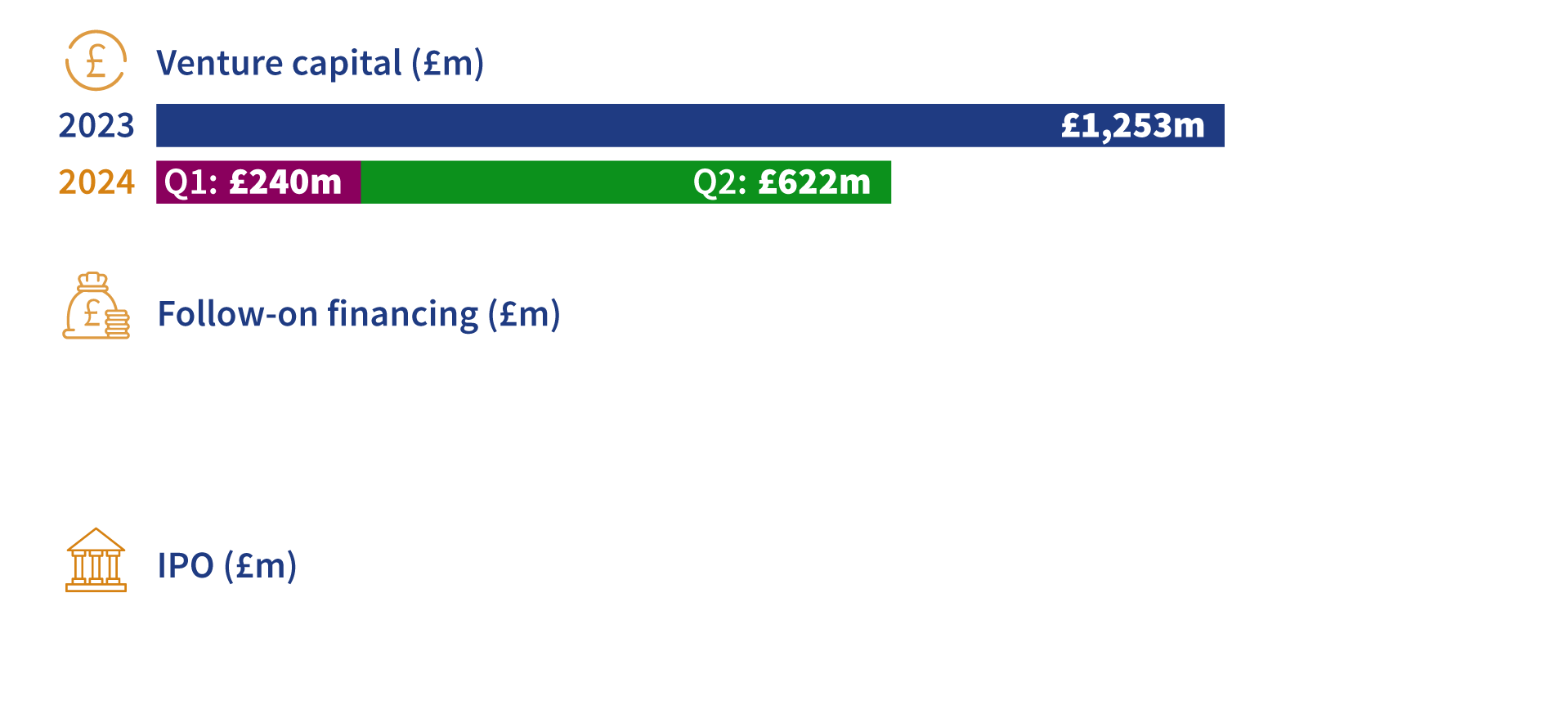
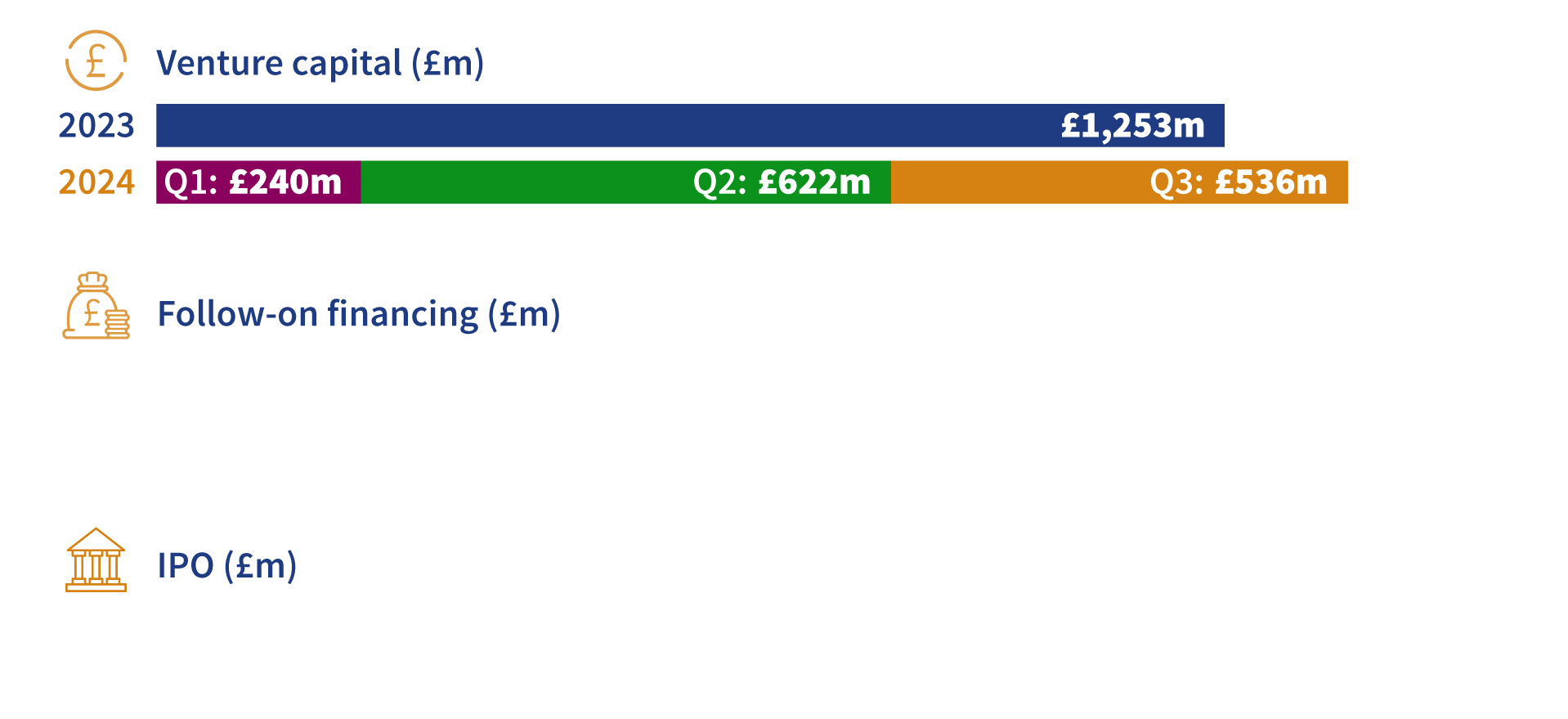
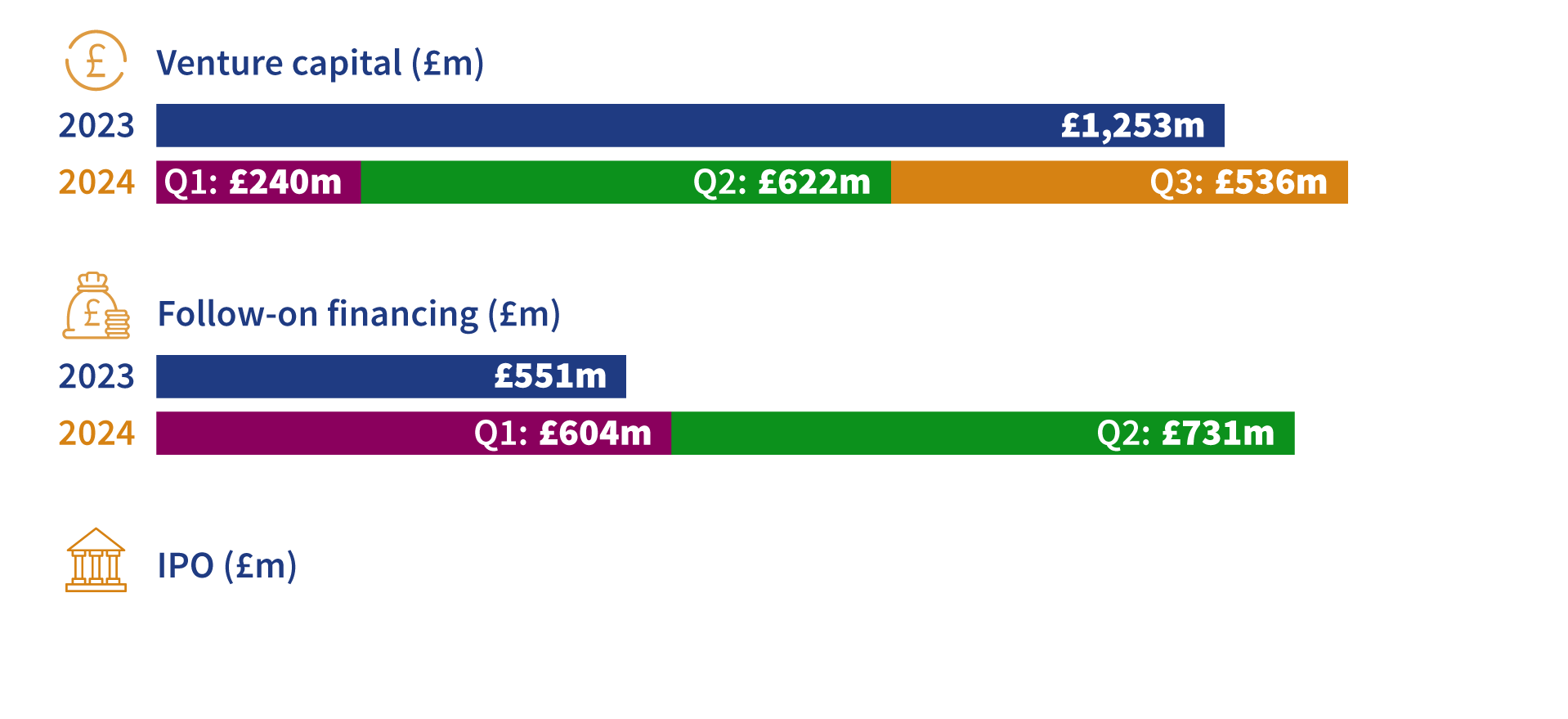
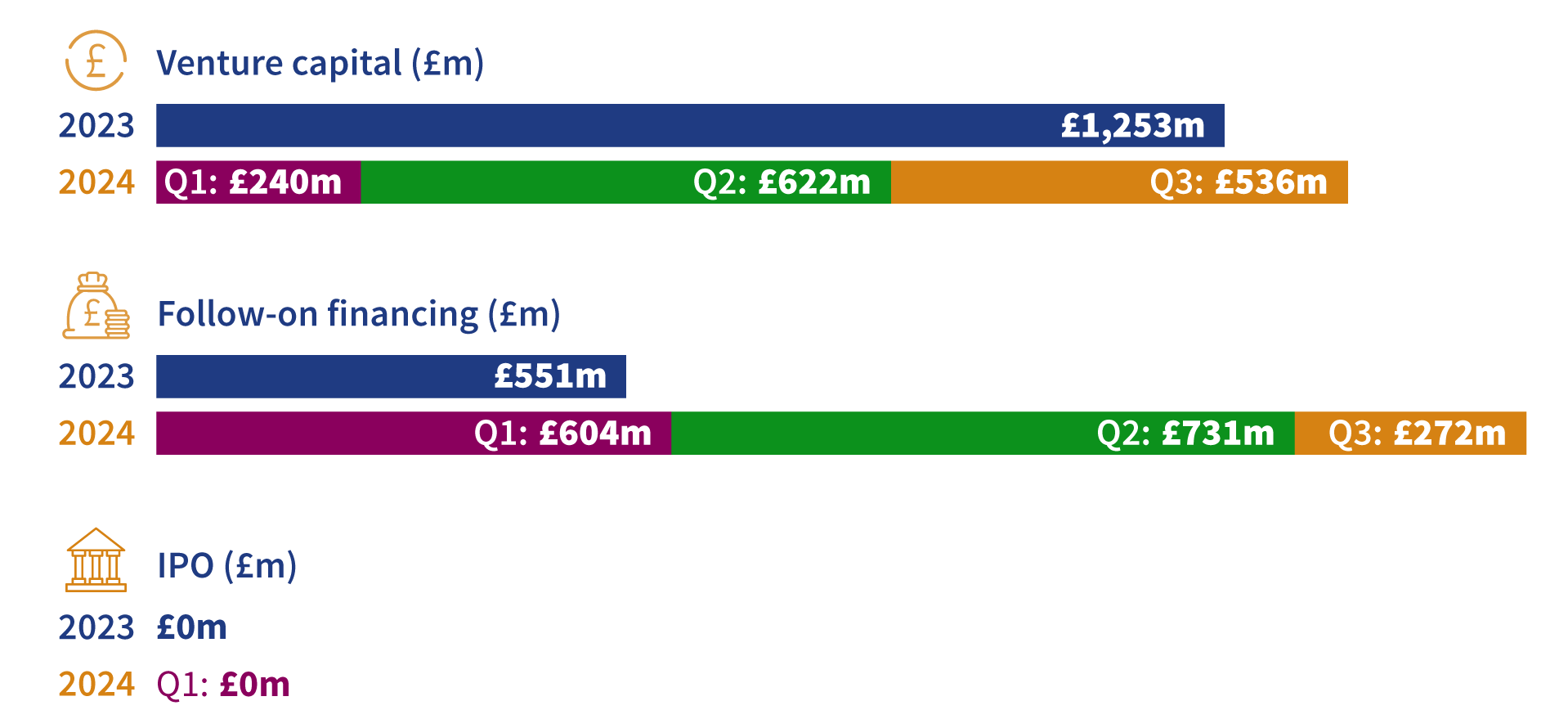
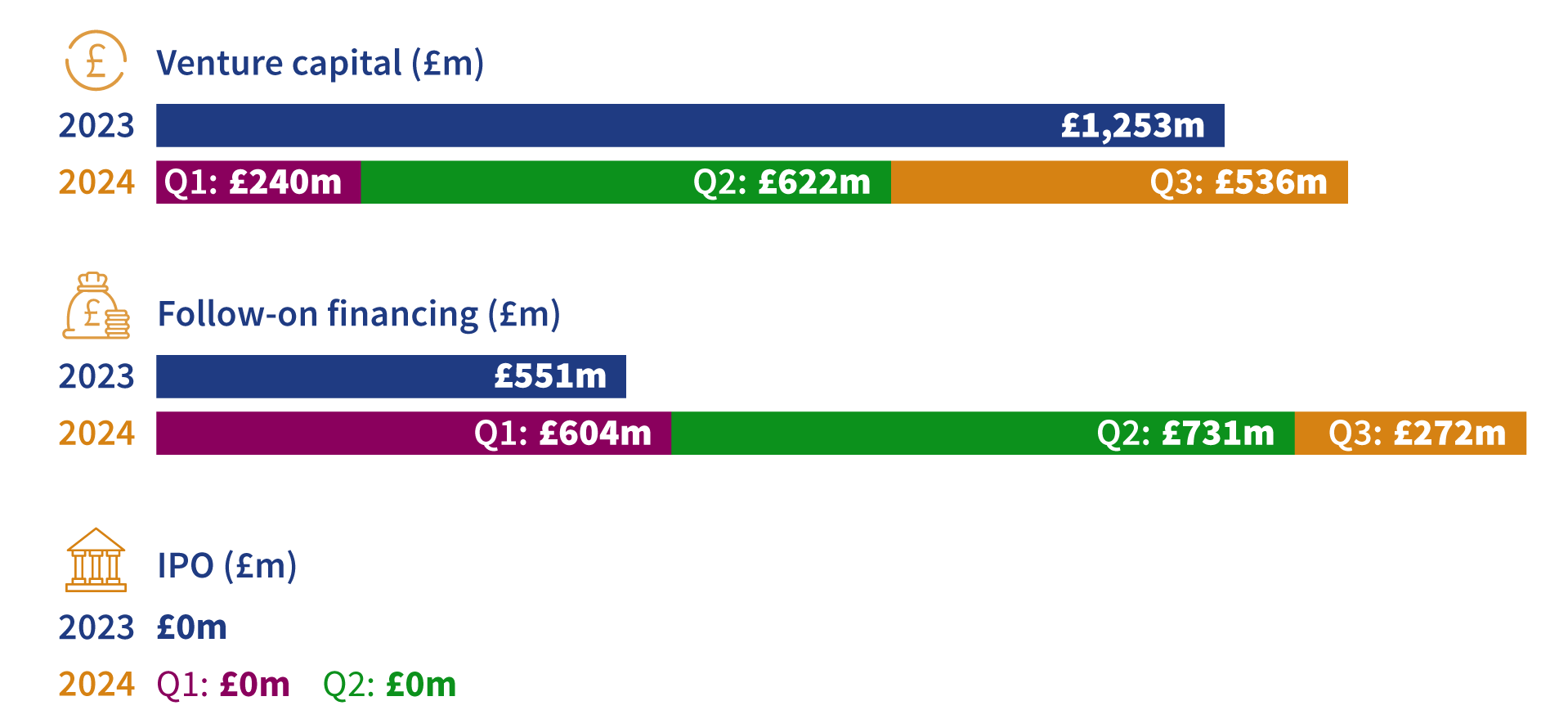
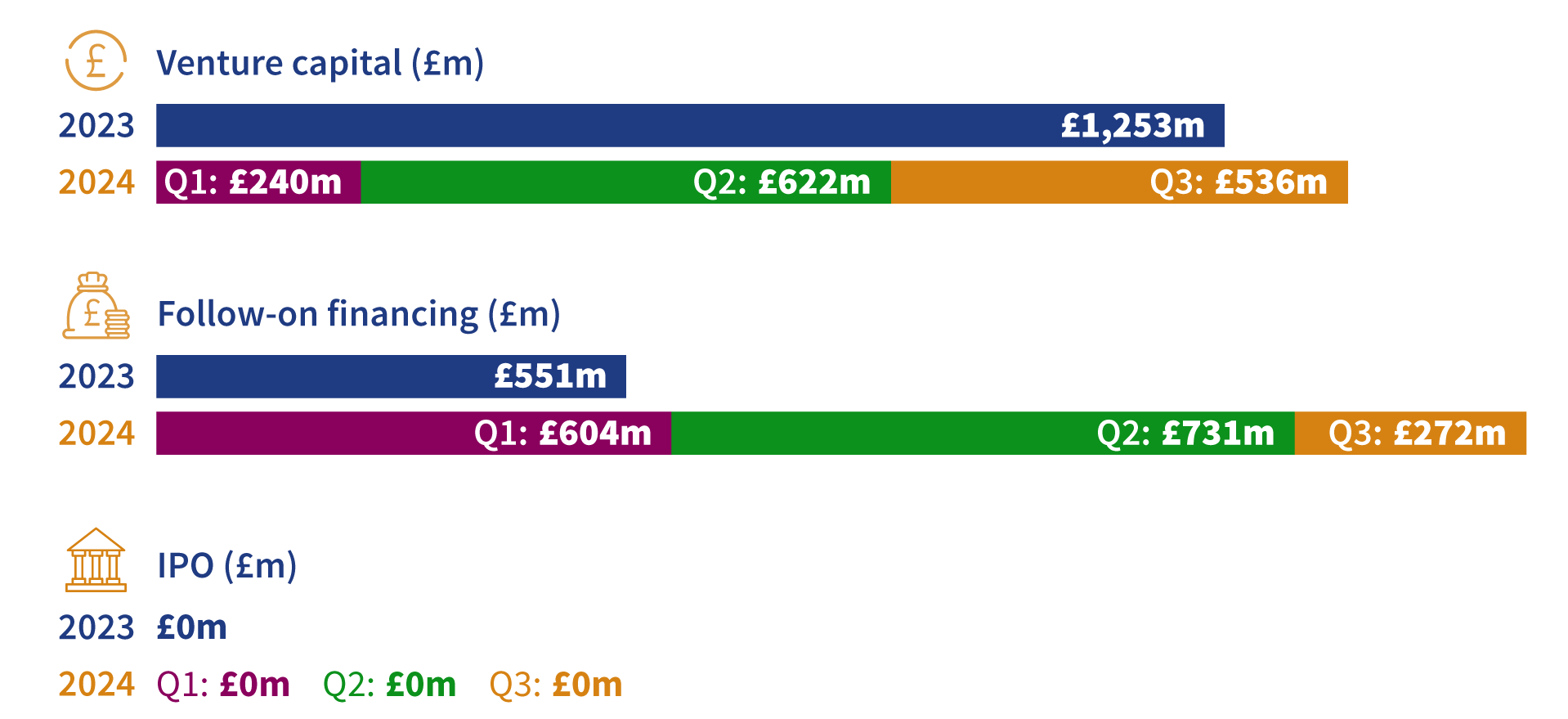
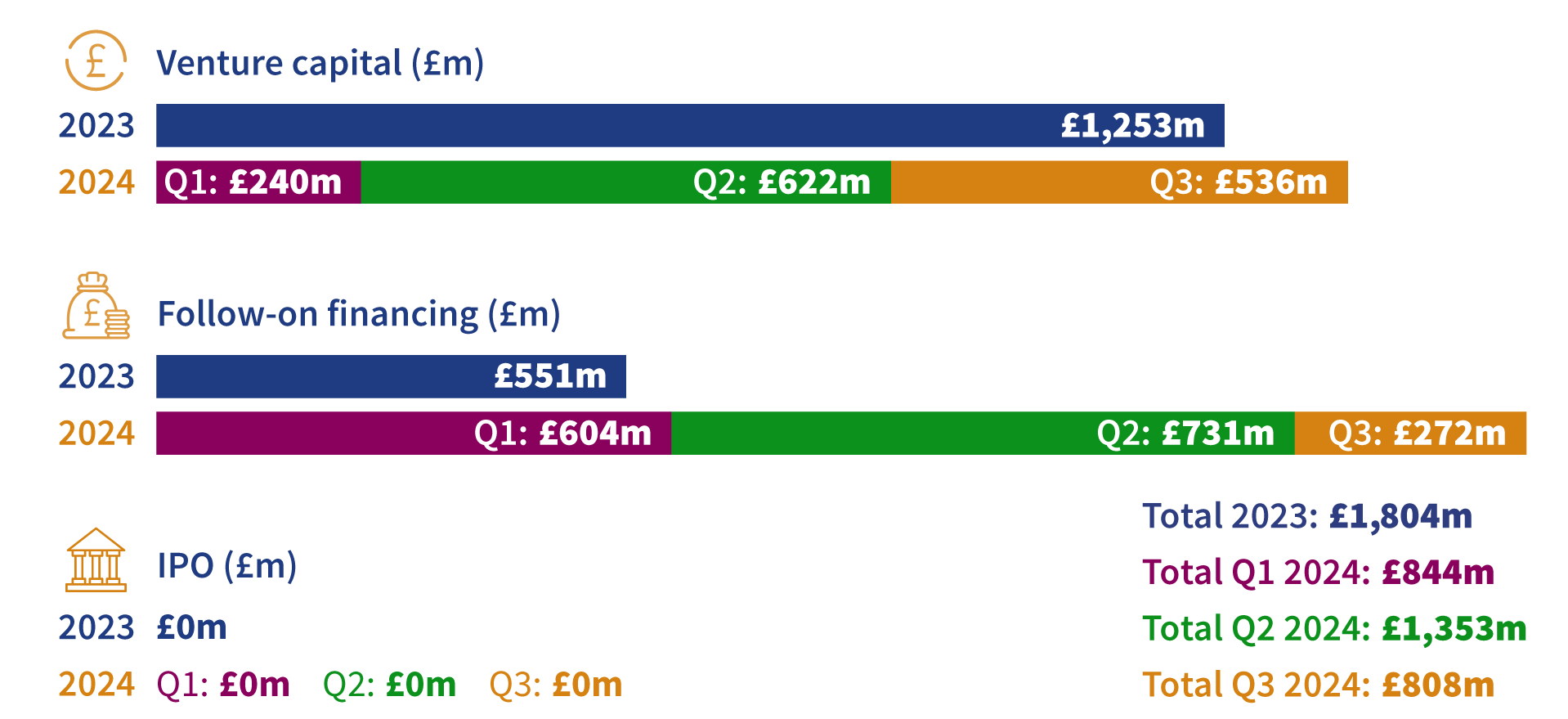
The UK biotech sector demonstrated encouraging resilience in the third quarter of 2024 raising a total of £808 million in venture capital and public financing.
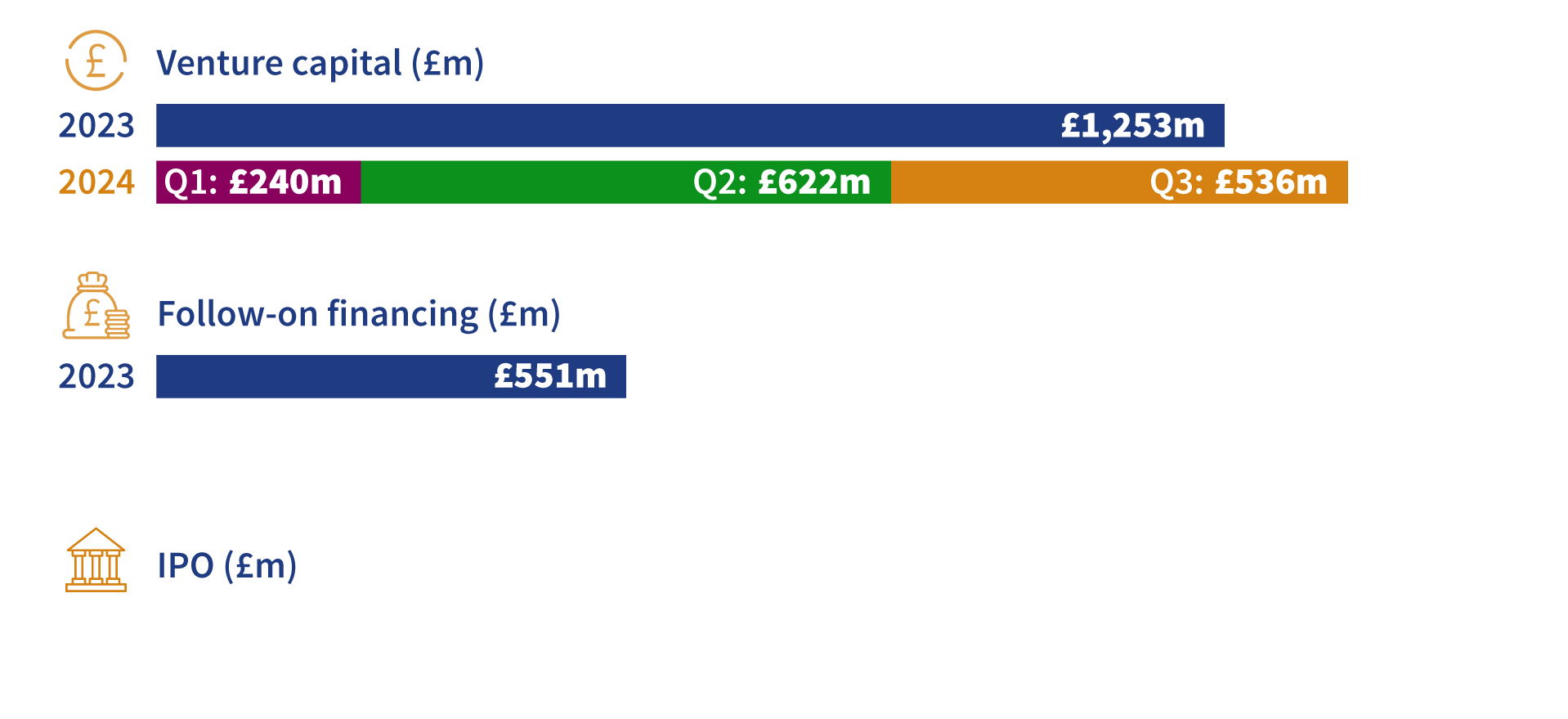
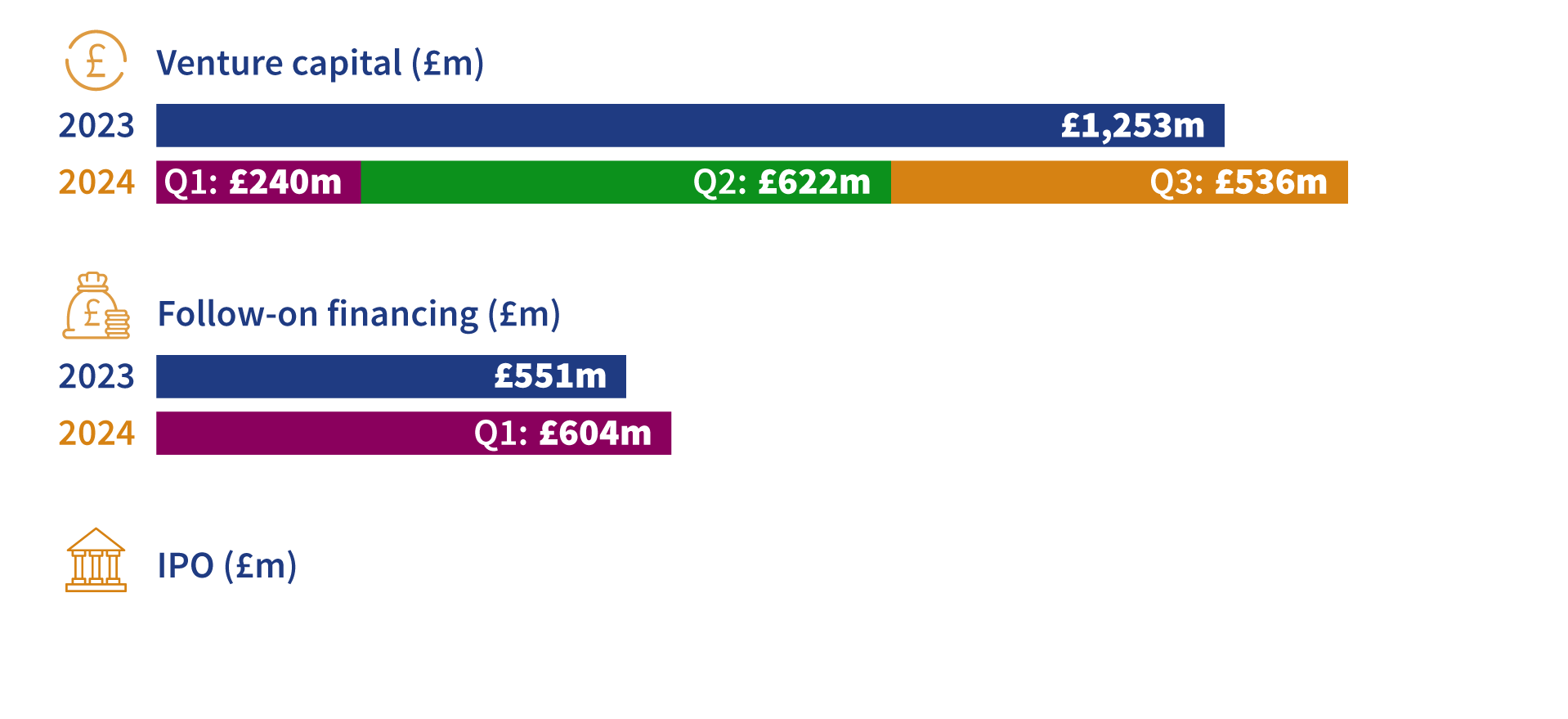
Venture capital investment maintaining a solid performance of £536 million across 18 deals. The steady flow of deals highlights continued investor confidence in the sector’s potential to drive innovation and deliver growth.
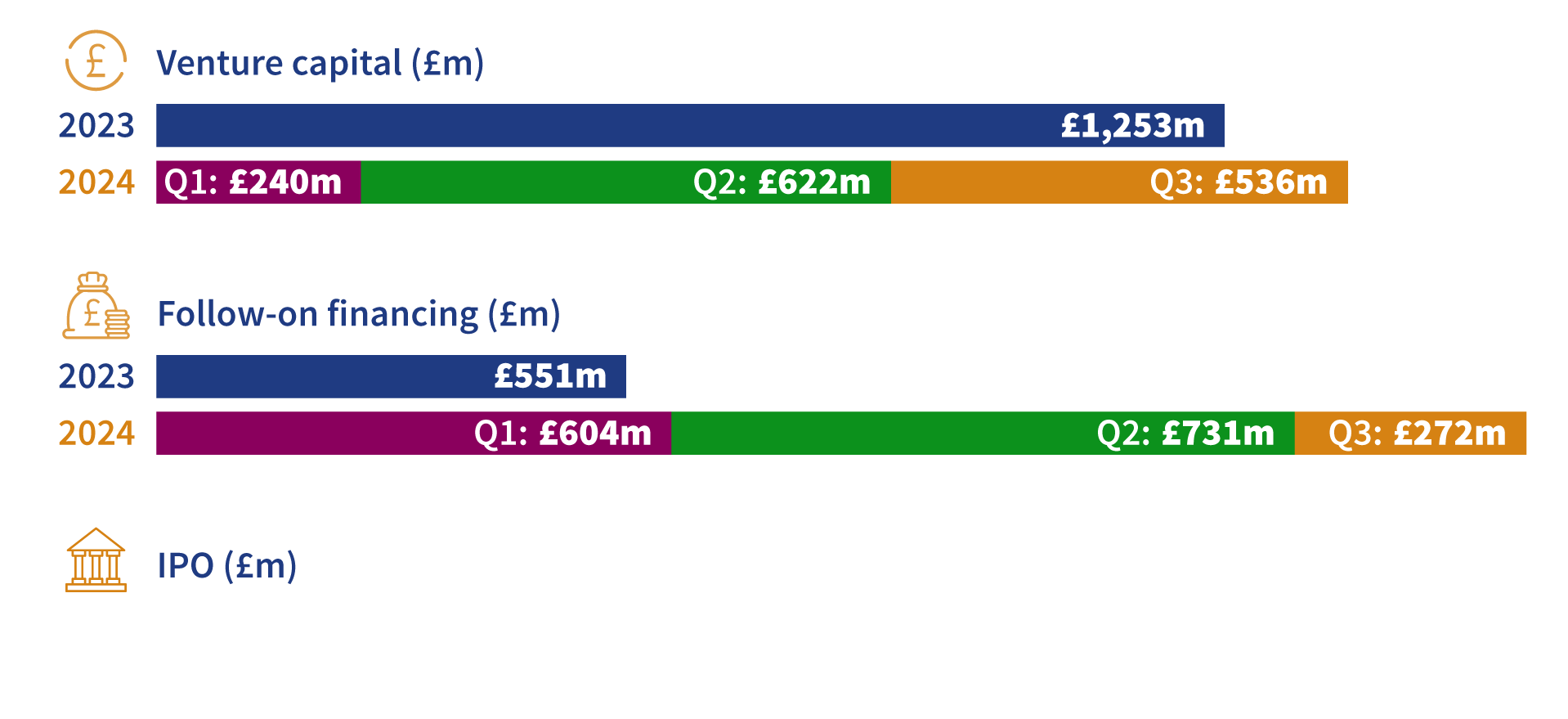
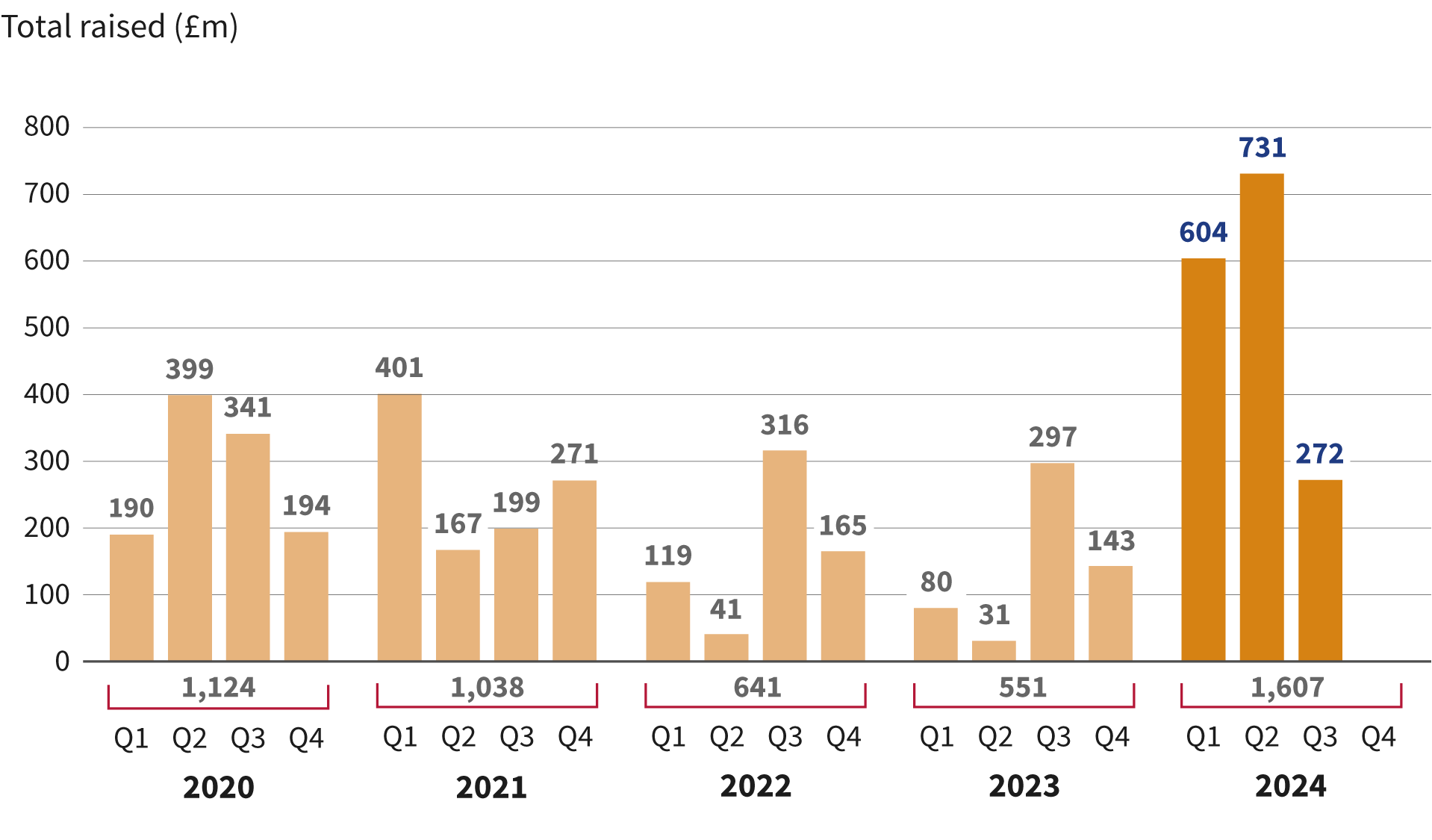
So far this year, £1.61 billion has been raised in follow-on financing, the largest total in the last five years.
While a slight decline was witnessed from the previous quarter, the overall trend for 2024 indicates that the biotech sector continues to attract investment, highlighting its strength and appeal to both domestic and foreign investors.
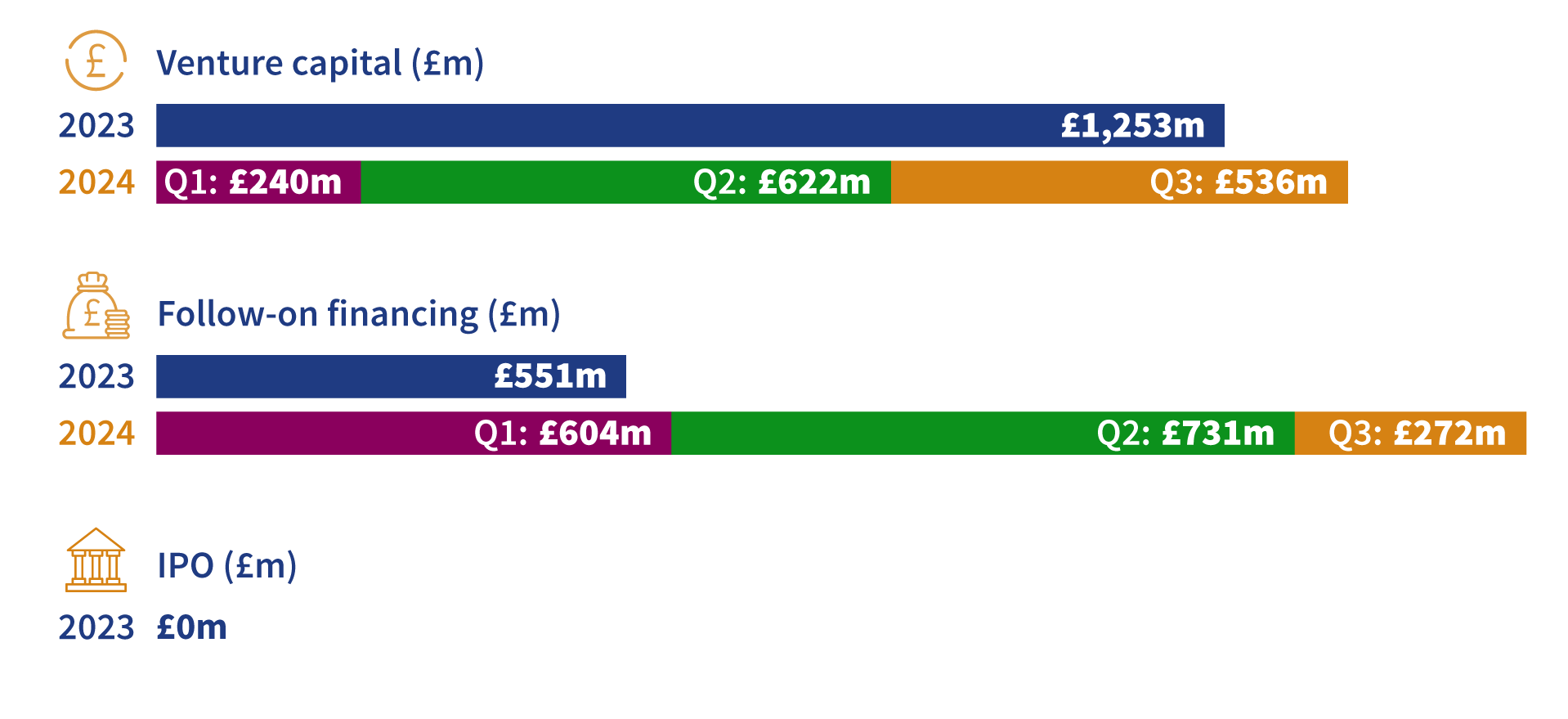
However, the ongoing lack of IPO activity remains a point of concern, indicating that market conditions are still not conducive to new public listings.
Looking ahead, the outlook for the UK biotech industry remains positive. The UK government’s focus on revitalising the UK’s capital markets is expected to foster a more supportive environment for both emerging and established biotech companies. With these strategic efforts aimed at unlocking new sources of capital and driving innovation, the UK biotech sector is well-positioned remain competitive in the global biotech sector.
2024 Q3 figures at a glance

Steve Bates OBE
CEO, BIA
The resilience of the UK life science sector since the 2021 financing peak is undeniable. It is encouraging to see new companies emerging even in the face of tough conditions. With venture investment still going strong, our data shows the Labour government is right to prioritise a key UK growth sector of the future.
Private investors are realising opportunities that public market data just doesn’t show in UK life science. It is vital, if we are to get UK pension funds to invest in UK life science, that more data on the actual returns in UK life science from private investment are put in the public domain.
Looking ahead, the UK government’s industrial strategy, which prioritises life sciences and aims to attract global investment, is set to create an even more supportive environment for biotech innovation. This will enable the UK biotech sector to sustain its competitive edge on the global stage.
The BIA’s report signals that despite economic uncertainty, the UK biotech sector is well-positioned for future success given strong investor confidence, early-stage innovation, and the promise of sustained government support.
 Venture capital
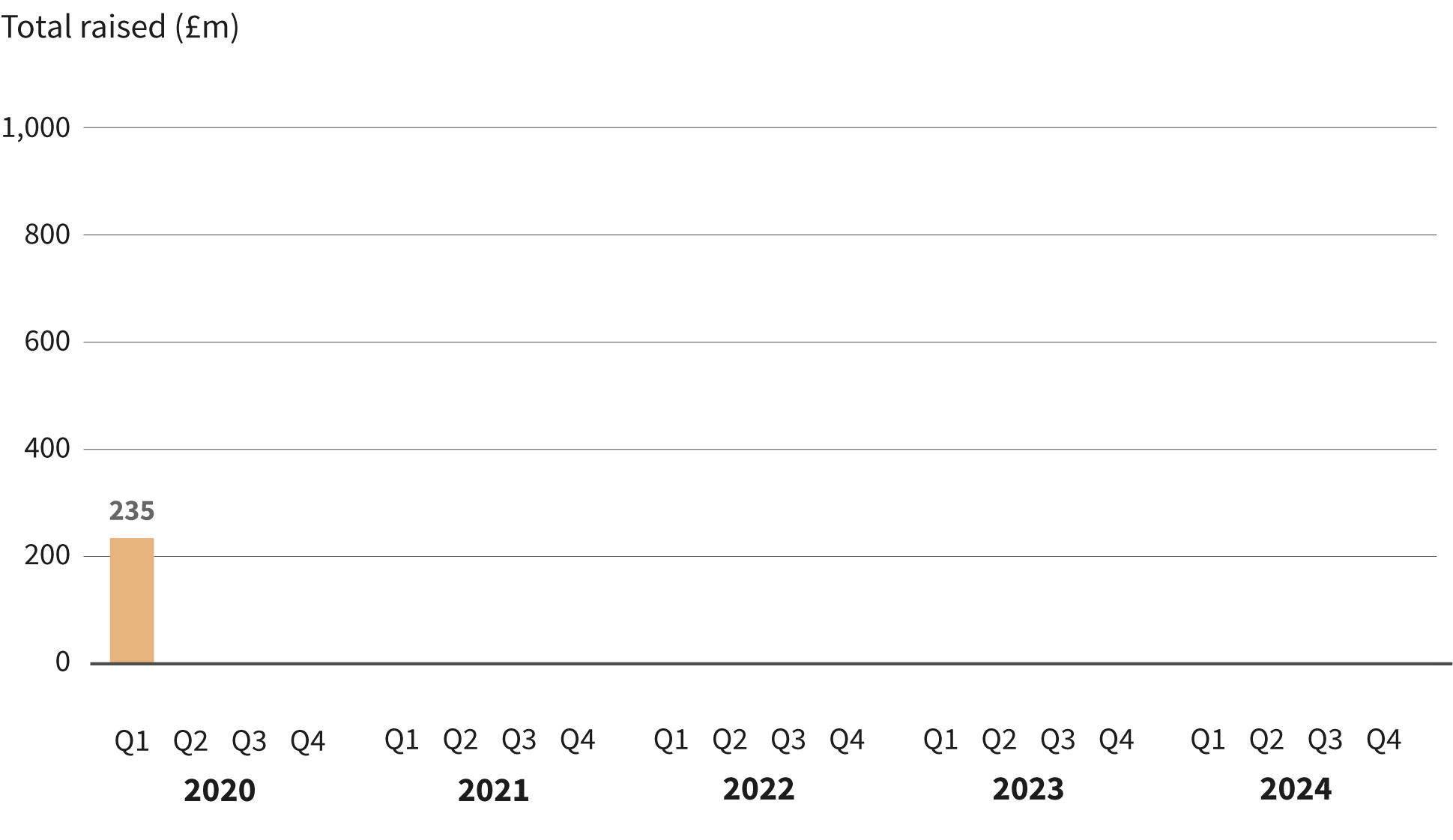
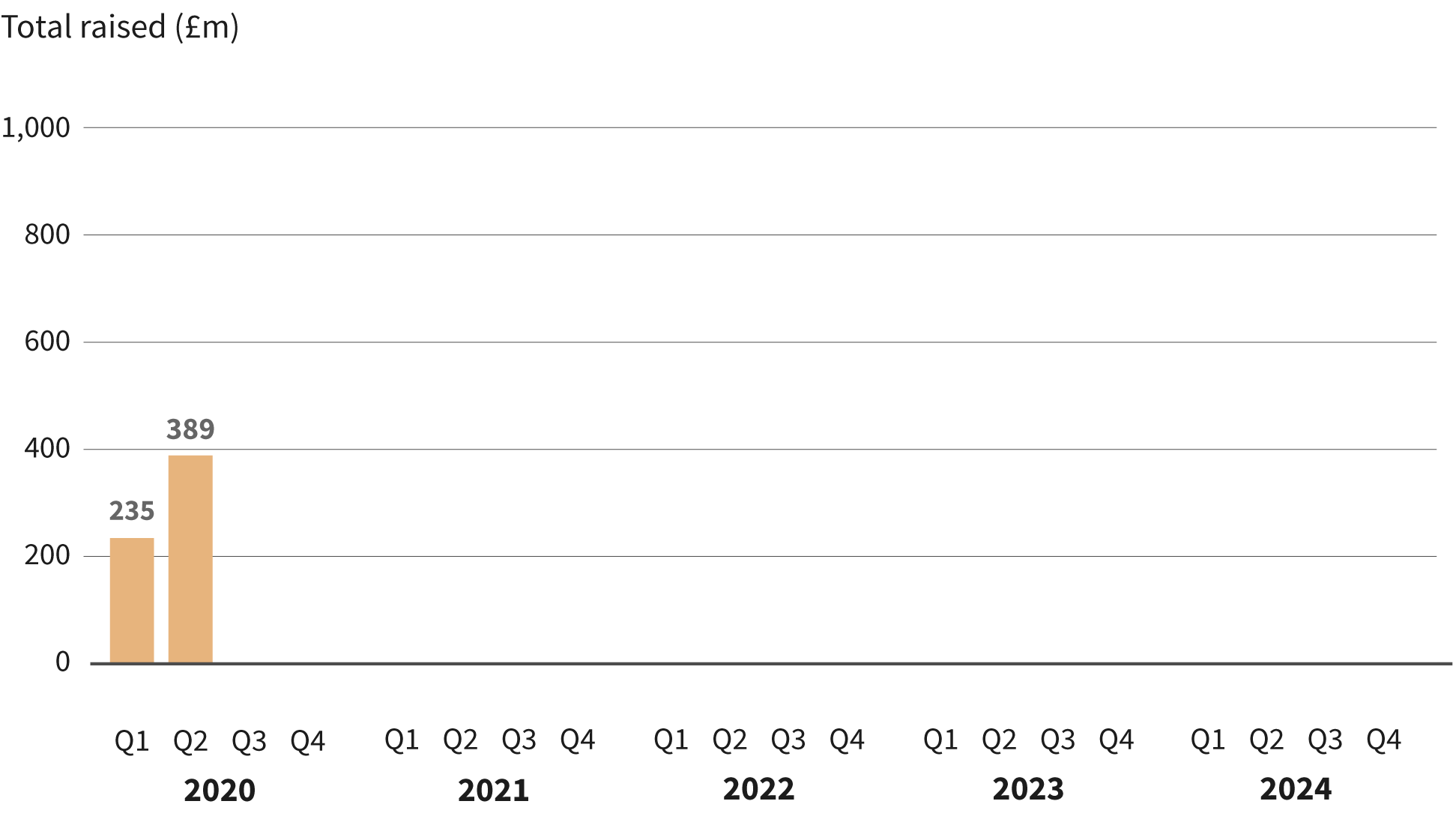
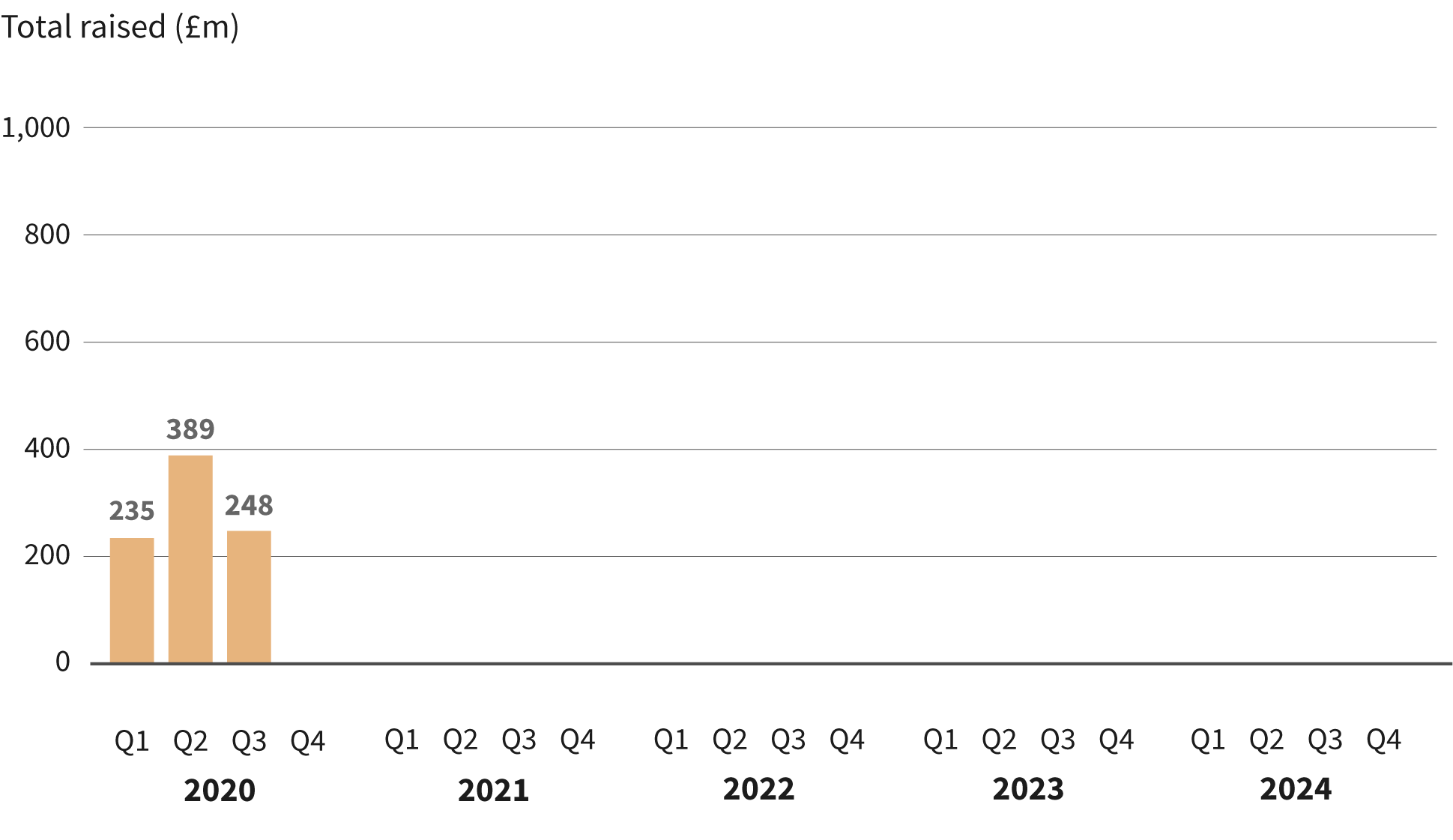
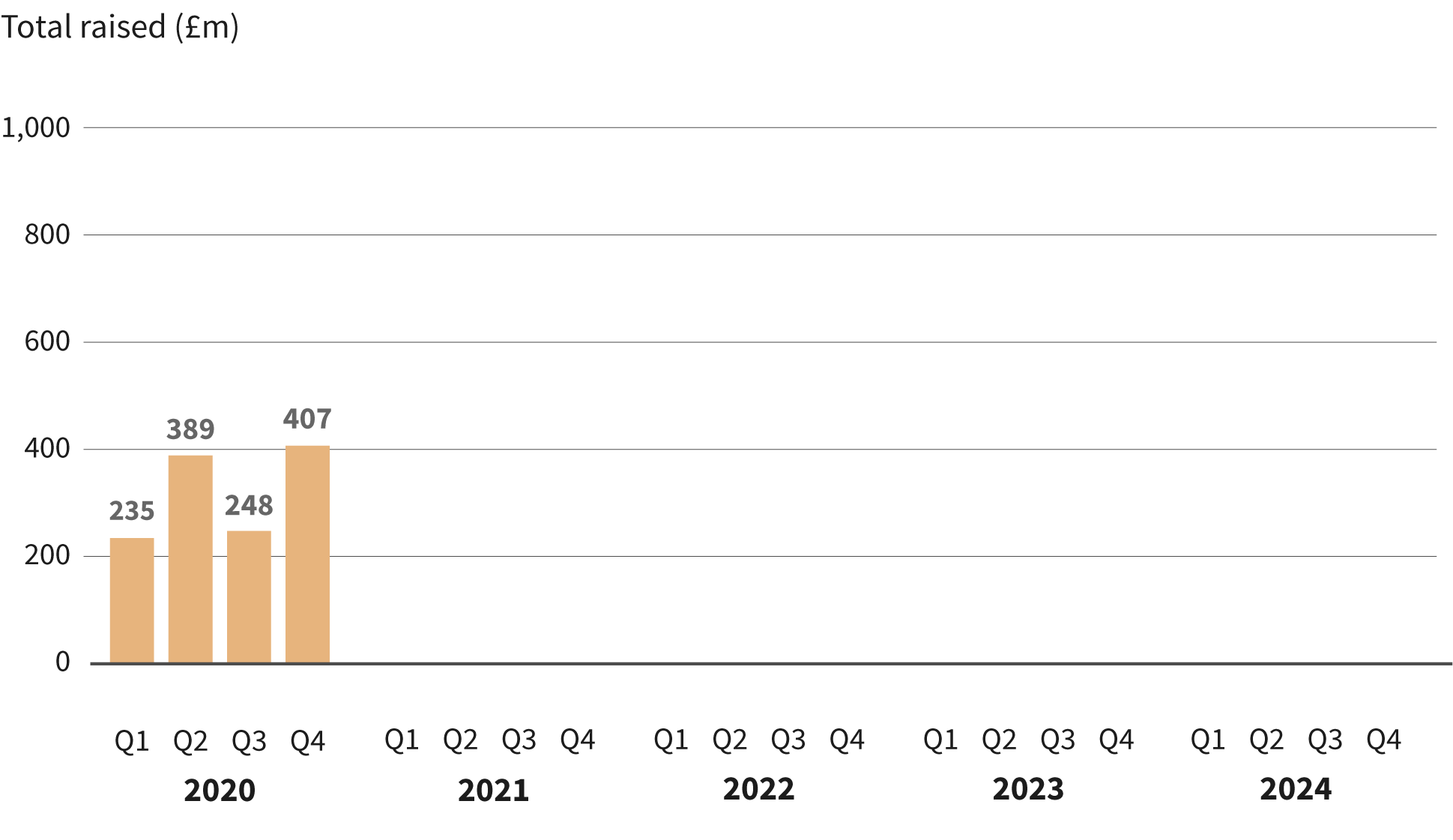
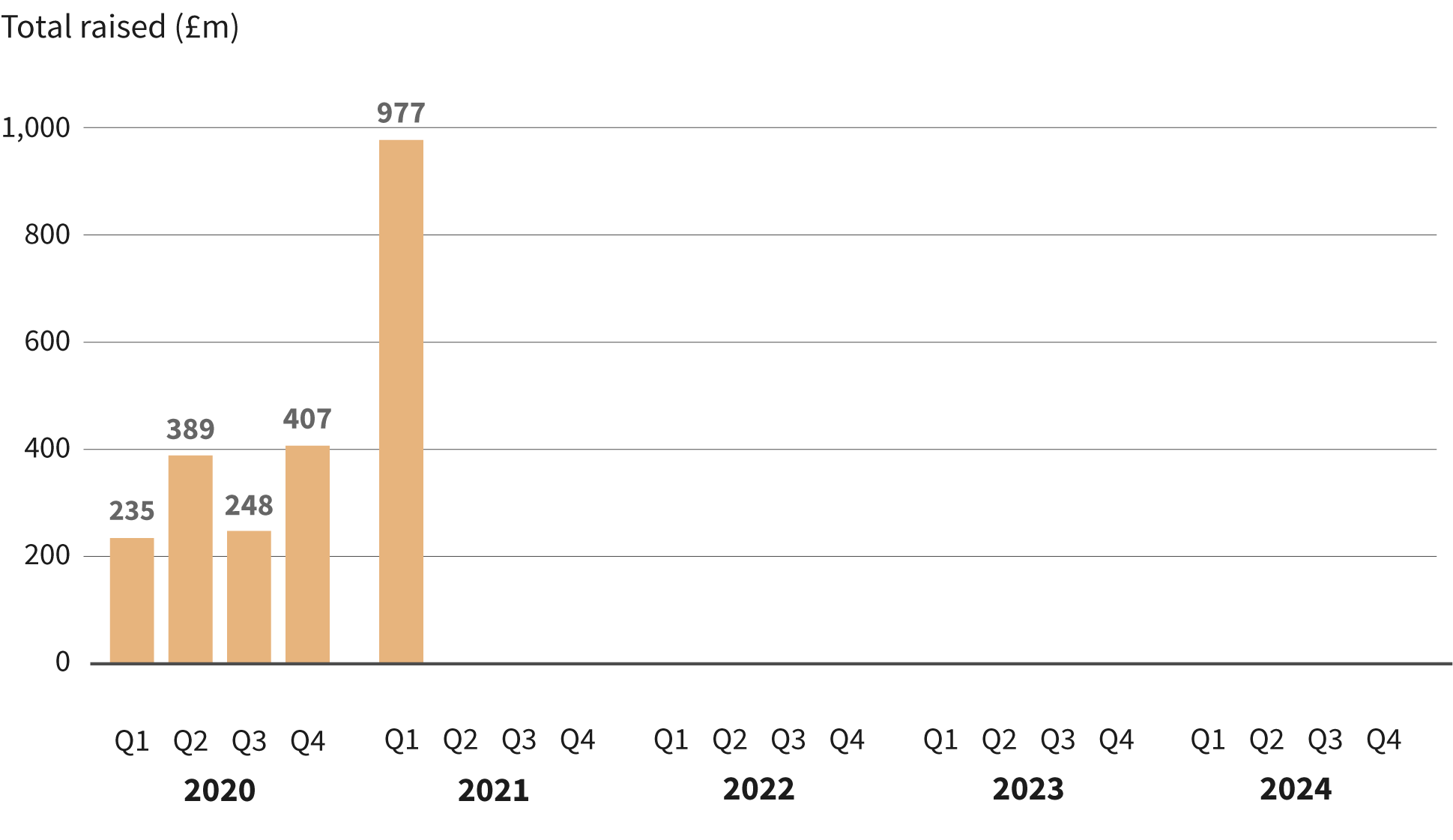
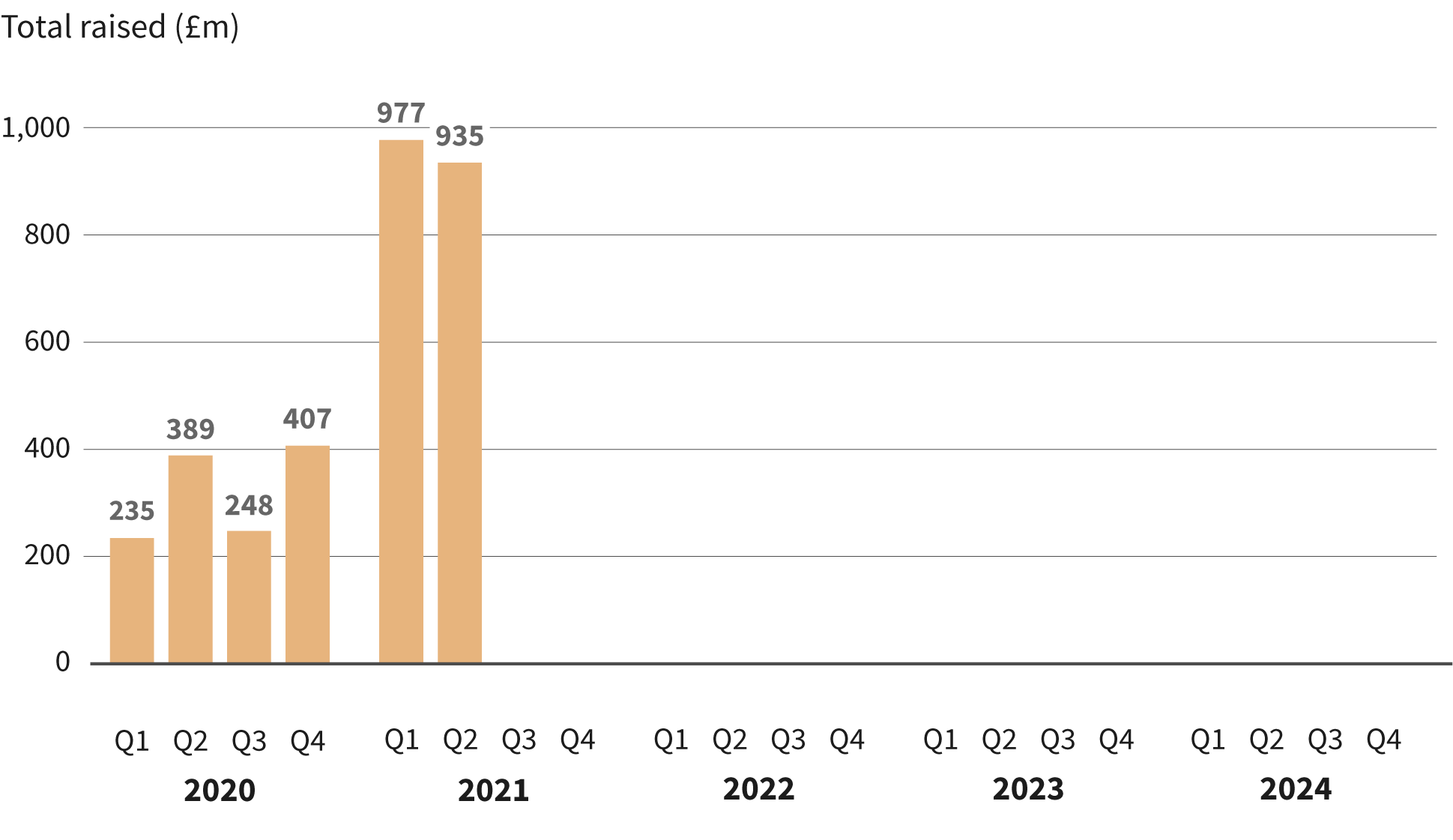
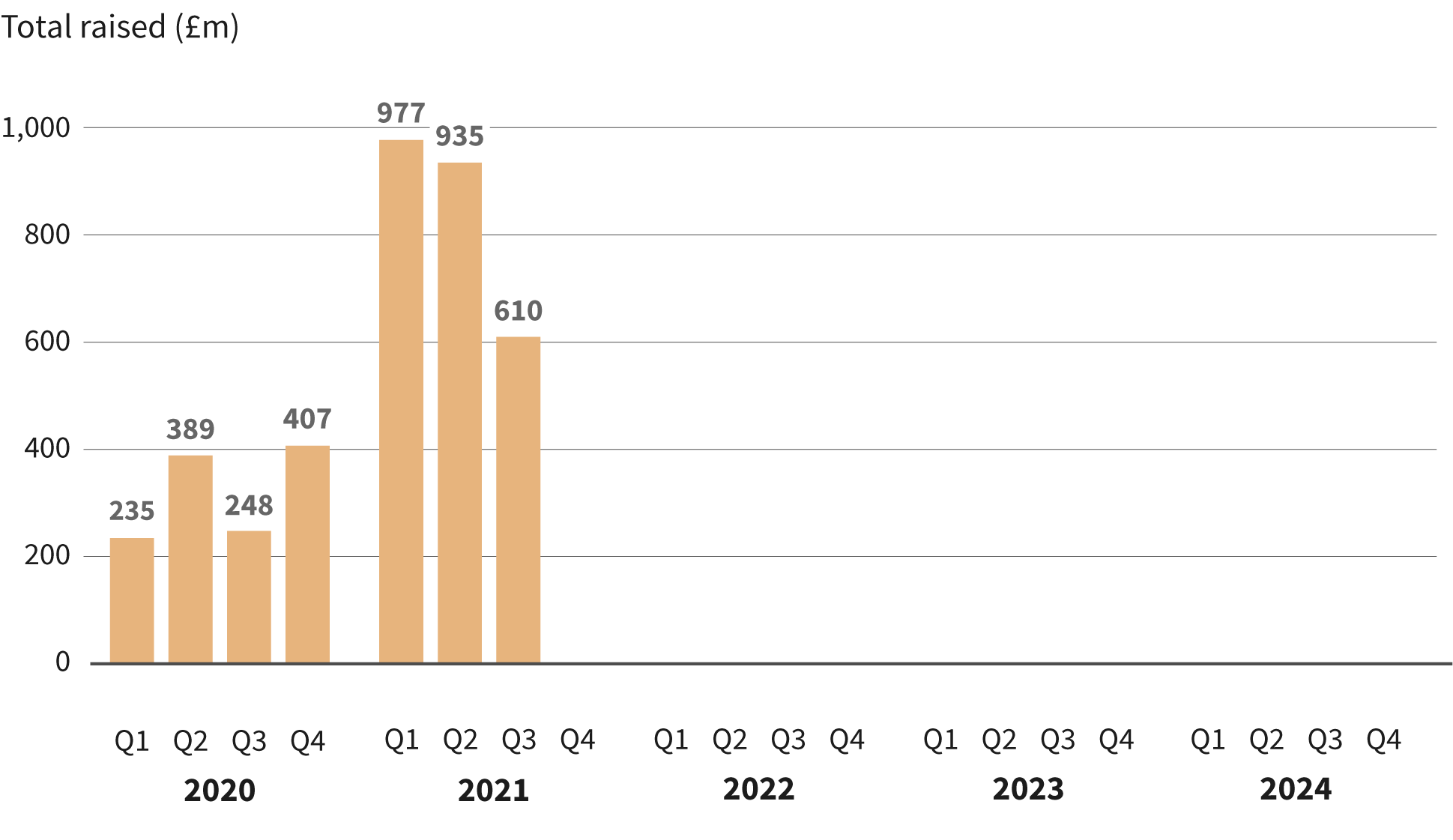
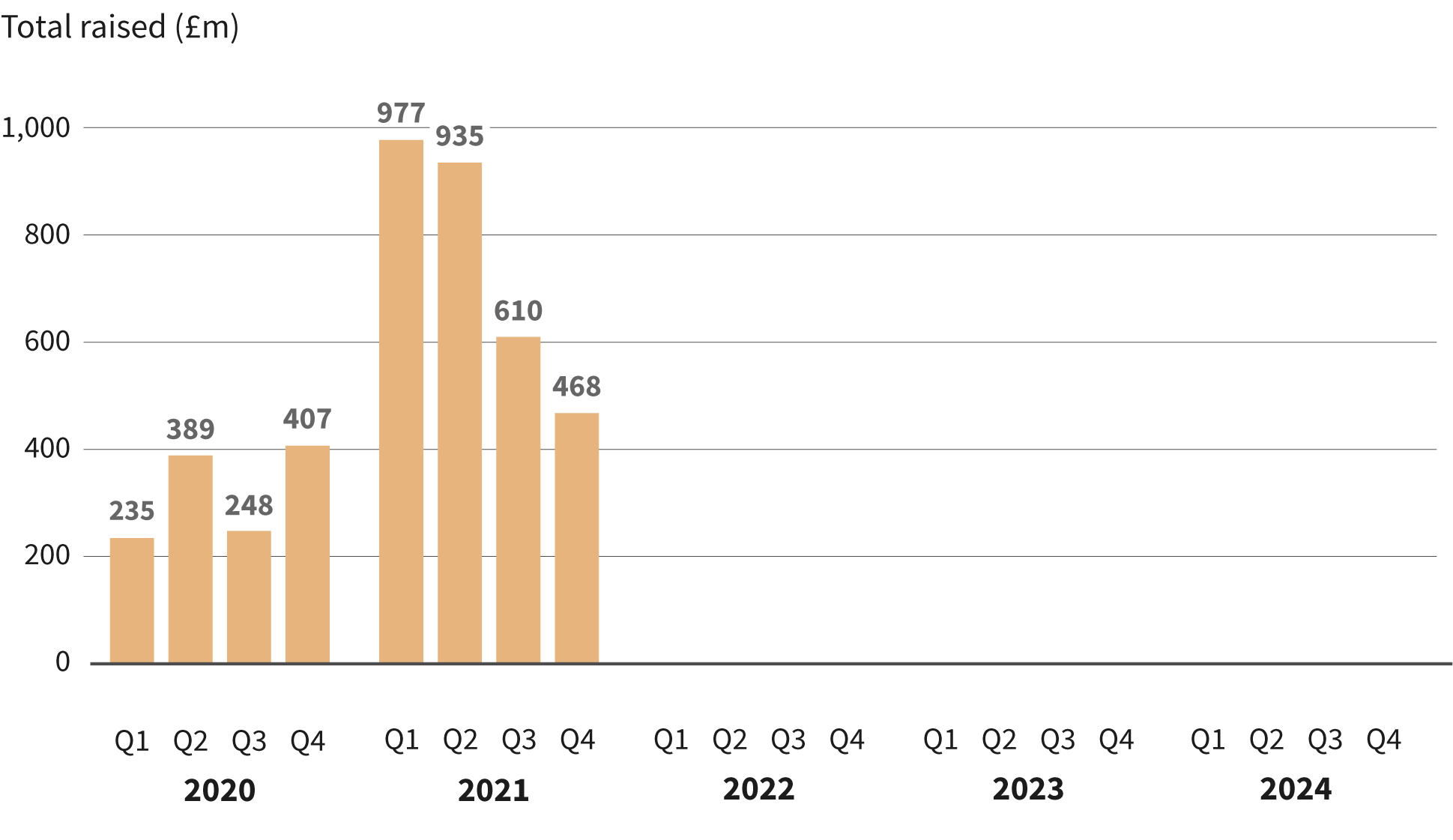
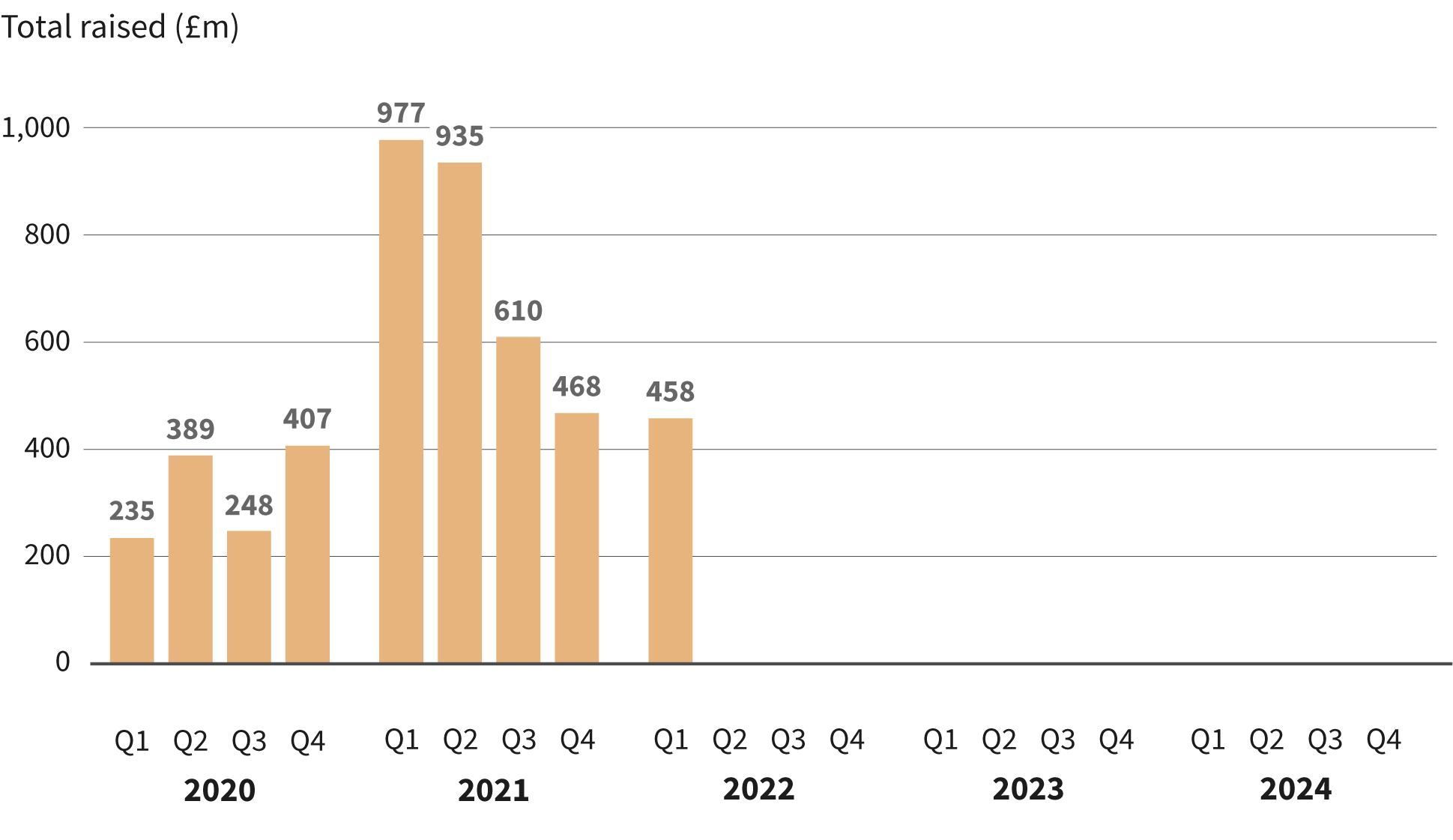
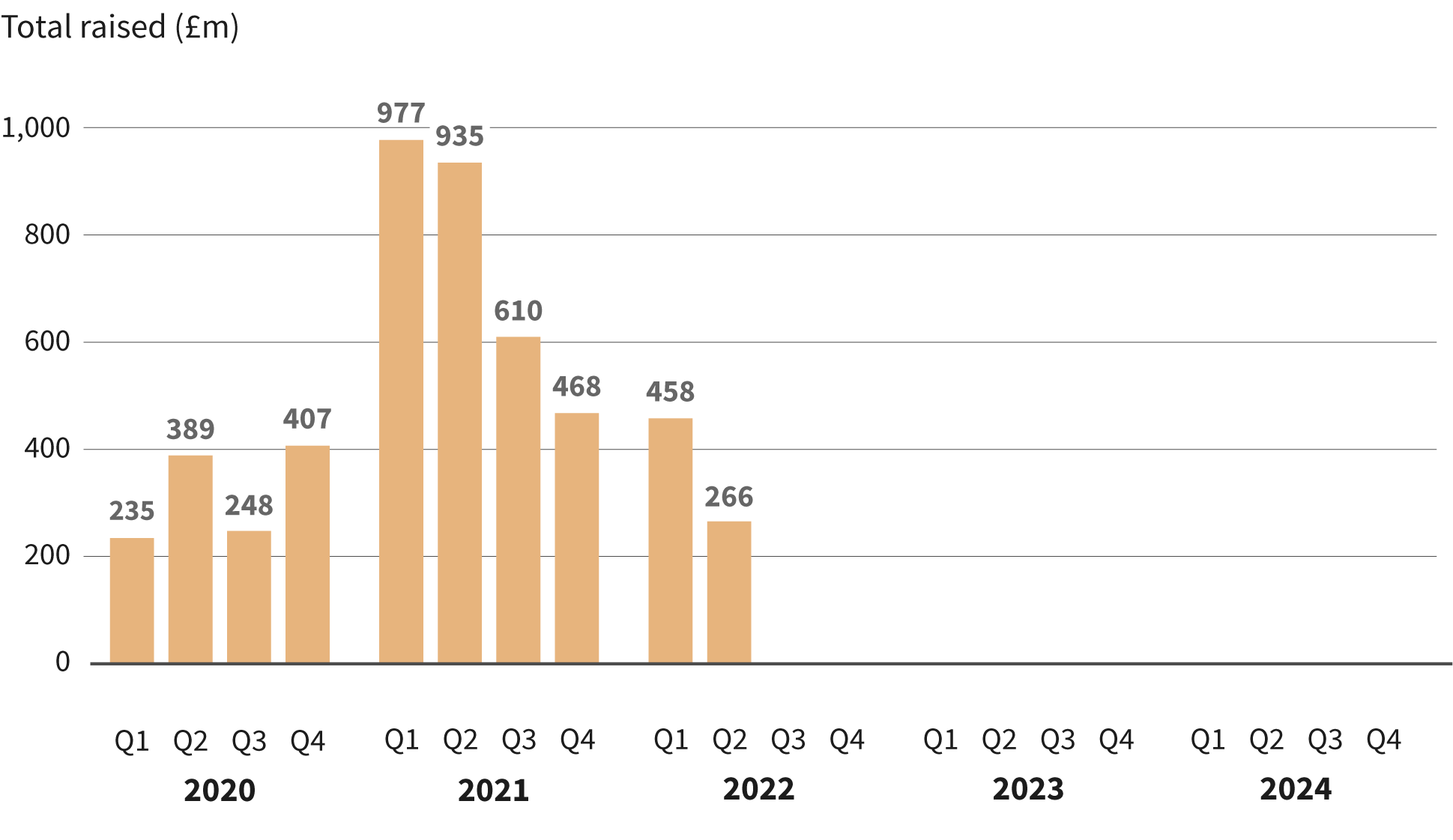
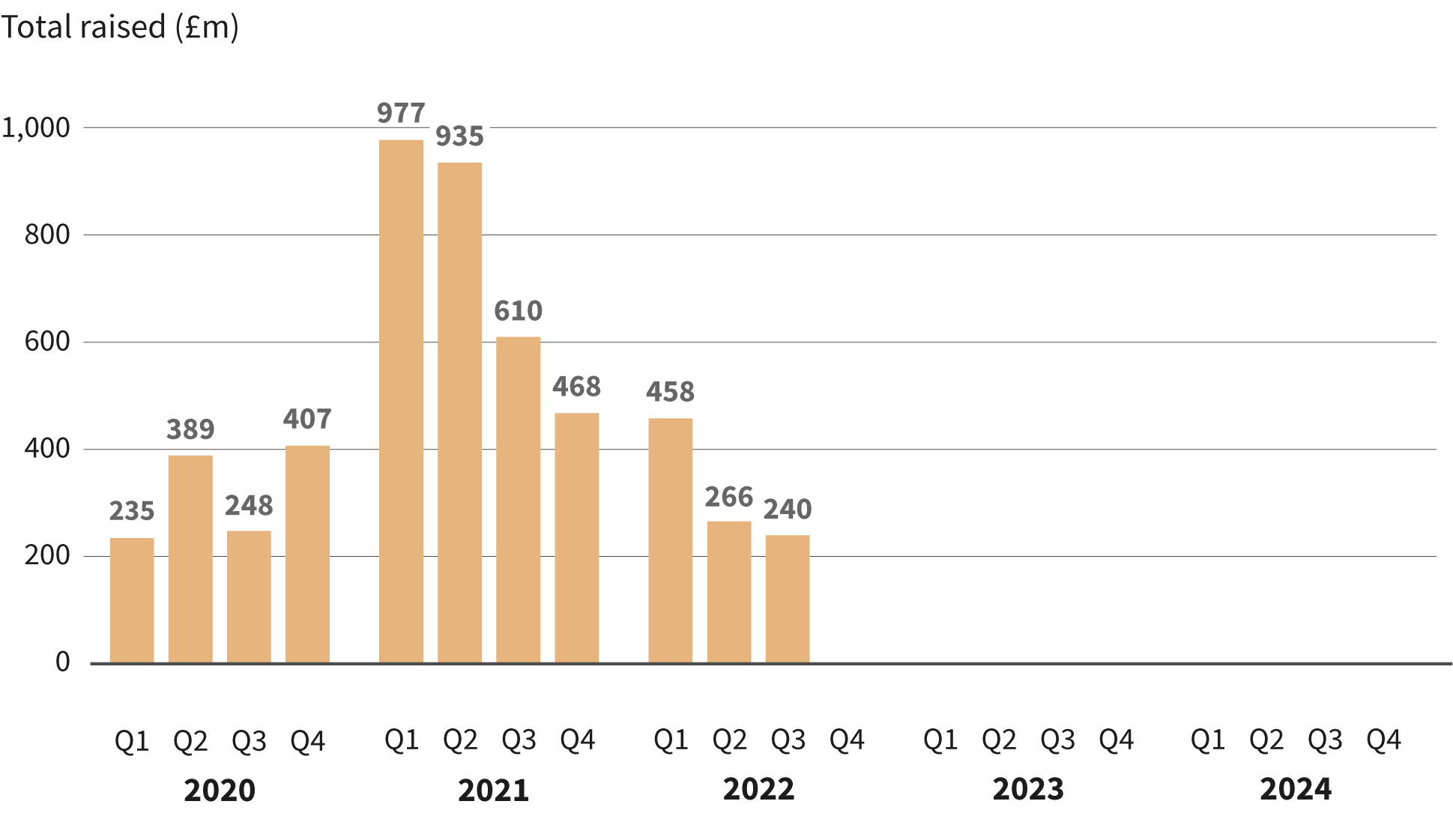
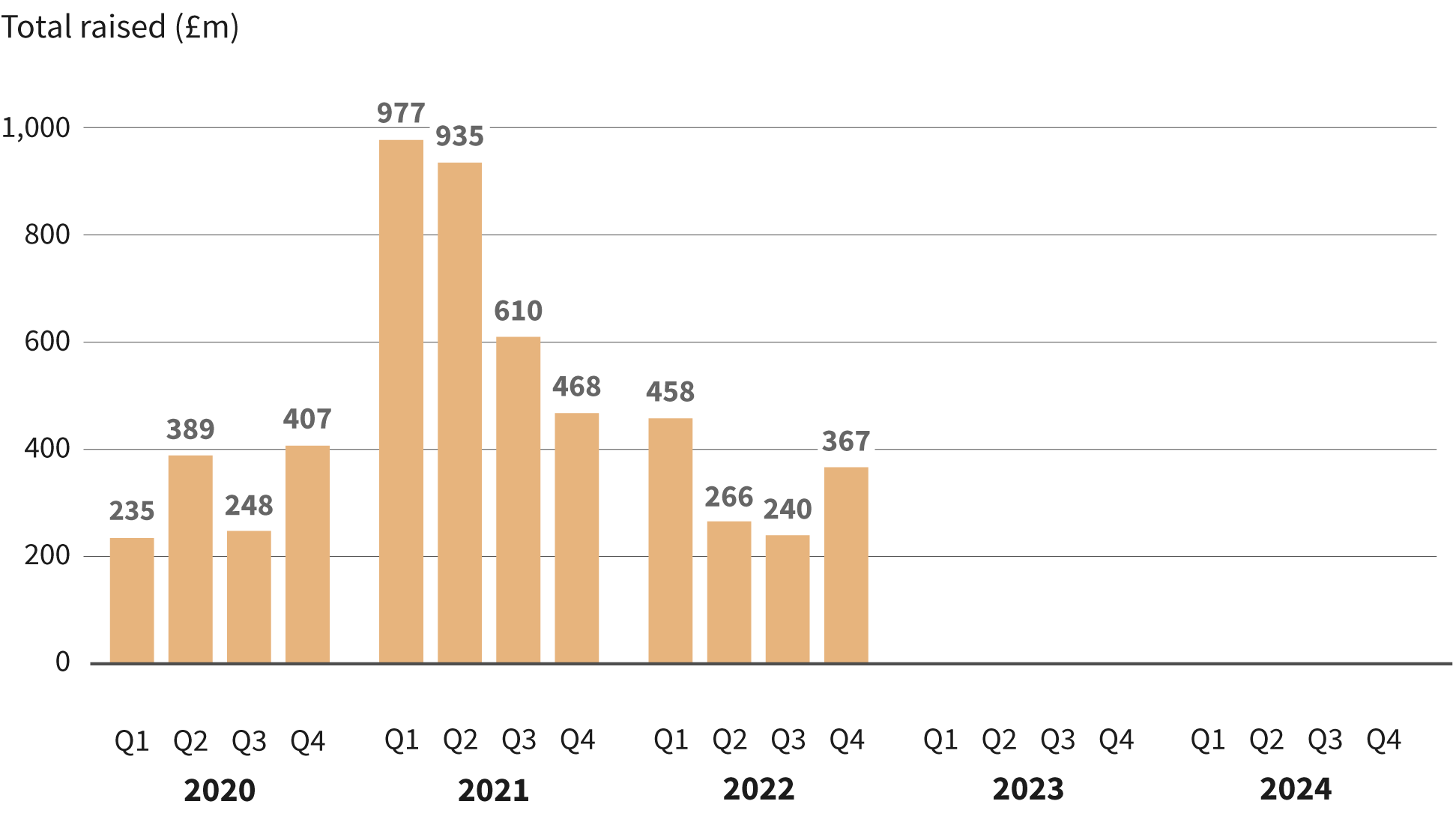
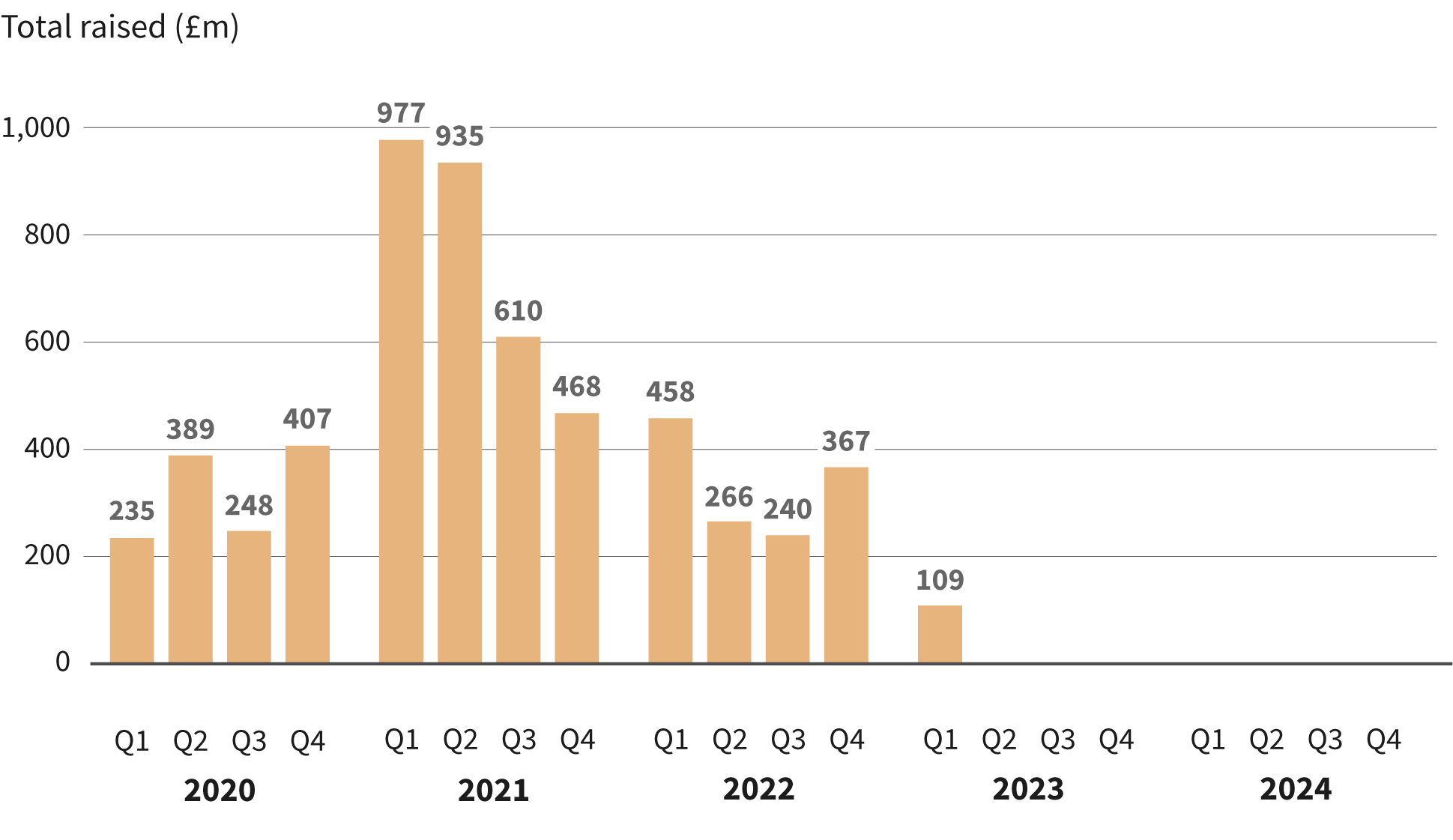
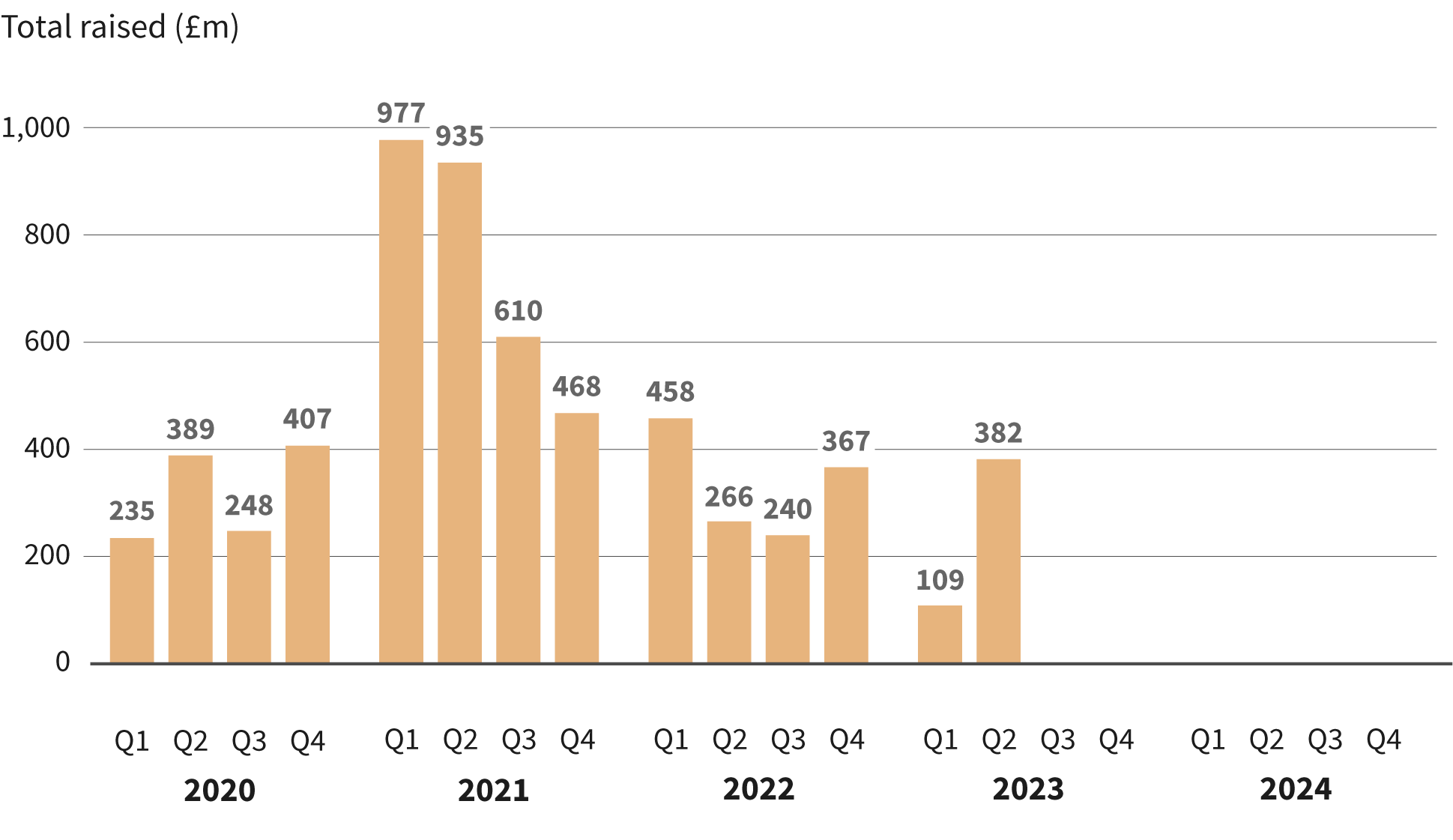
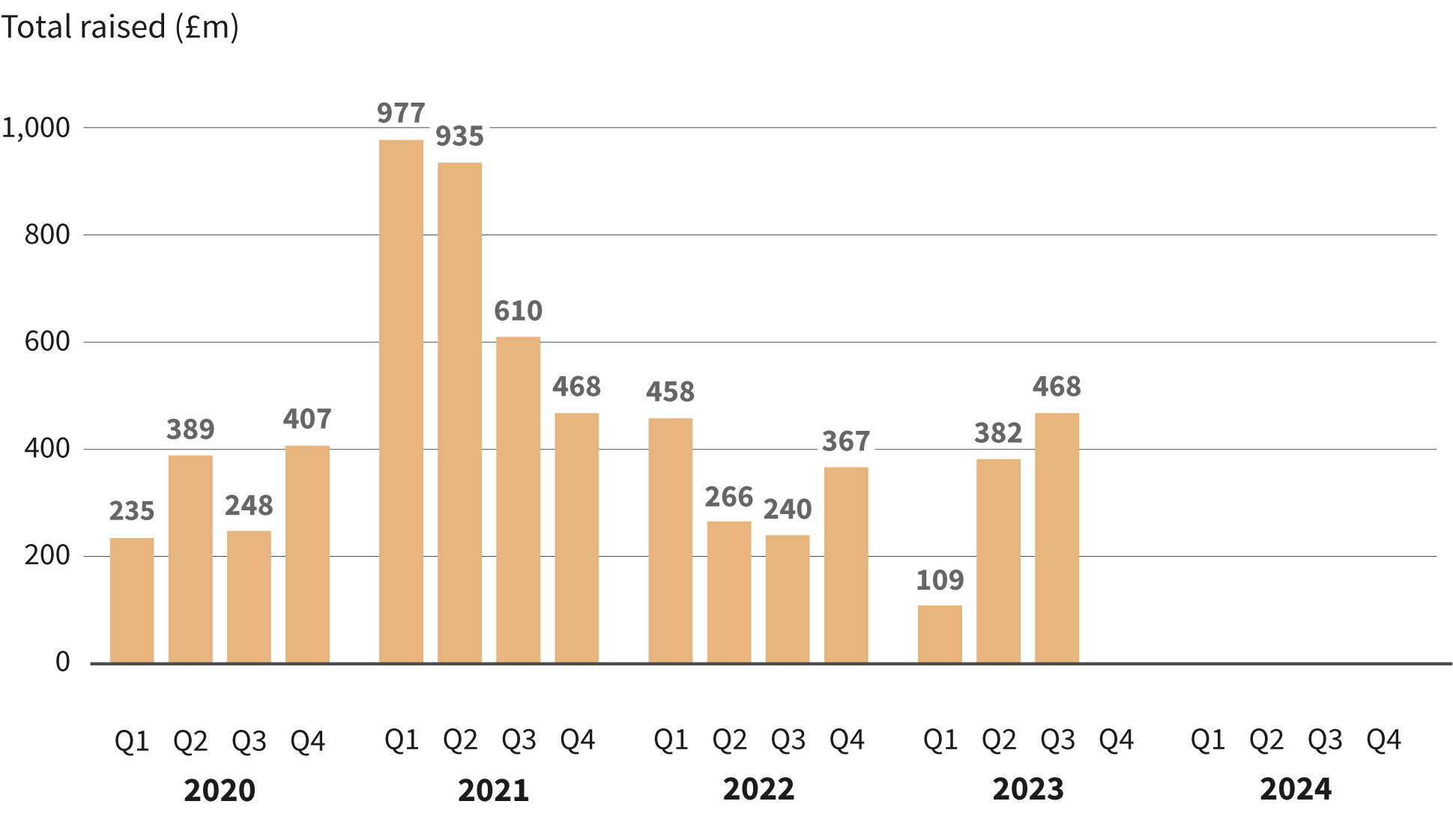
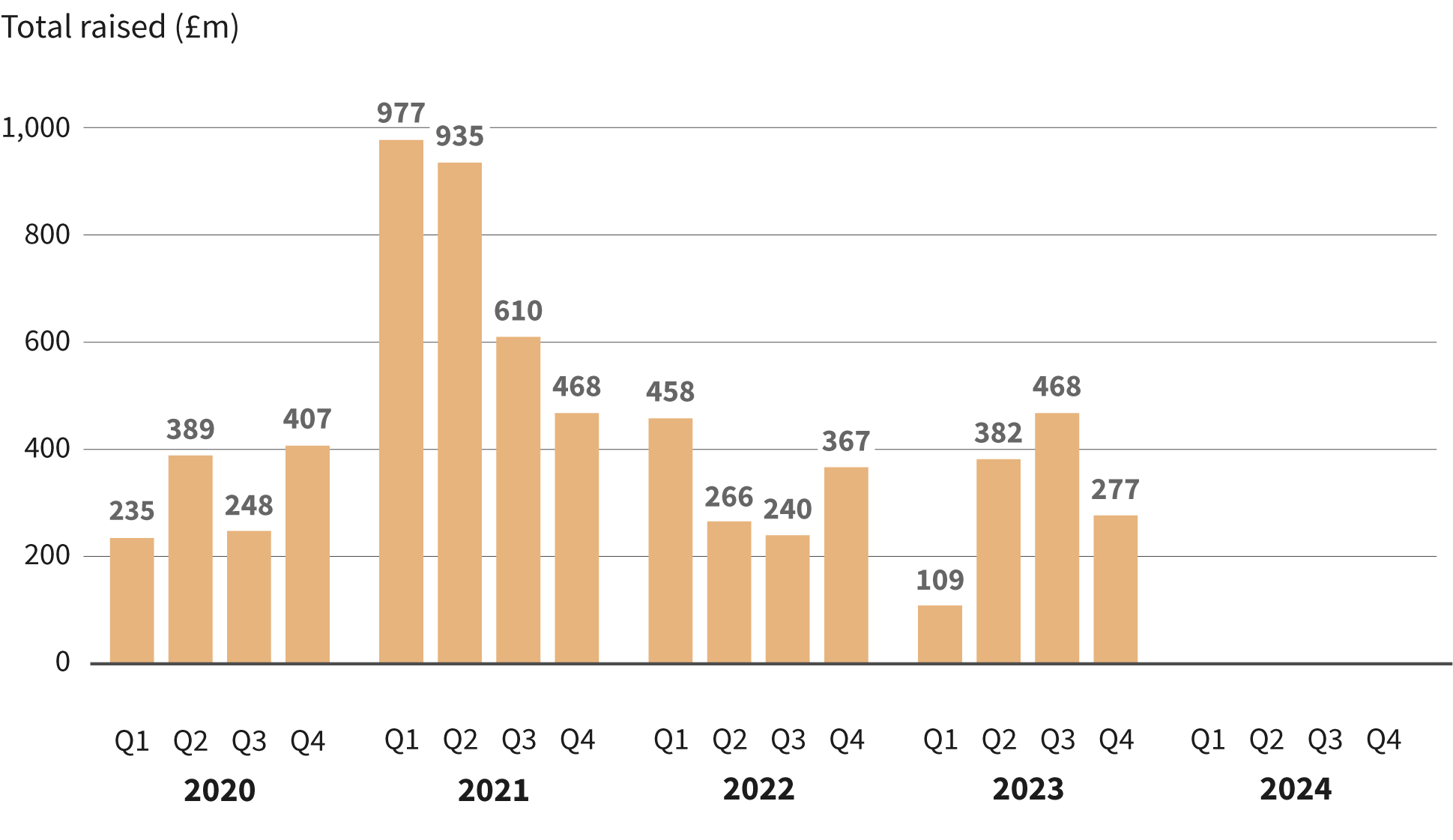
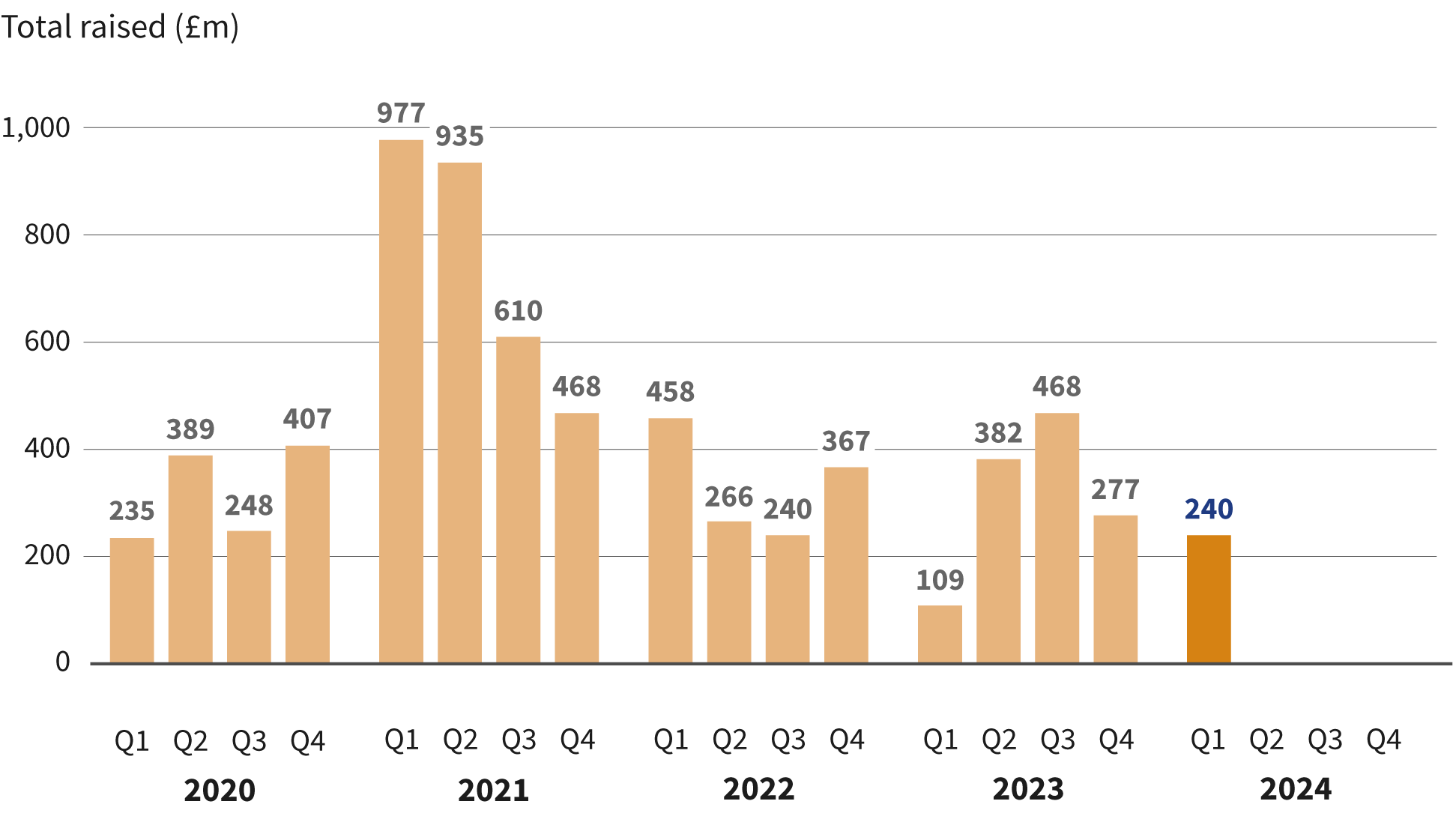
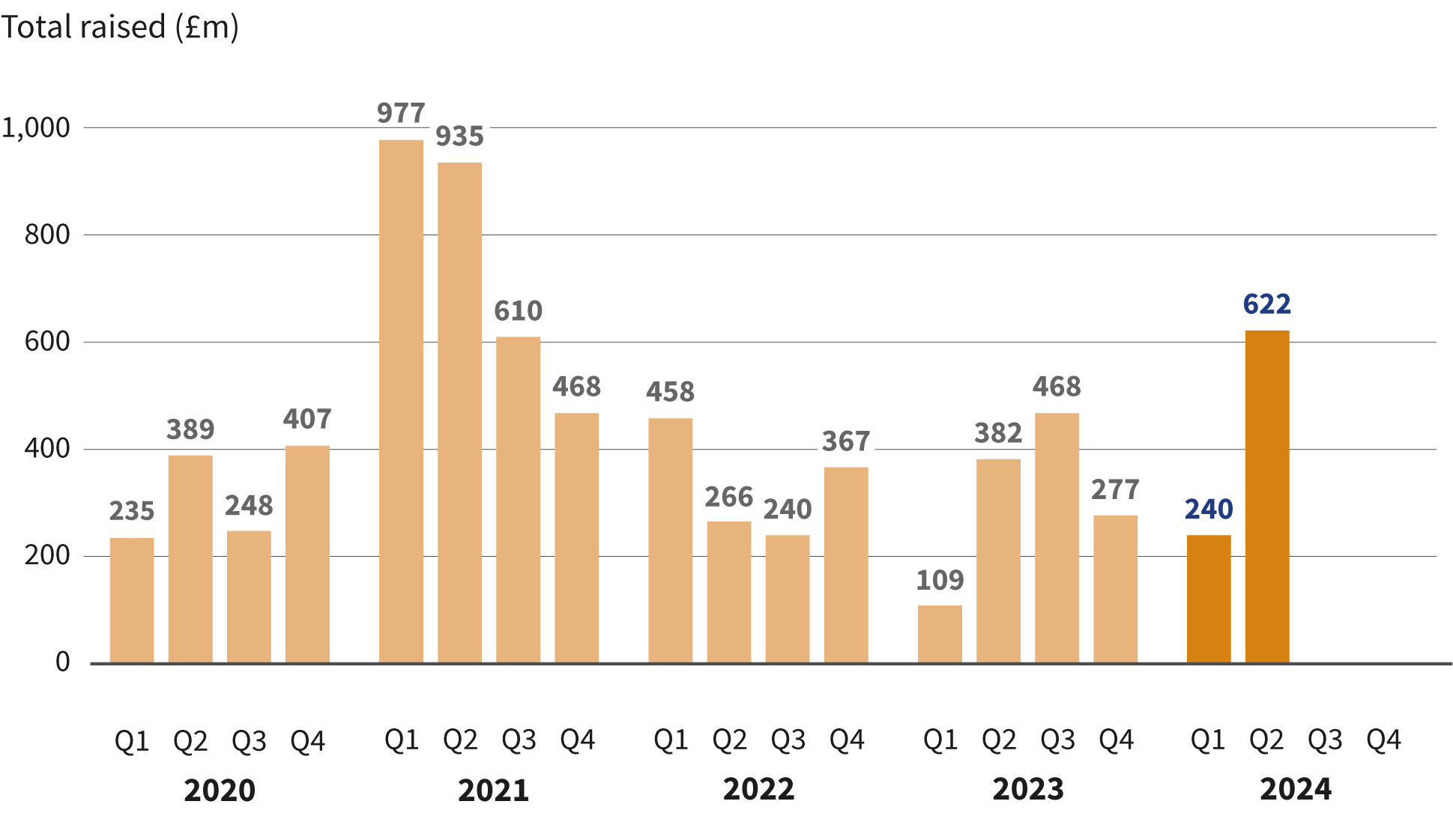
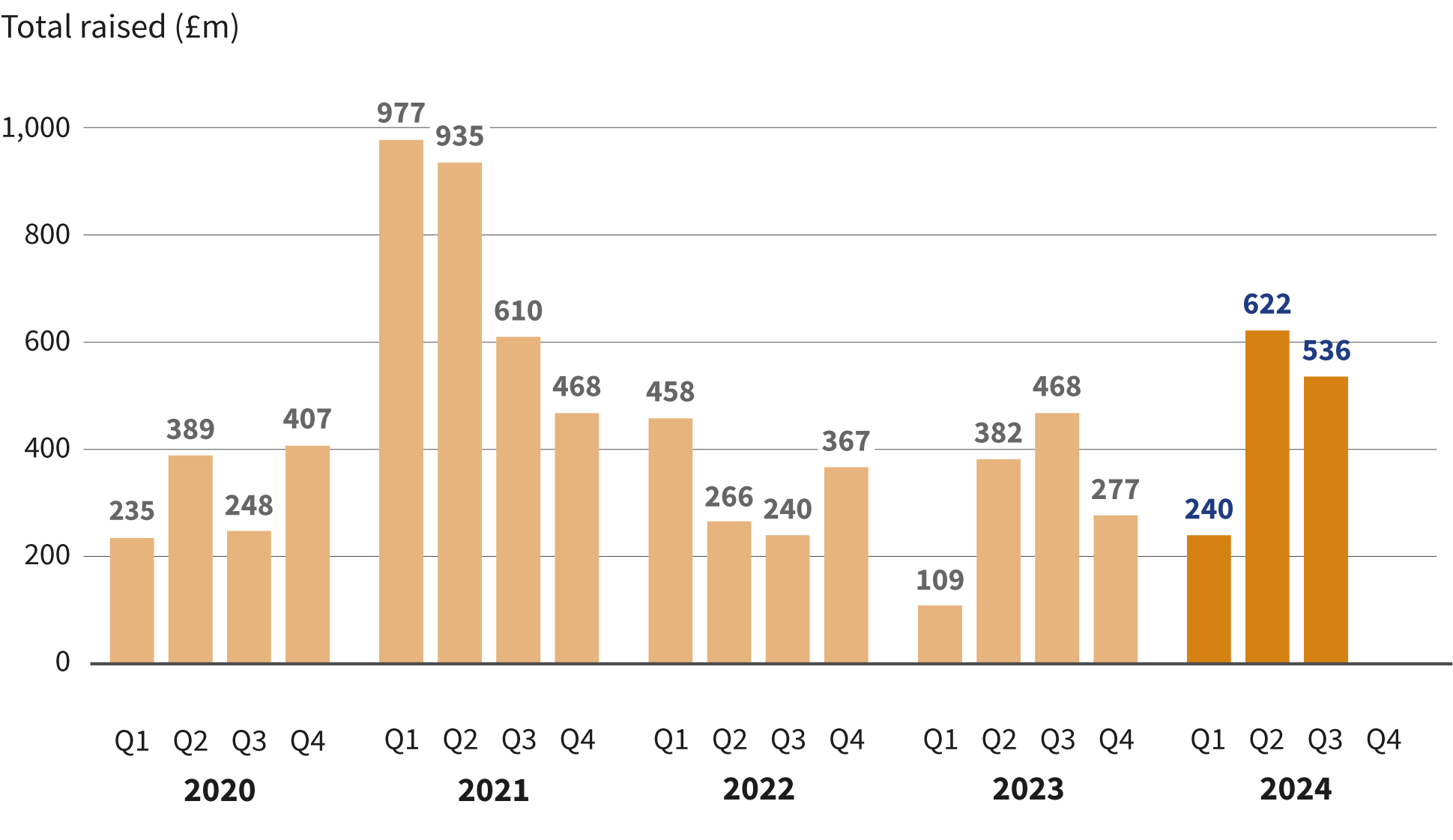
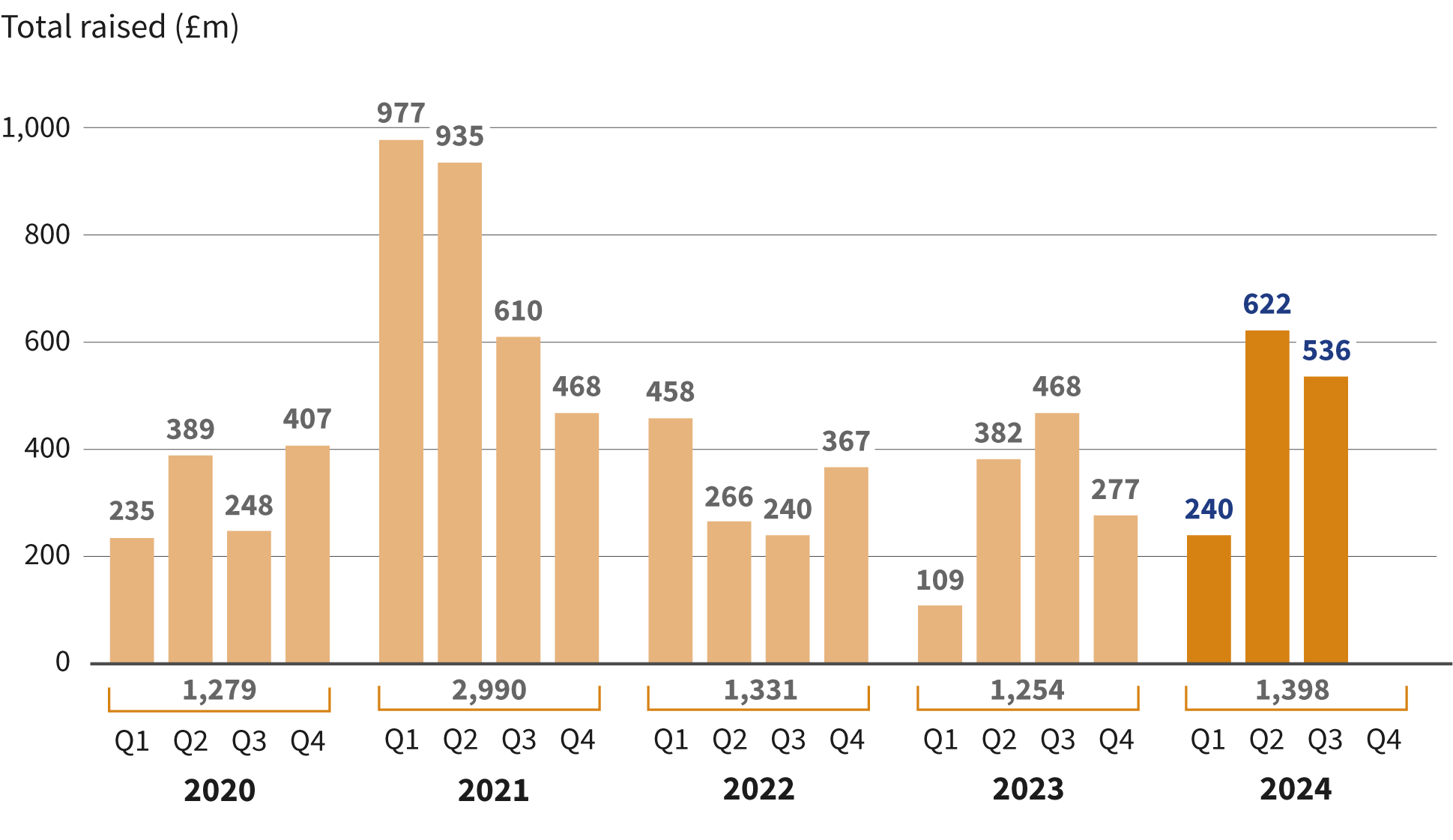
UK biotech companies raised £536 million in venture capital funding in Q3 2024, a 13.8% decline from the previous quarter but a higher than average total when compared to quarters in recent years.
Despite the decrease in investment, the number of deals remained the same at 18, as in the previous quarter, indicating sustained investor interest. This also represented a 10.3% increase from the same period last year.
Total venture capital raised by quarter, for the past five years
UK biotech venture capital deals by amount raised and deal count
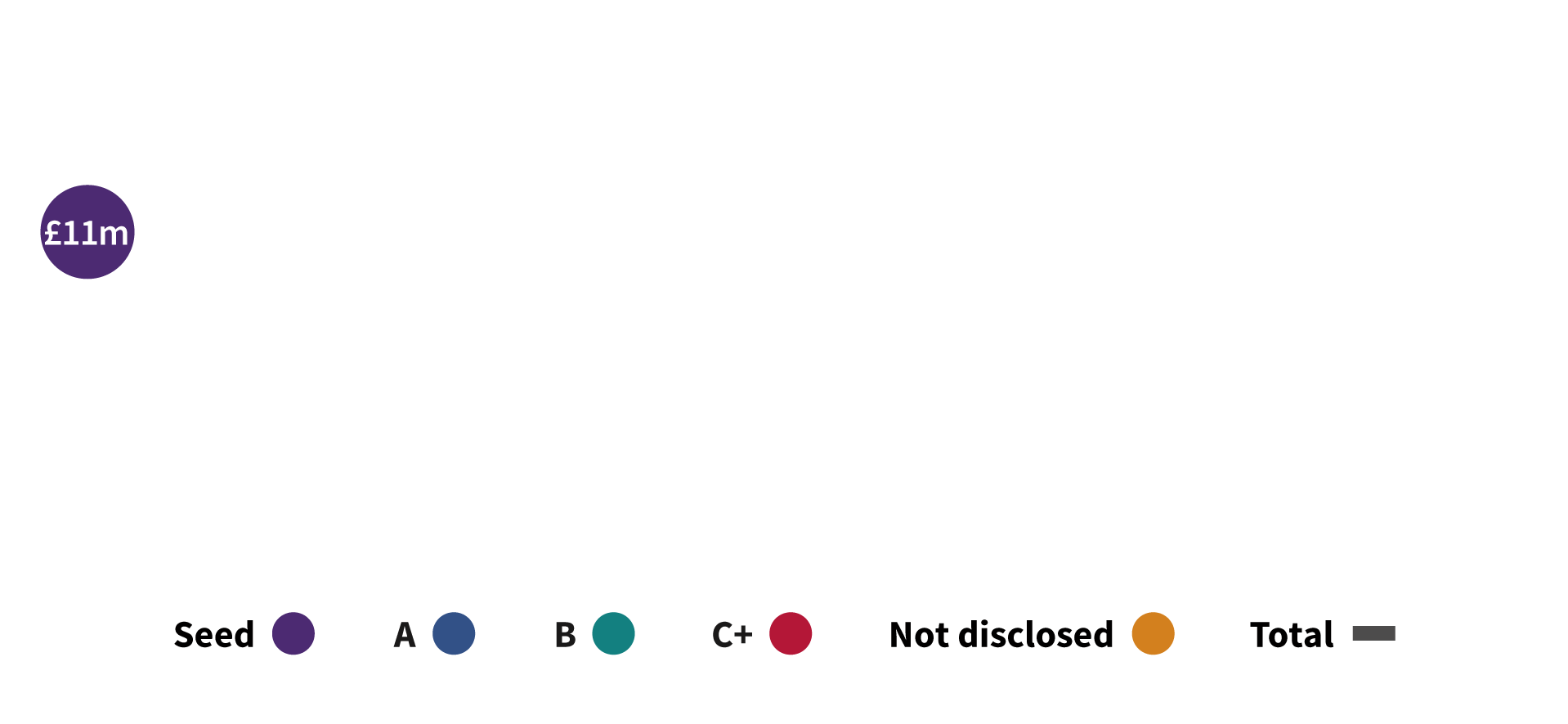
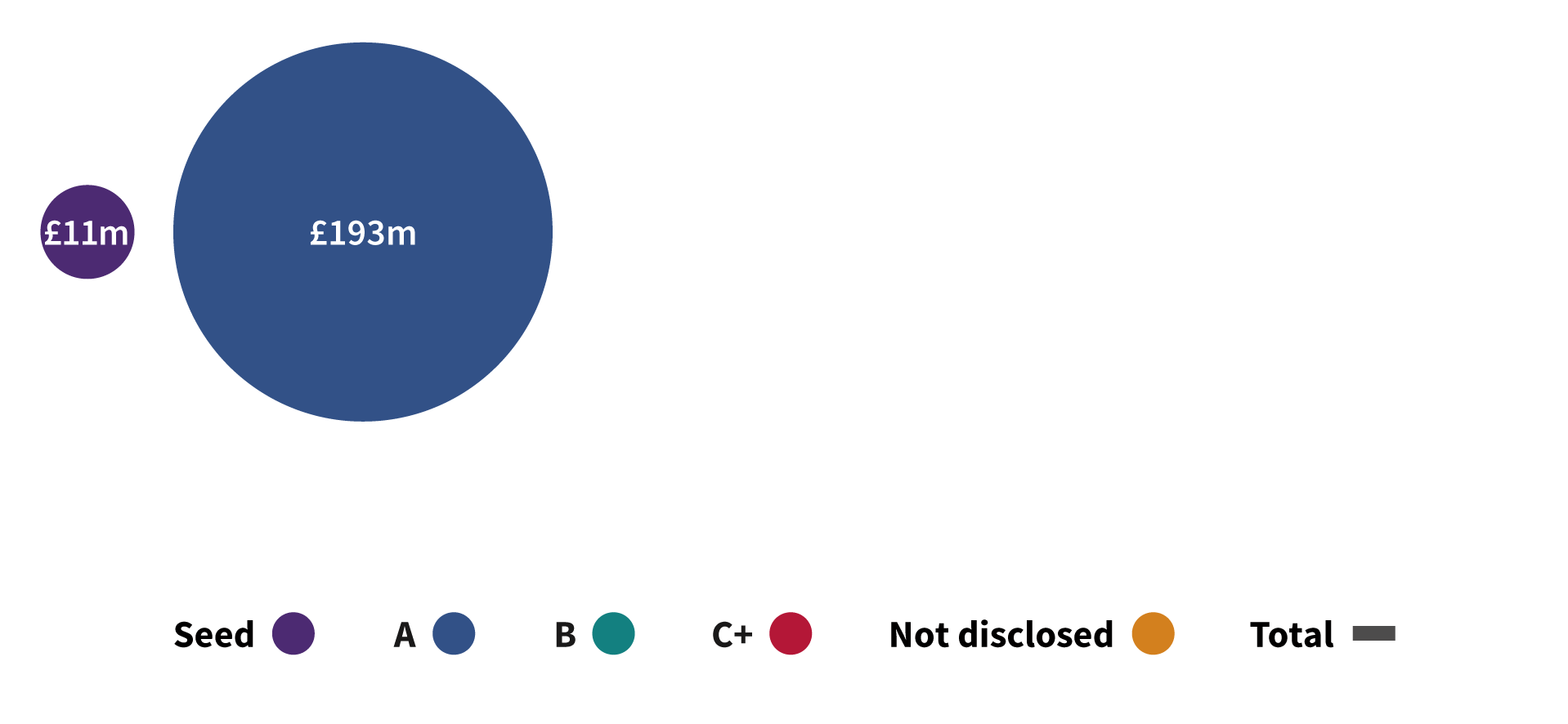
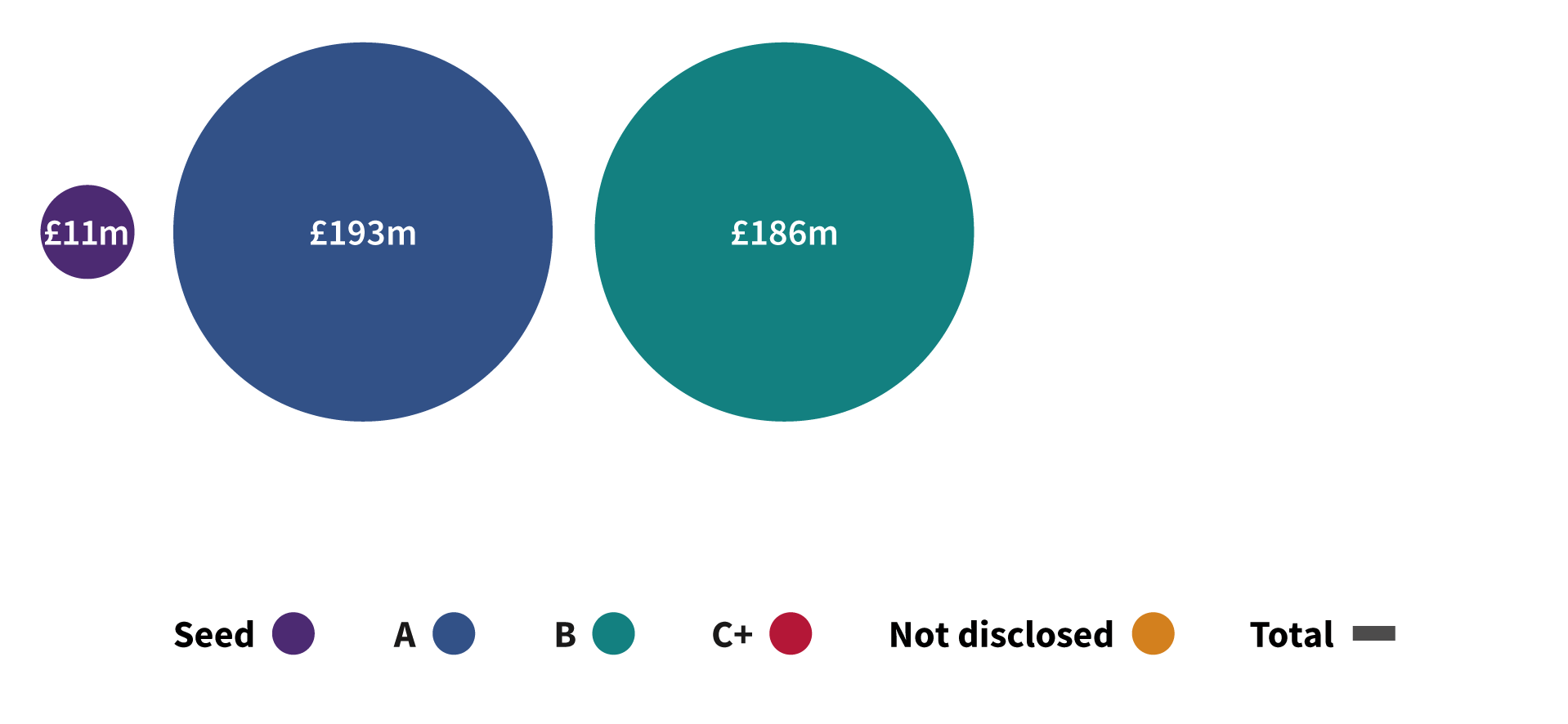
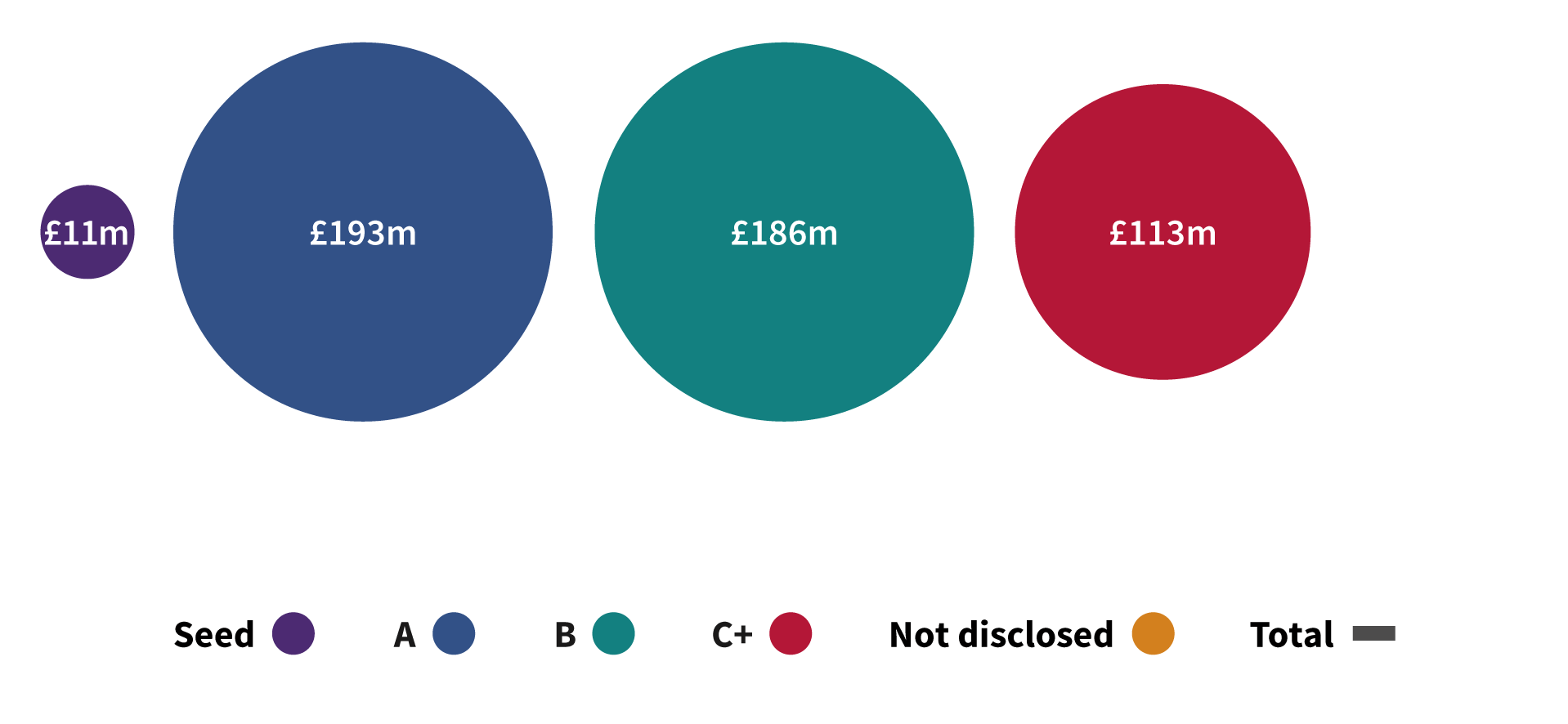
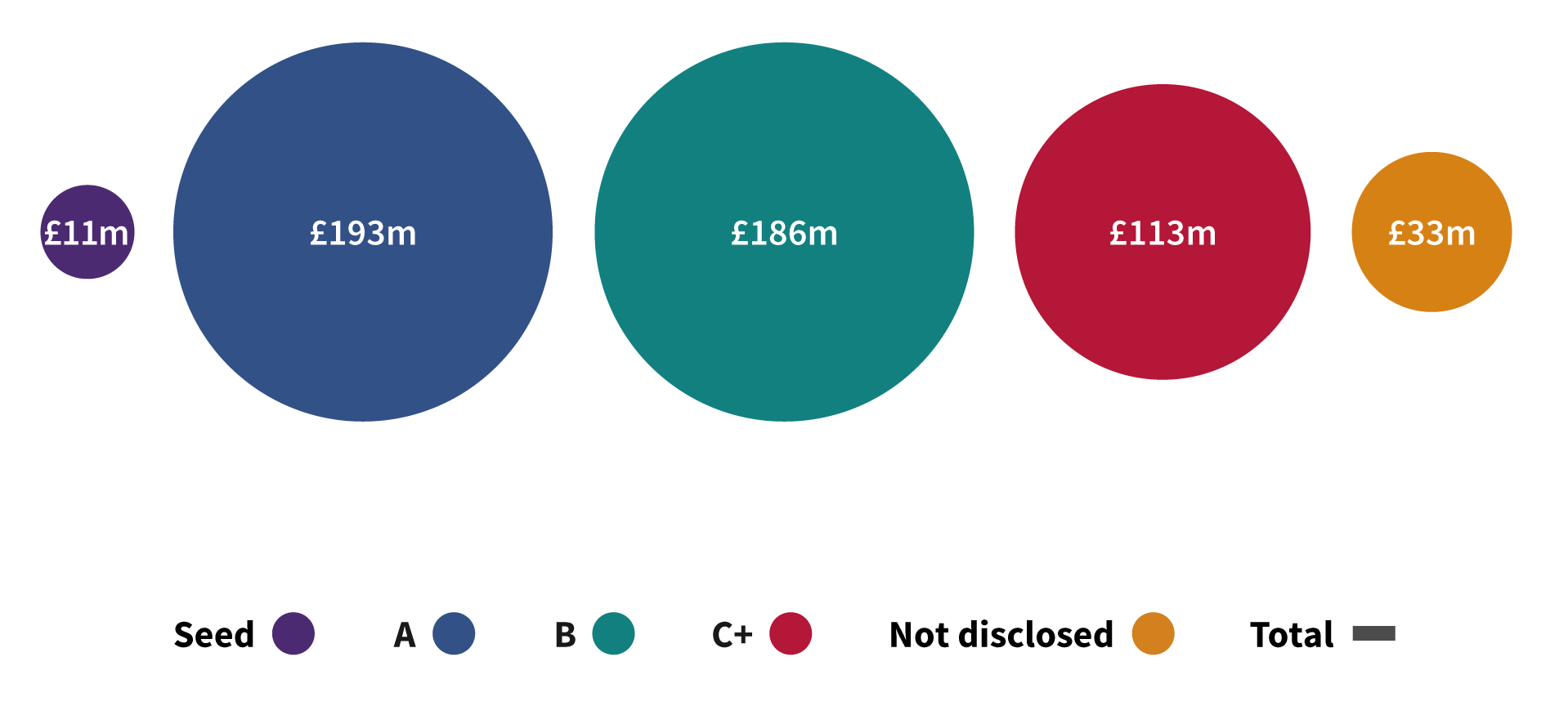
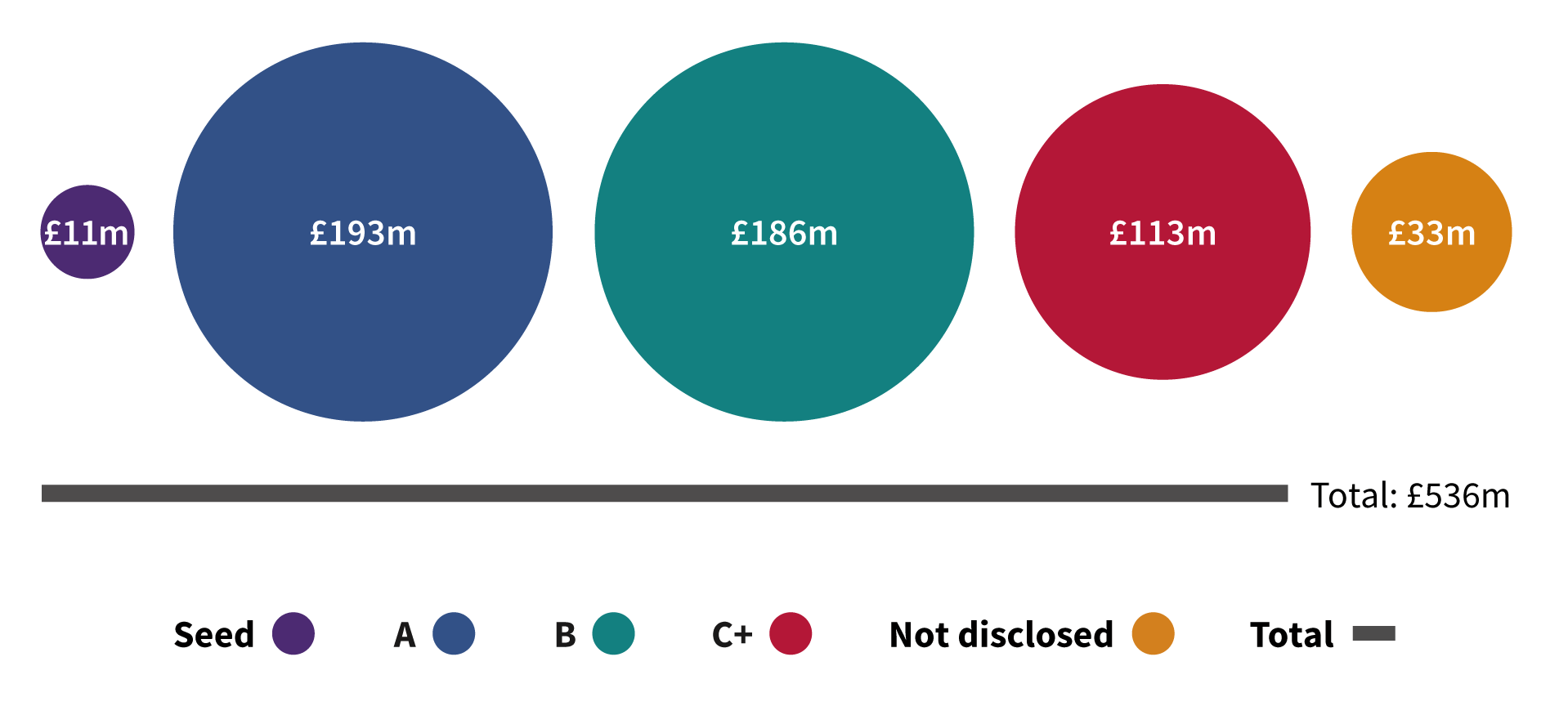
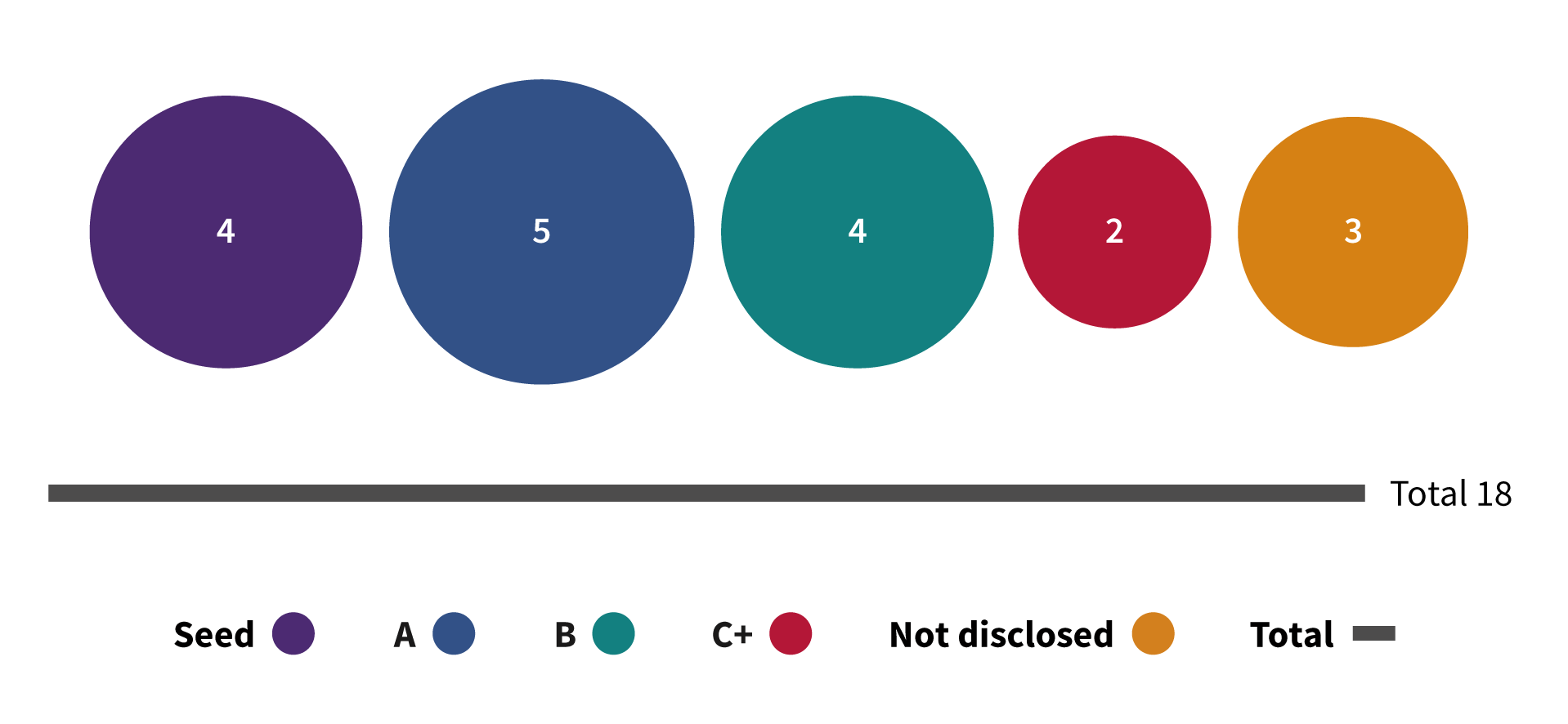
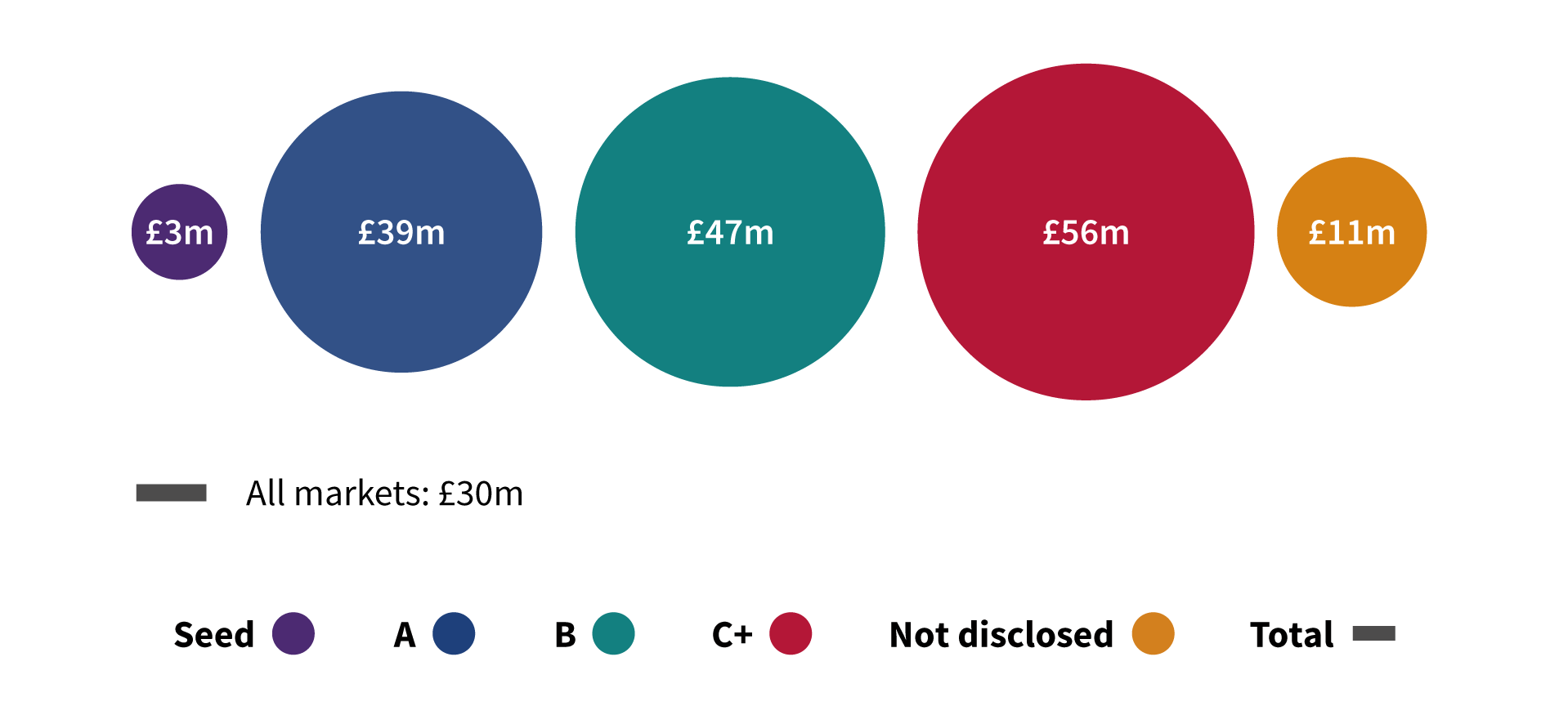
There was a healthy spread of investments at all stages, with A and Series B deals receiving the greatest funding. Series A financing led the way, raising £193 million across five deals at an average of £39 million per deal. Series B followed closely with £186 million over four deals, with a higher average deal value of £47 million.
While later-stage deals (Series C and beyond) accounted for £113 million in two deals, with an average deal size of £56 million, early-stage investments were also supported. Seed financing totalled £11 million from four deals averaging £3 million each, demonstrating a commitment to supporting the development of new biotech innovations. Deals without a disclosed series provided an additional £33 million from three deals.
Top five UK biotech venture capital deals
| Company | Date | Round | Amount (£m) |
|---|---|---|---|
| Myricx Bio | 07/07/2024 | Series A | 90 |
| F2G | 12/09/2024 | Series H | 76 |
| ViceBio | 23/09/2024 | Series B | 76 |
| PhoreMost | 10/09/2024 | Series B | 45 |
| Constructive Bio | 24/09/2024 | Series A | 44 |
Continuing a trend seen in Q2, UK biotechs were able to secure large deals to support their R&D programmes. Myricx Bio led the quarter by securing £90 million in a Series A round marking the largest early-stage VC deal of the quarter.The funds will be used “to expand their patented N-Myristoyltransferase inhibitor (NMTi) ADC payload platform and push its pipeline of NMTi-ADCs through clinical proof of concept trials targeting clinically validated tumour-associated antigens”.
Later-stage funding was also well-represented, with F2G and Vicebio each raising £76 million in their respective Series H and Series B rounds in September 2024. These substantial investments reflect a focus on scaling up more mature biotech companies, further supporting the sector’s growth trajectory. These significant investments in both early and later-stage companies provide growing confidence that the UK biotech sector is accelerating out of the difficult funding period we have seen since 2022.
International VC financing
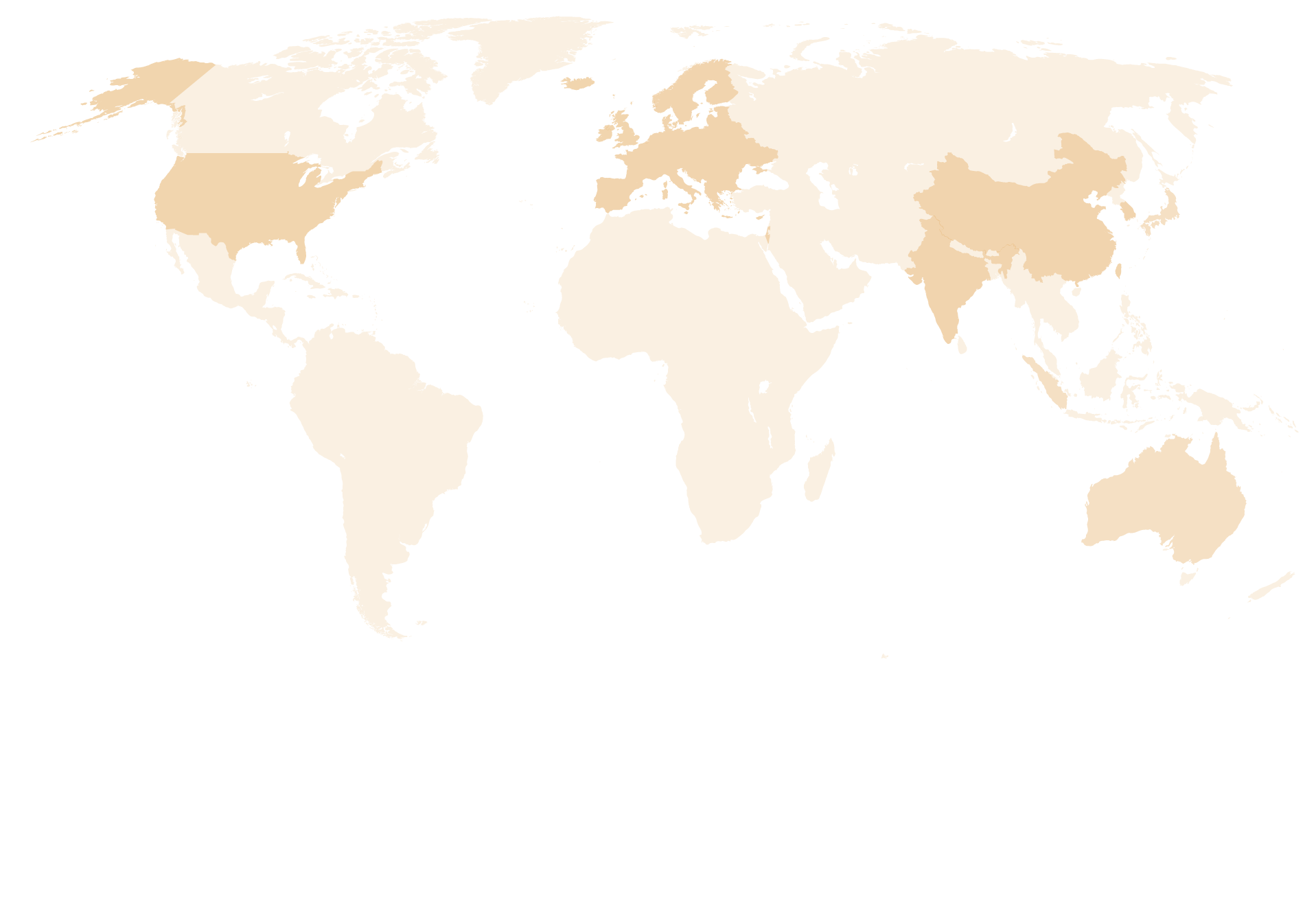
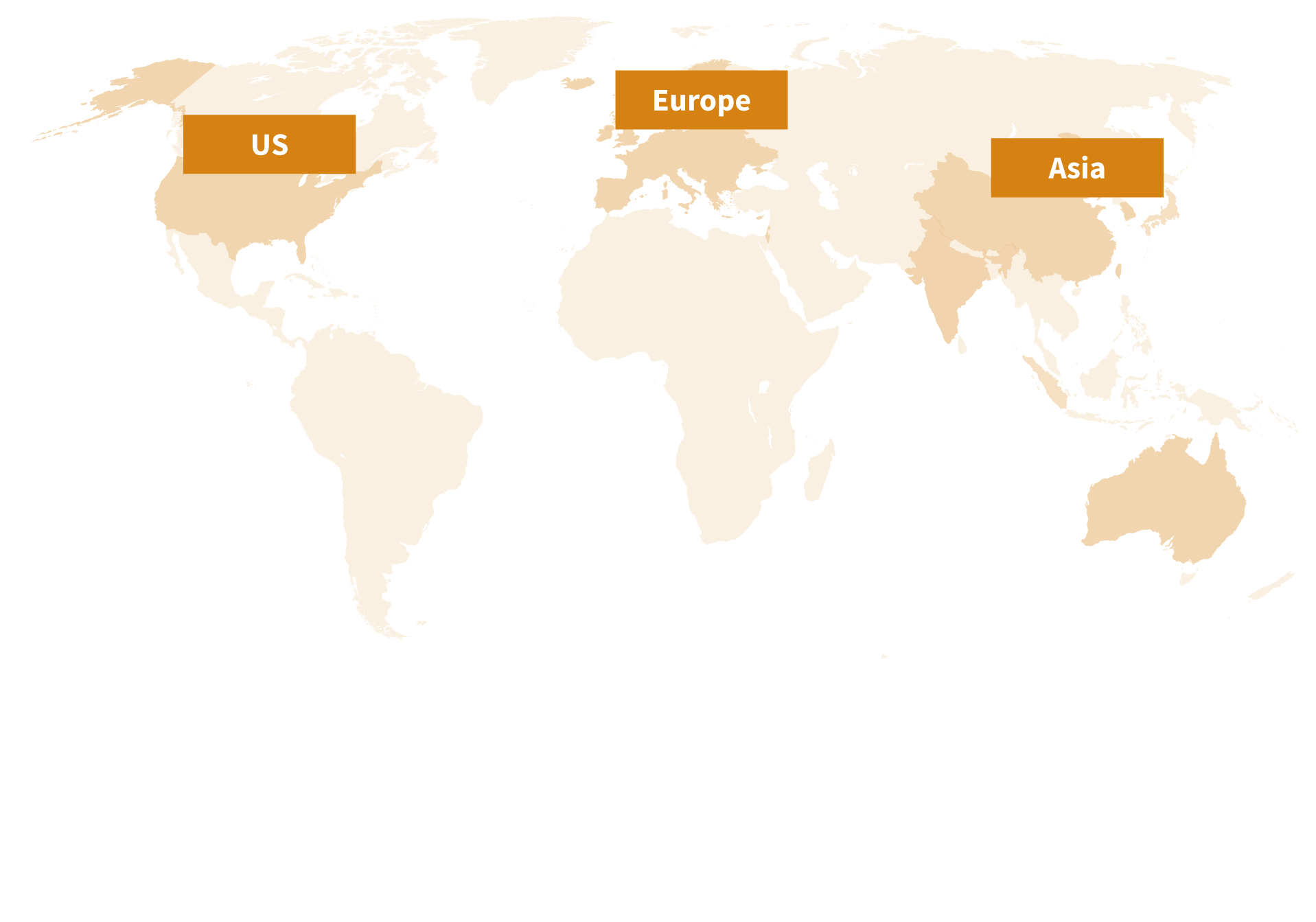
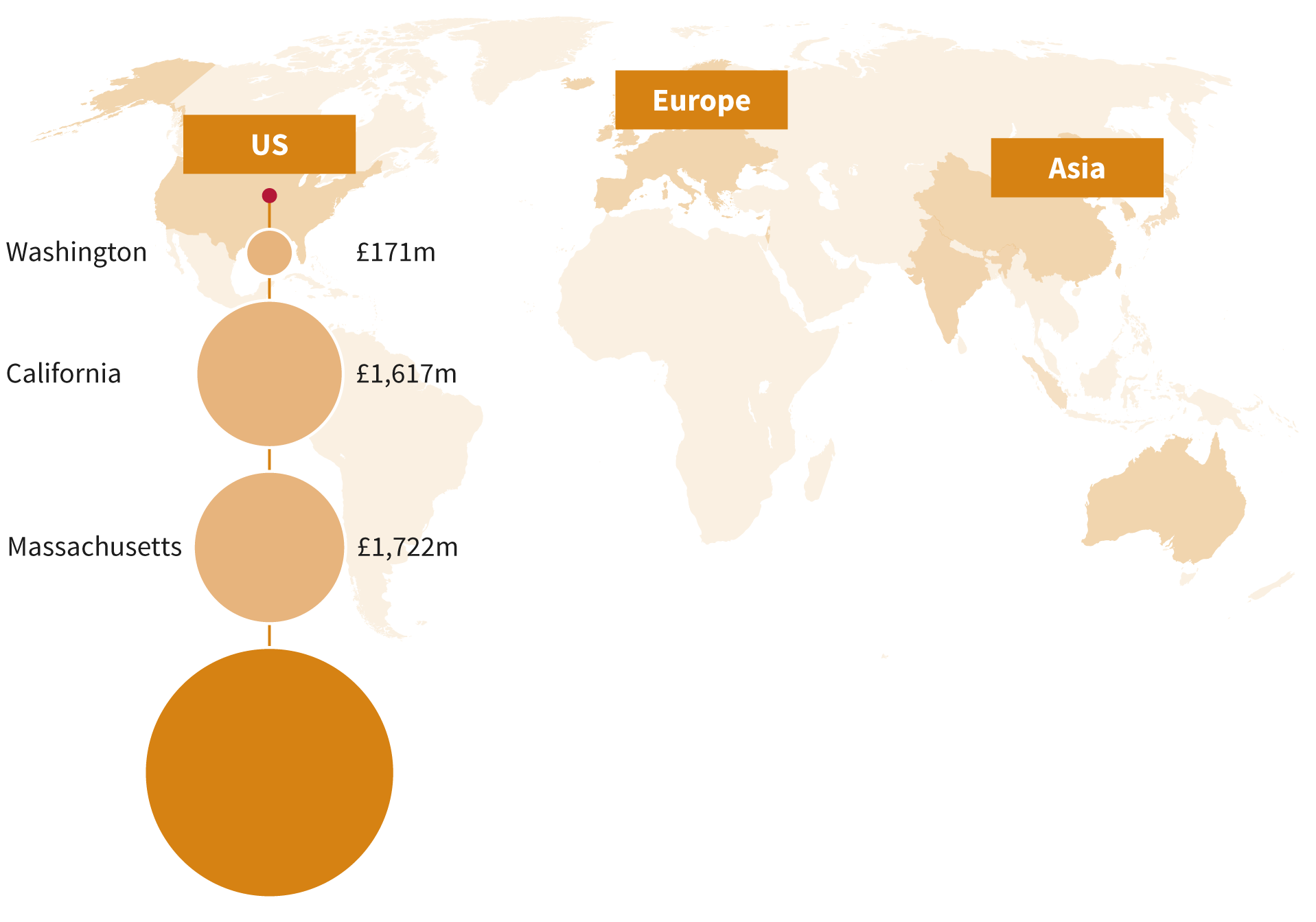
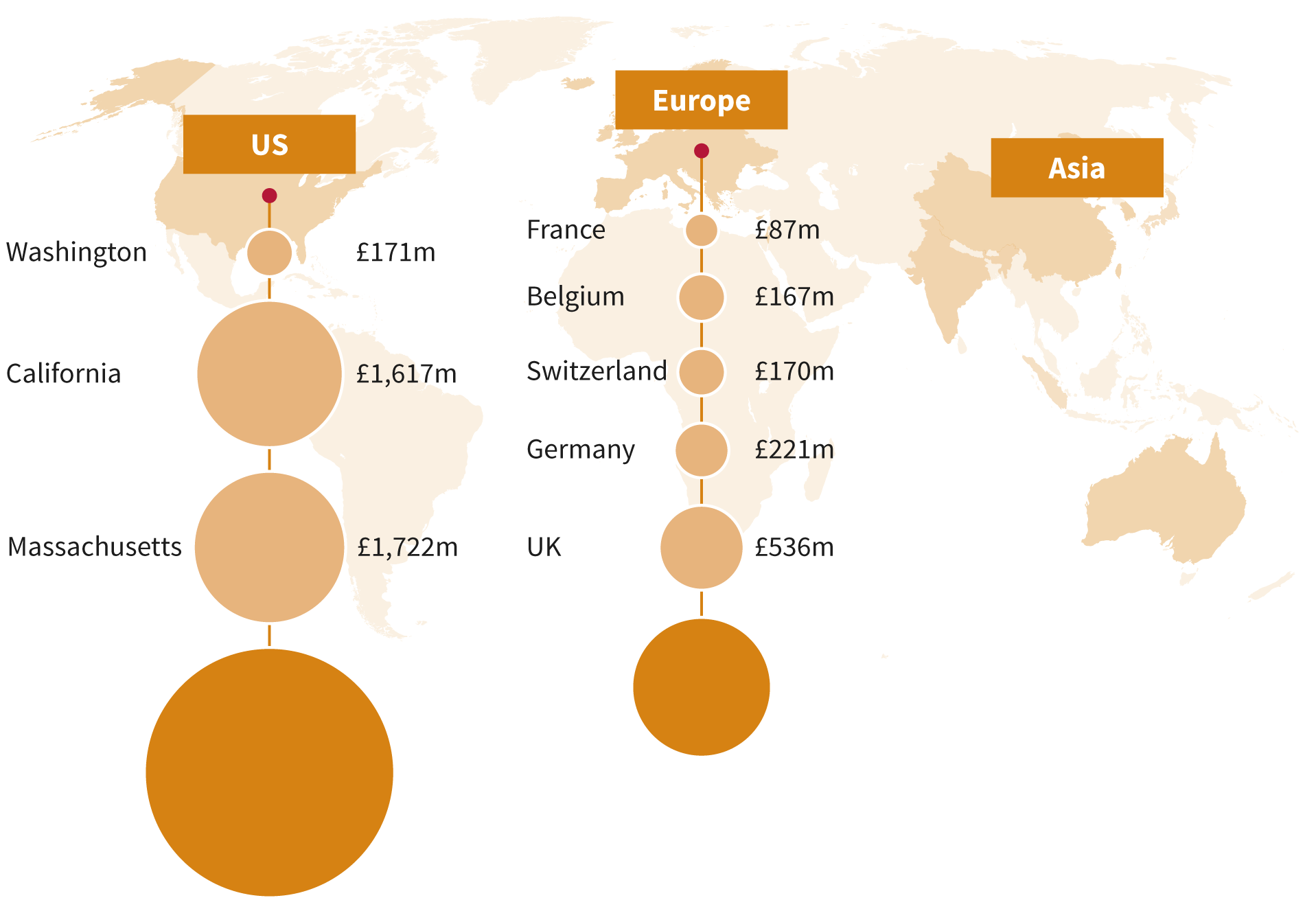
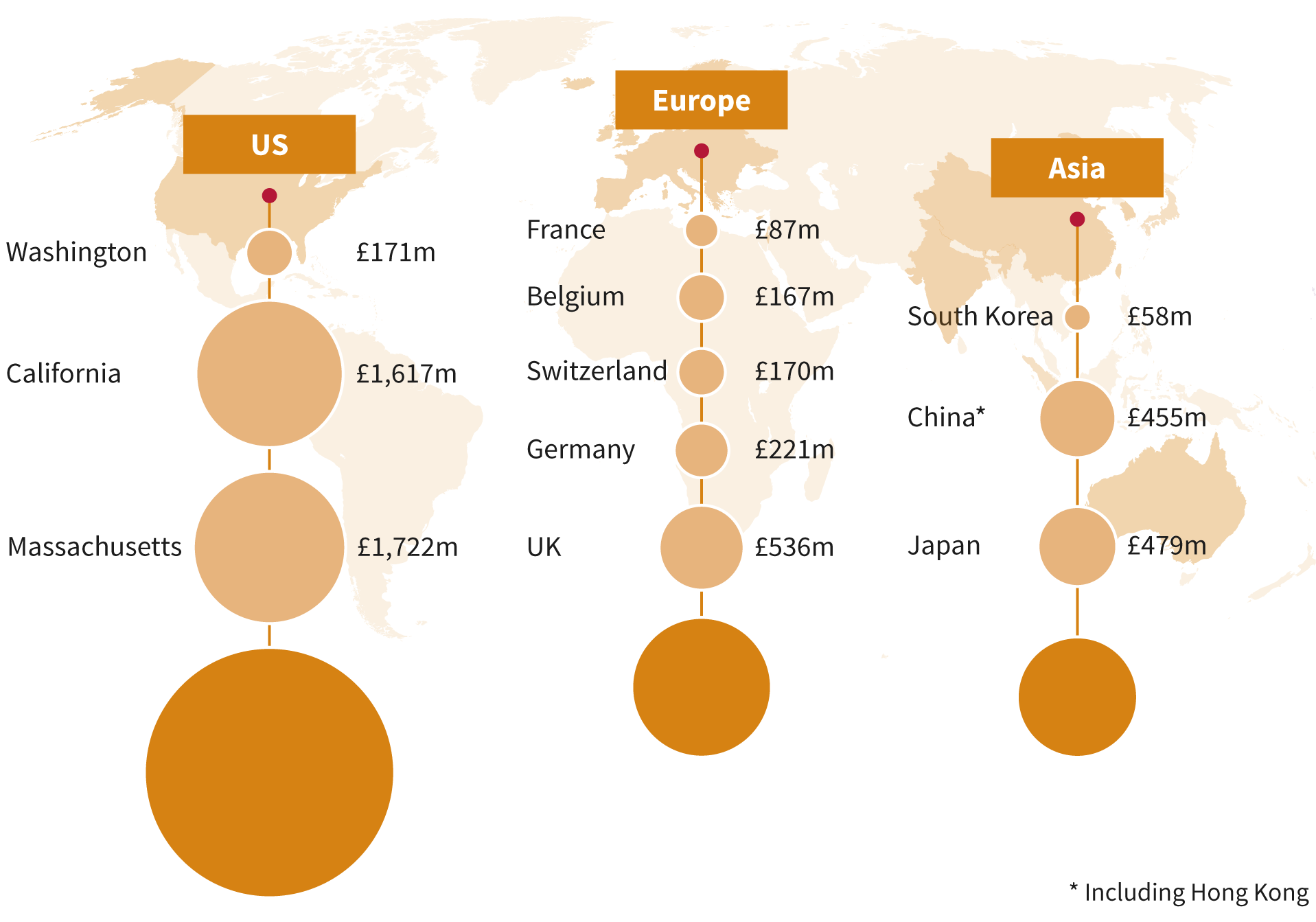
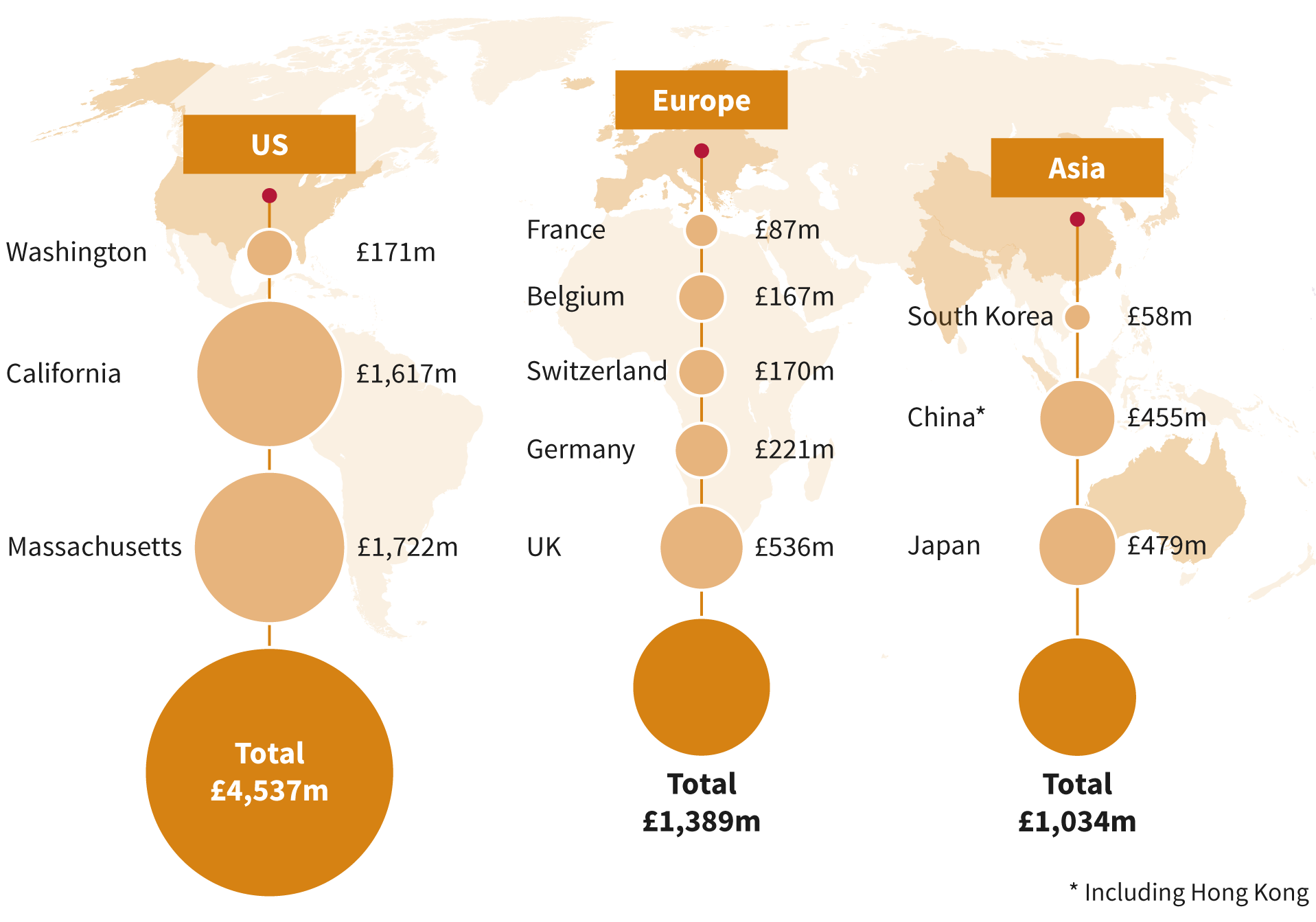
International venture capital investment in biotech rose to an incredible £6.96 billion in Q3 2024, a 90.2% rise over the same period last year, demonstrating a continued global interest in this sector. The US continued to lead the charge, raising a total of £4.54 billion, with Massachusetts receiving the most at £1.72 billion, closely followed by California at £1.62 billion.
Europe also witnessed strong venture capital activity, collectively raising £1.39 billion. The UK topped the list with £536 million, Germany came in second with £221 million, followed by Switzerland (£170 million) underscoring Europe’s growing appeal to investors seeking innovative biotech opportunities.
Asia saw a total of £1.03 billion in VC funding, led by Japan at £479 million and China at £455 million, highlighting these countries’ strategic importance in the global biotech industry.
This surge in global biotech investment reflects easing concerns about recessions around the world and loosening monetary policy in the US and Europe.
 Public markets
IPOs
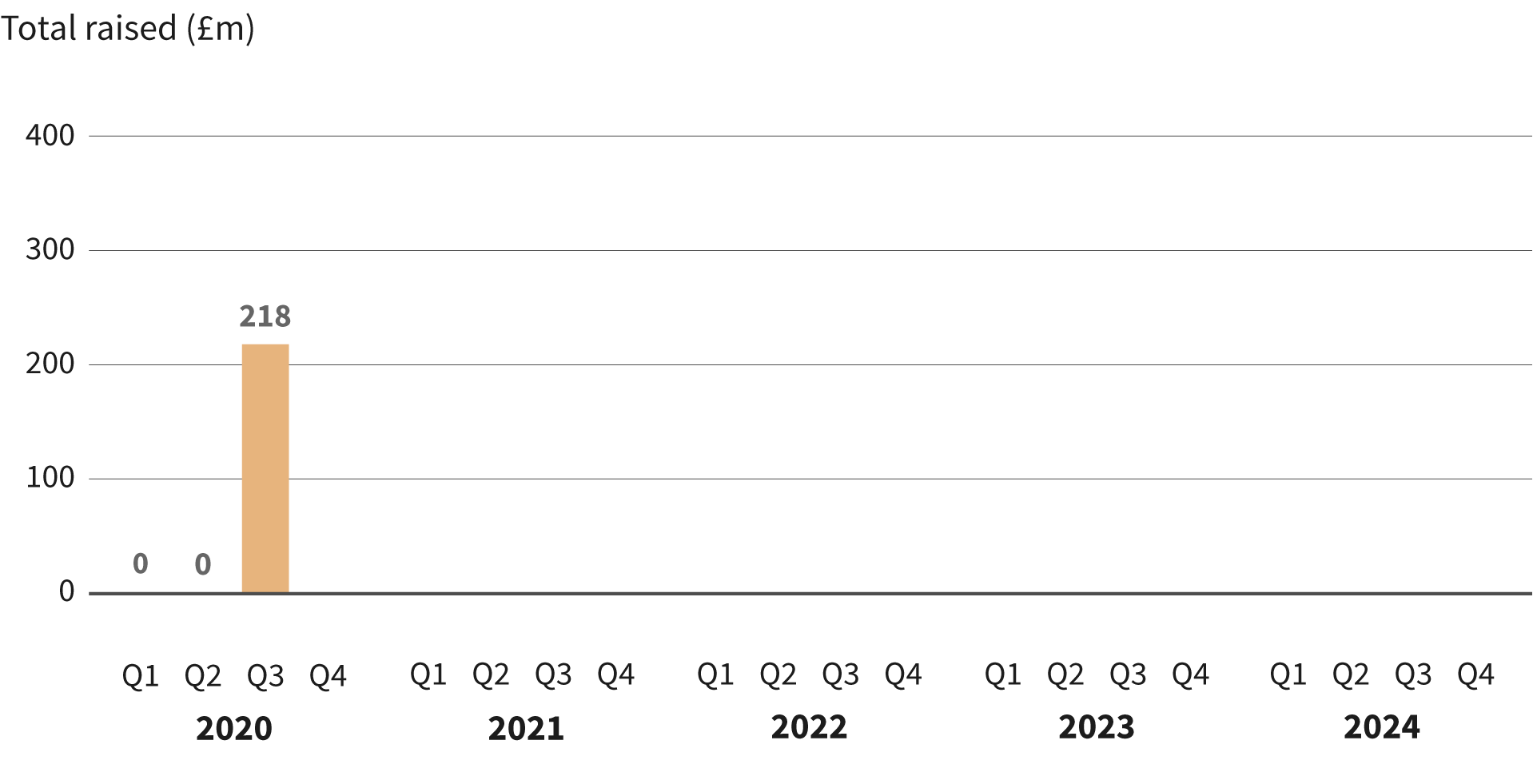
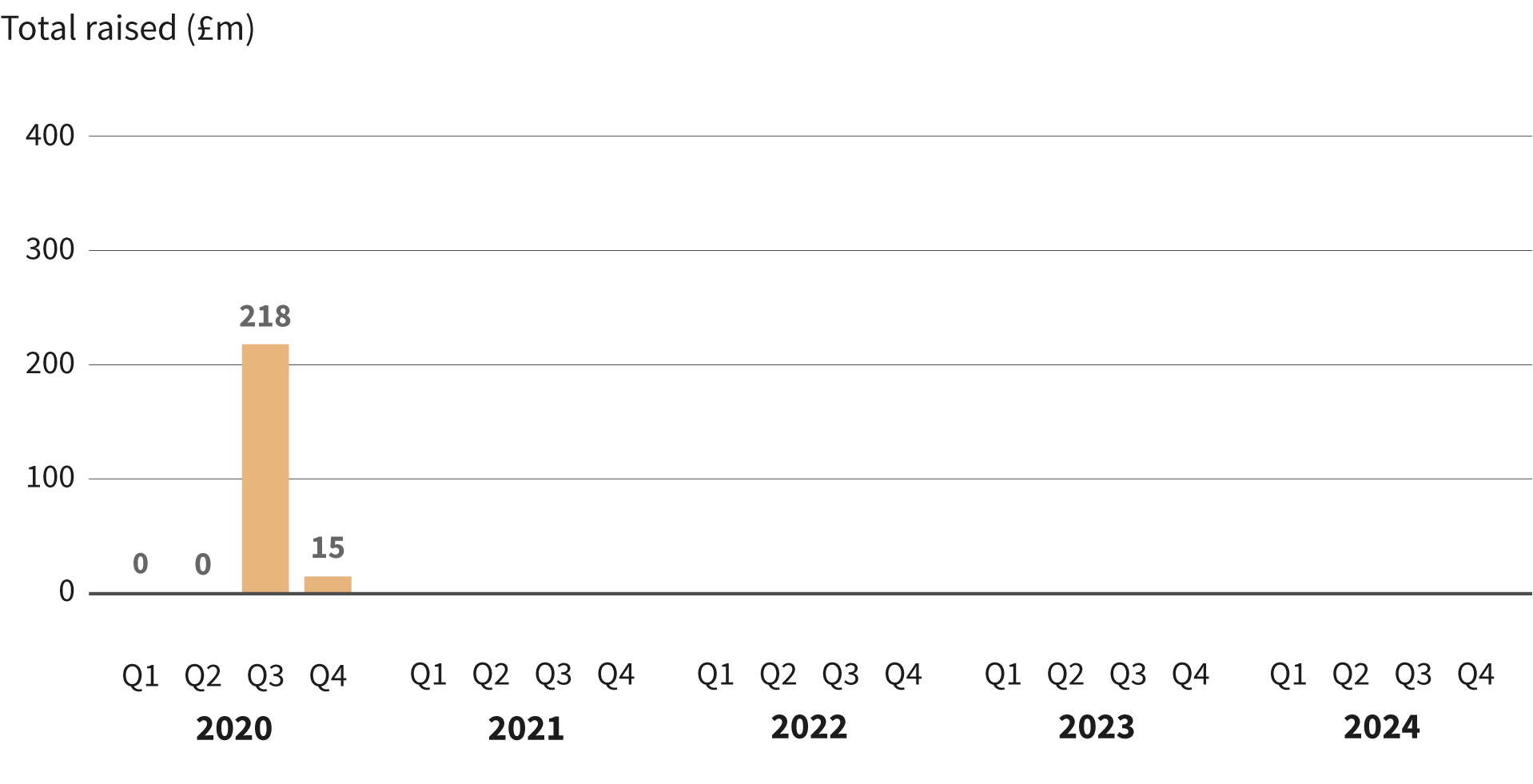
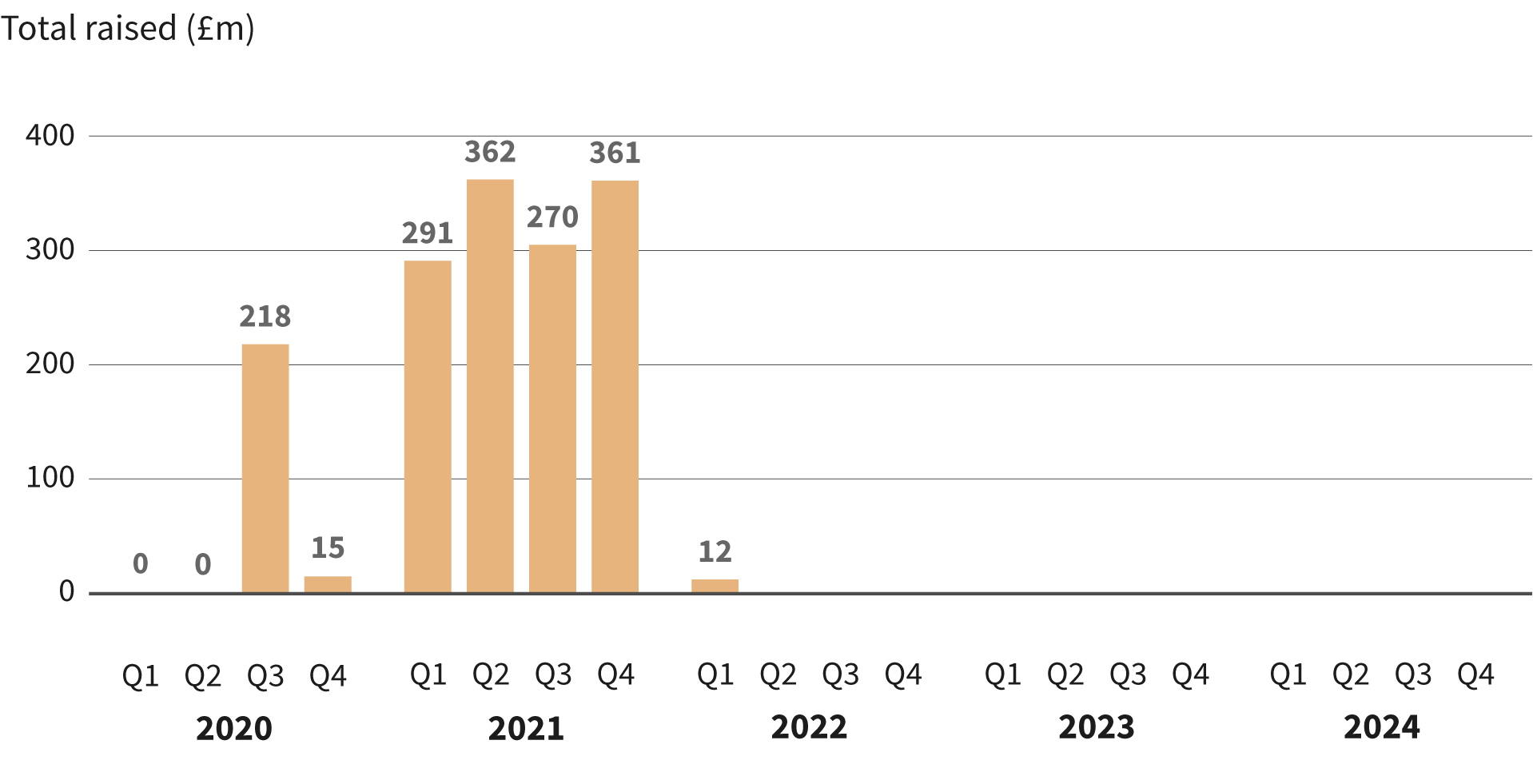
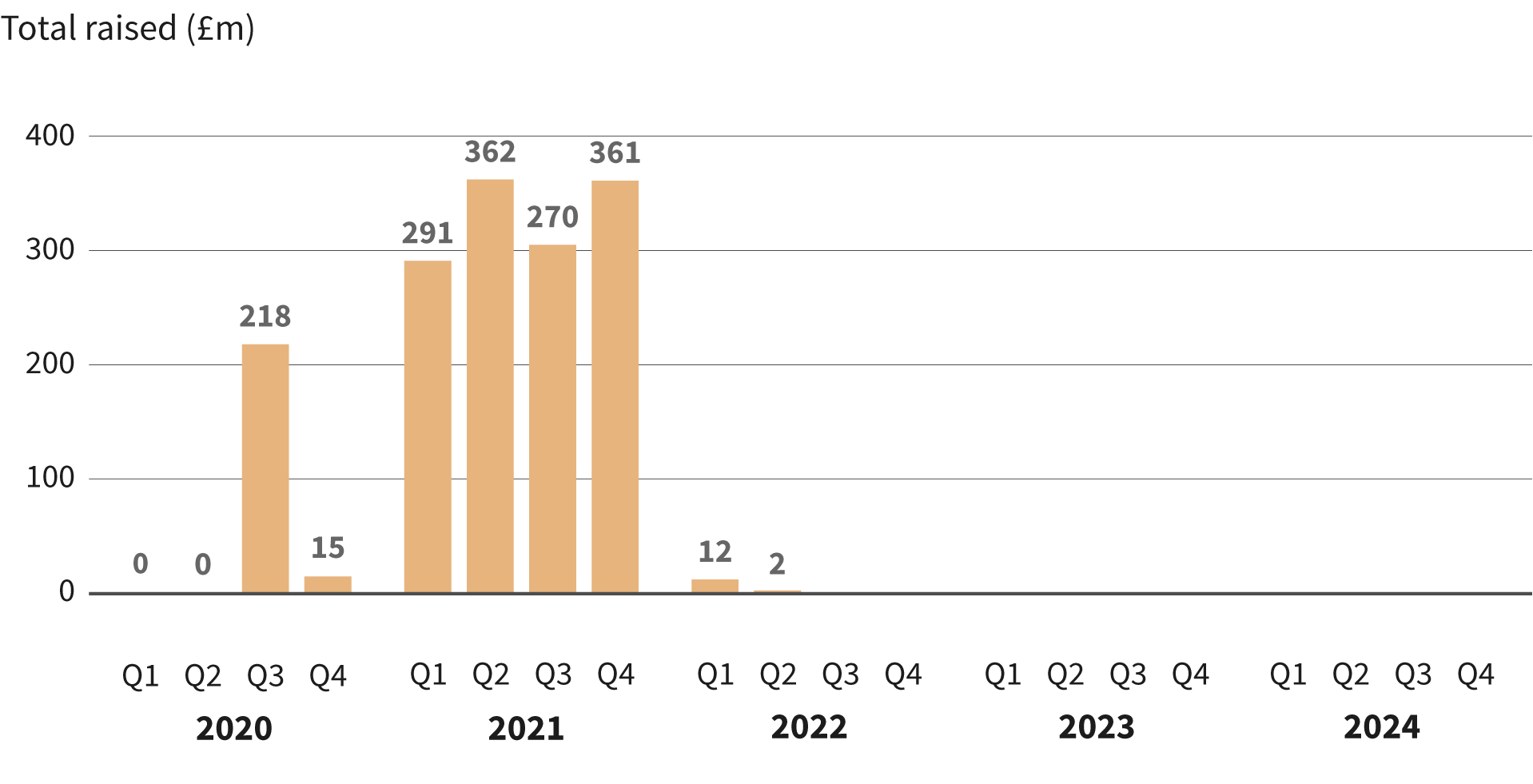
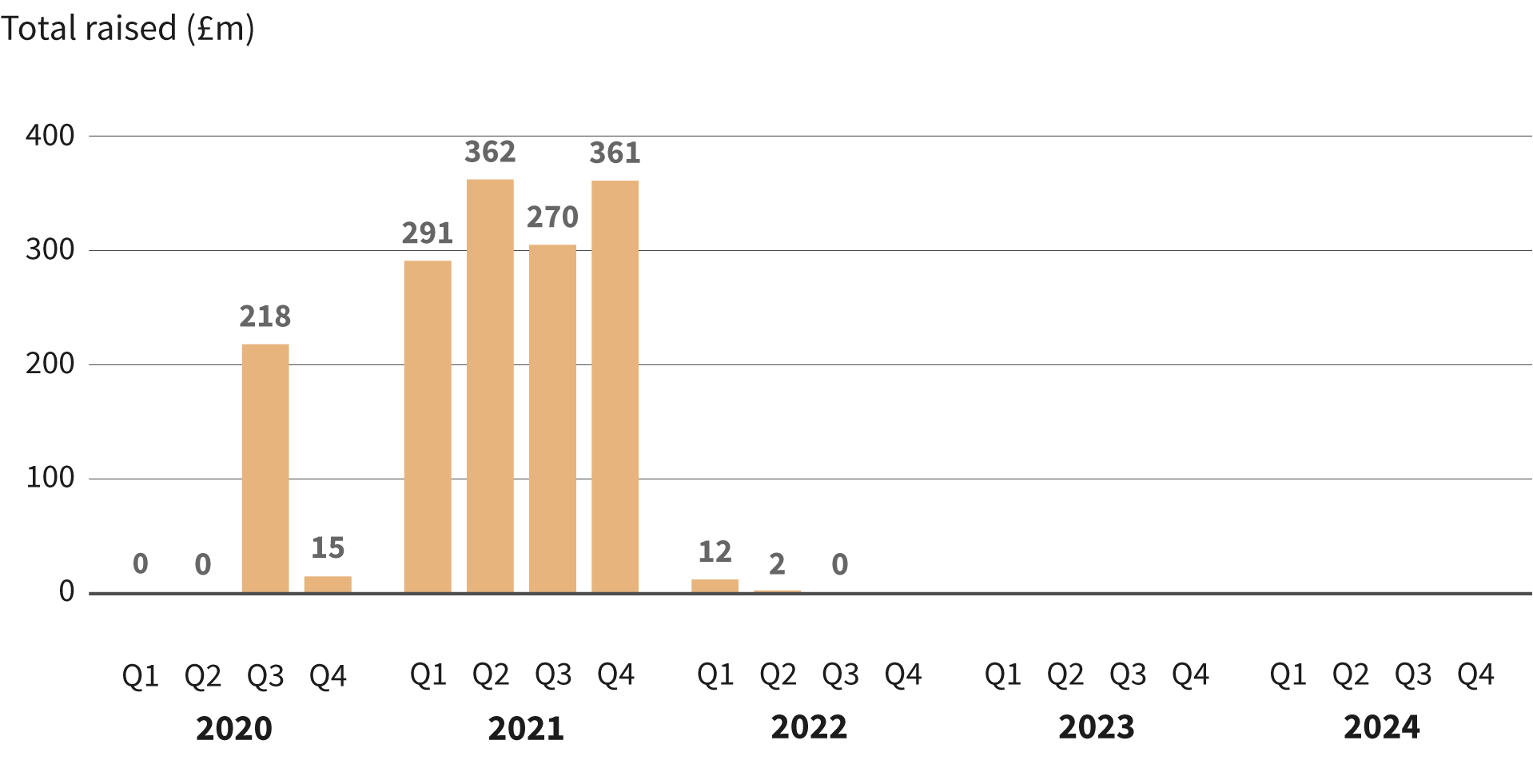
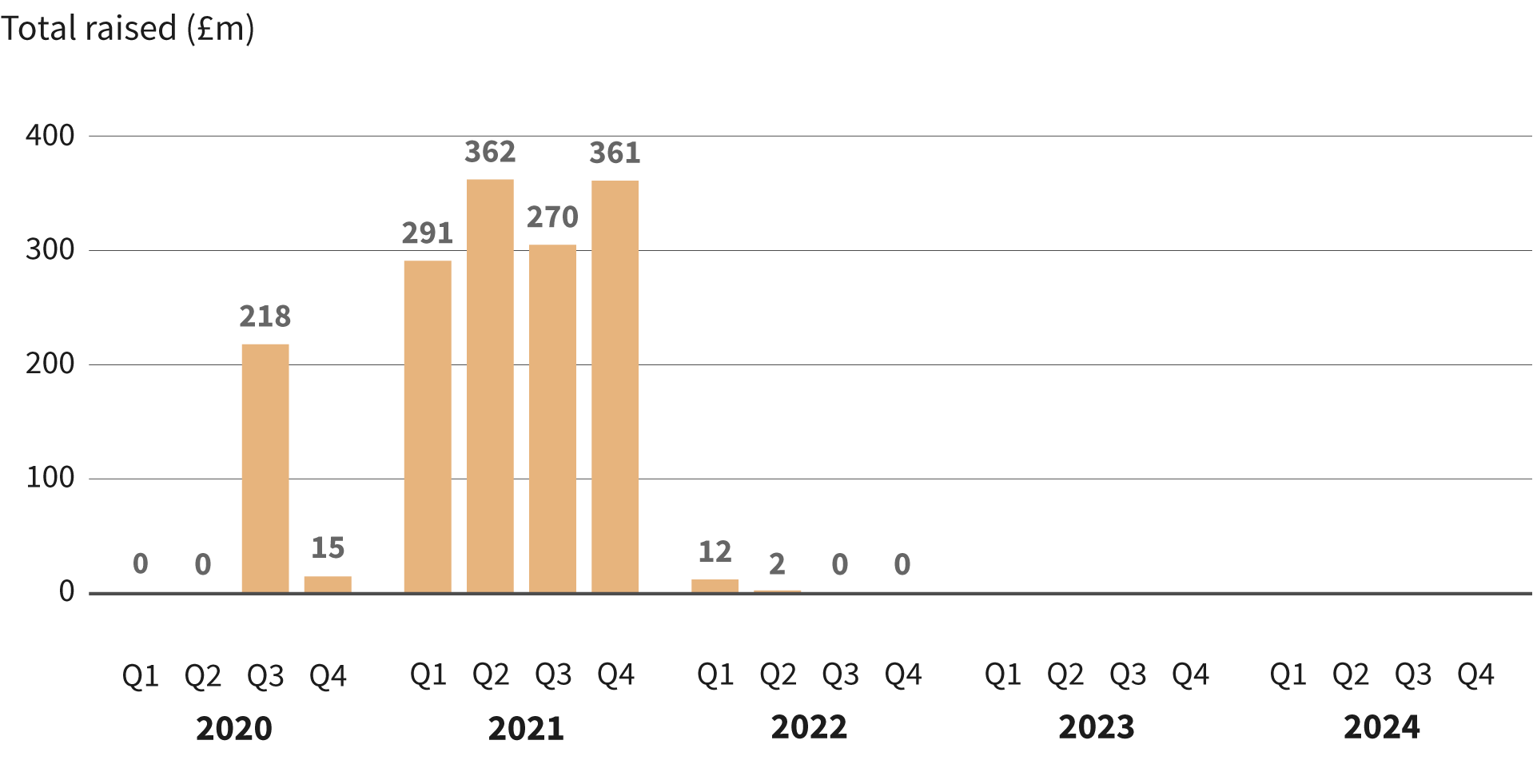
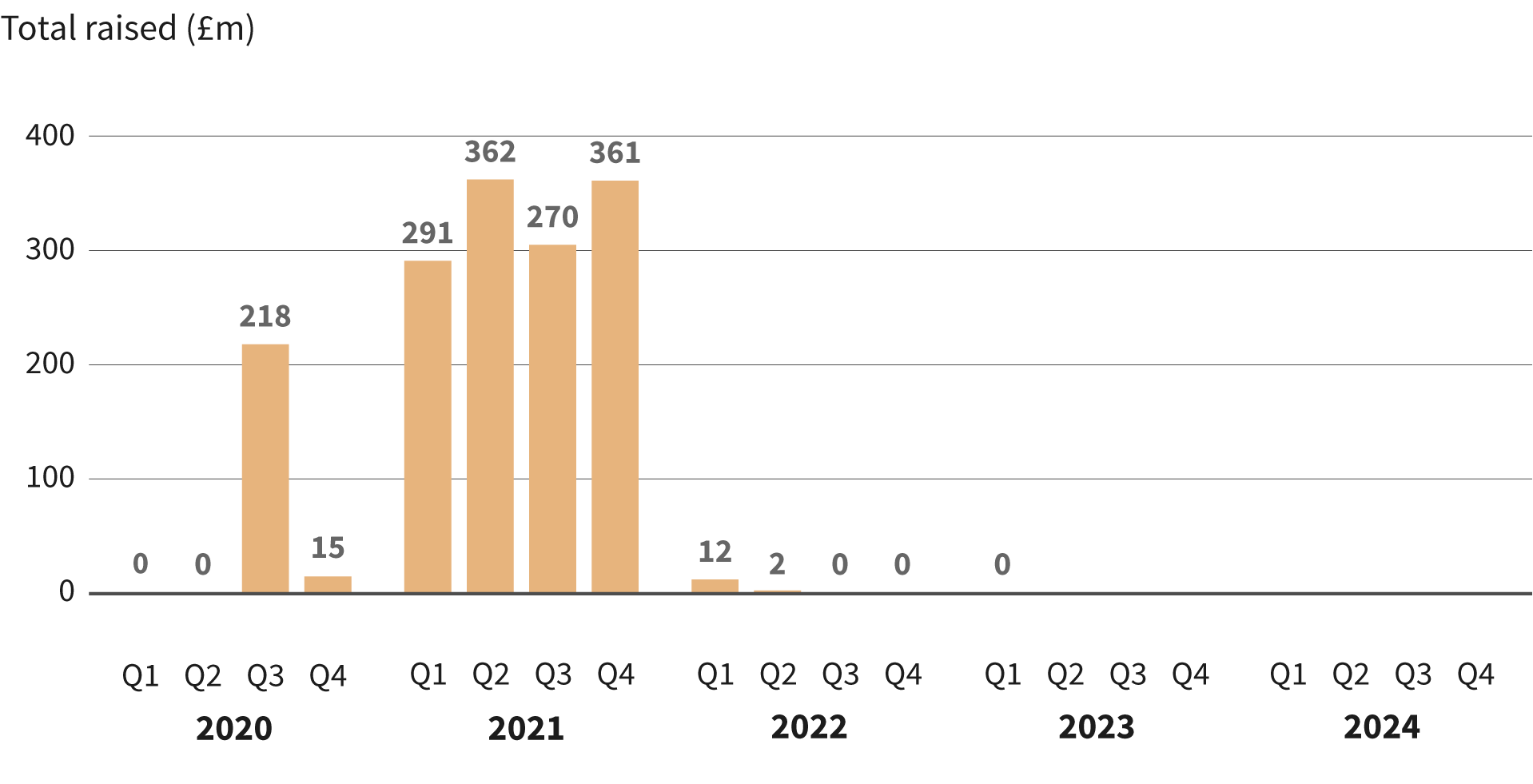
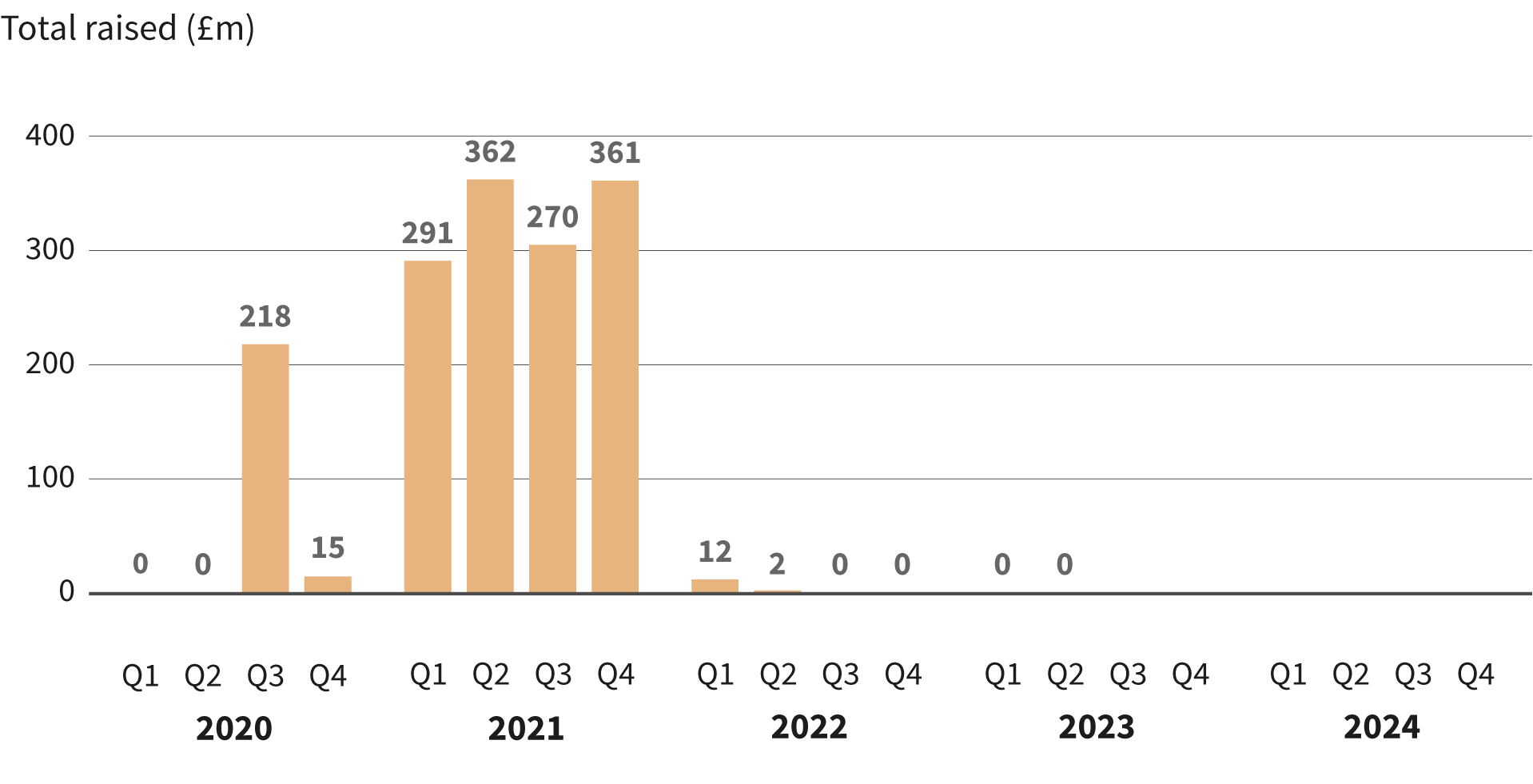
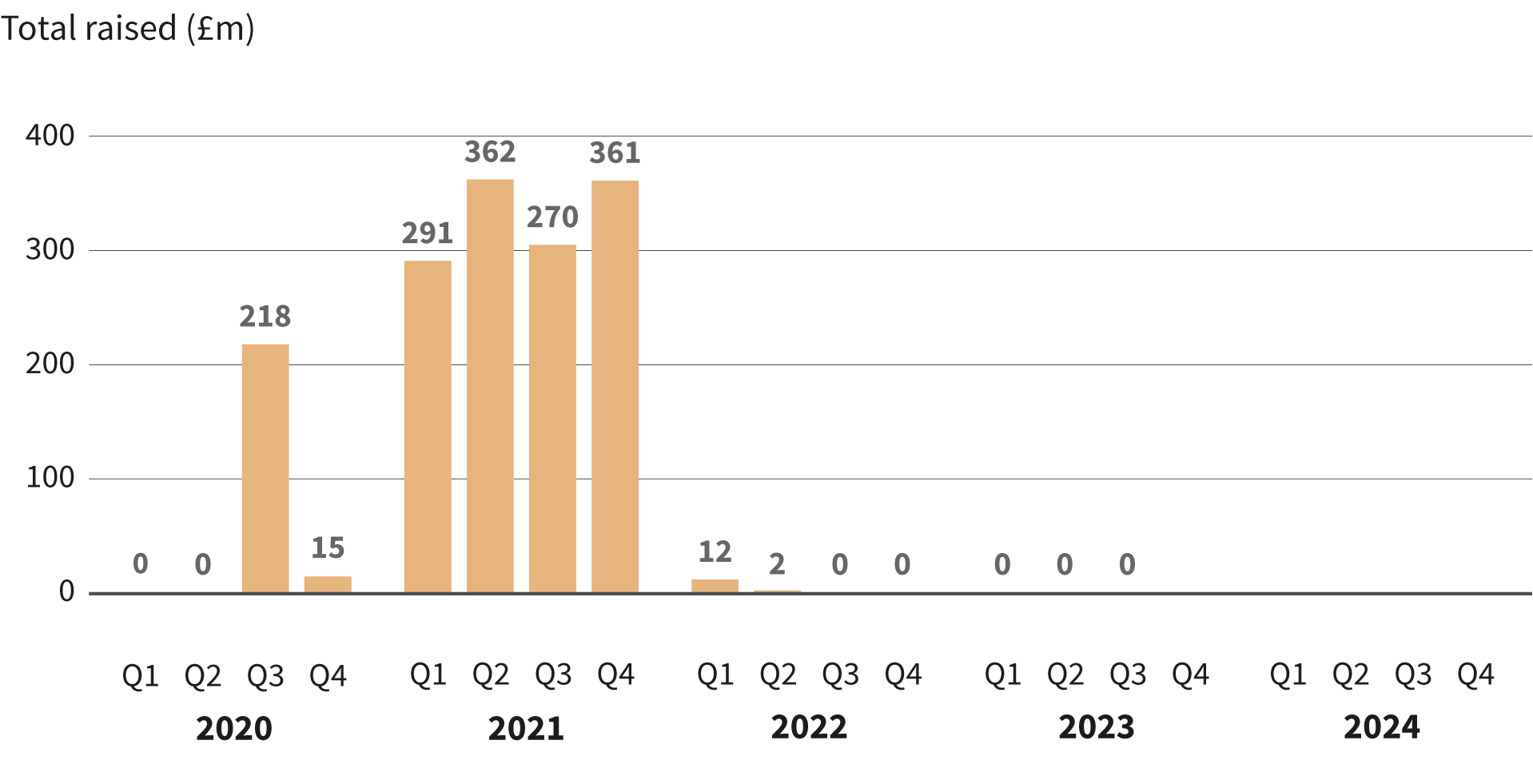
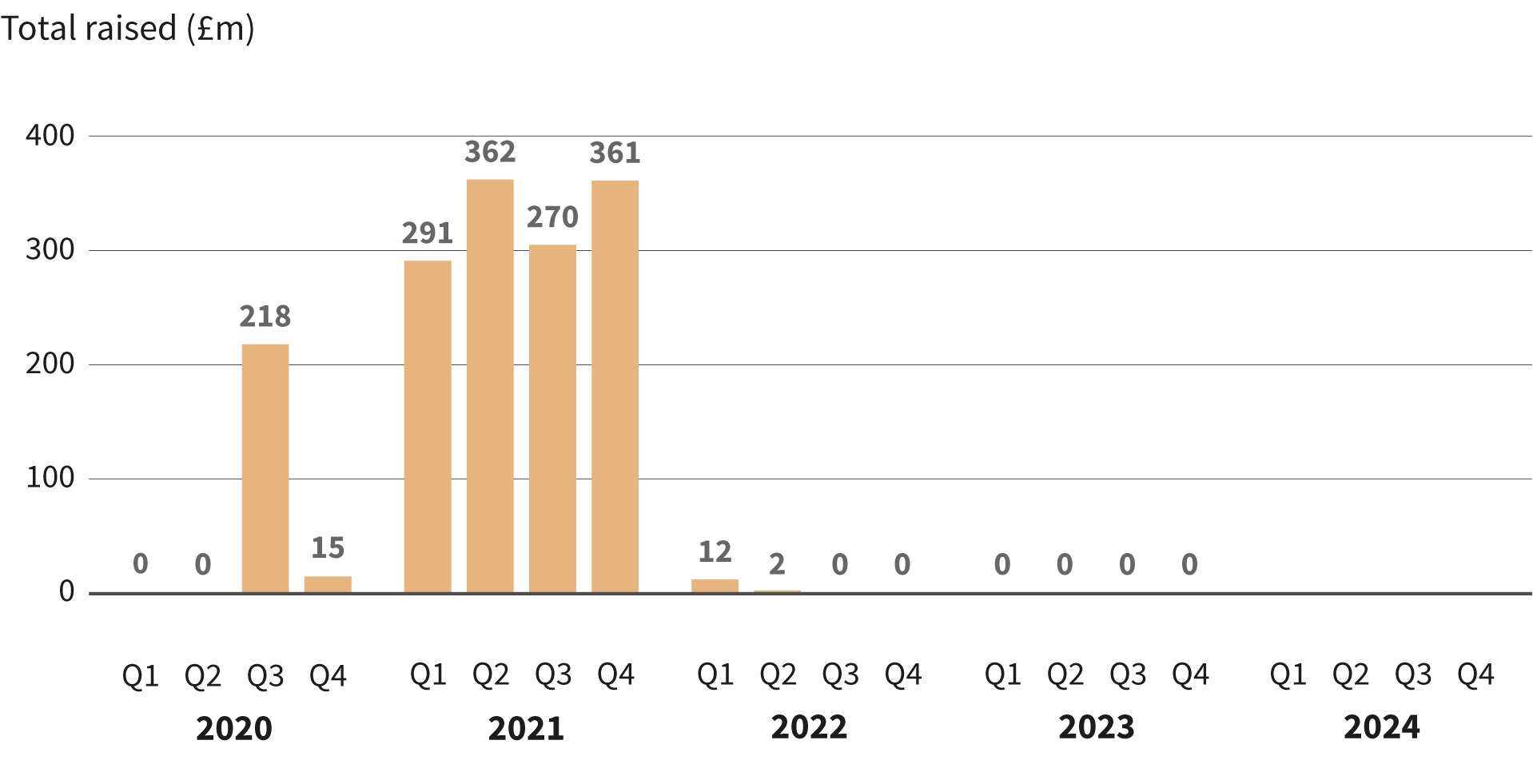
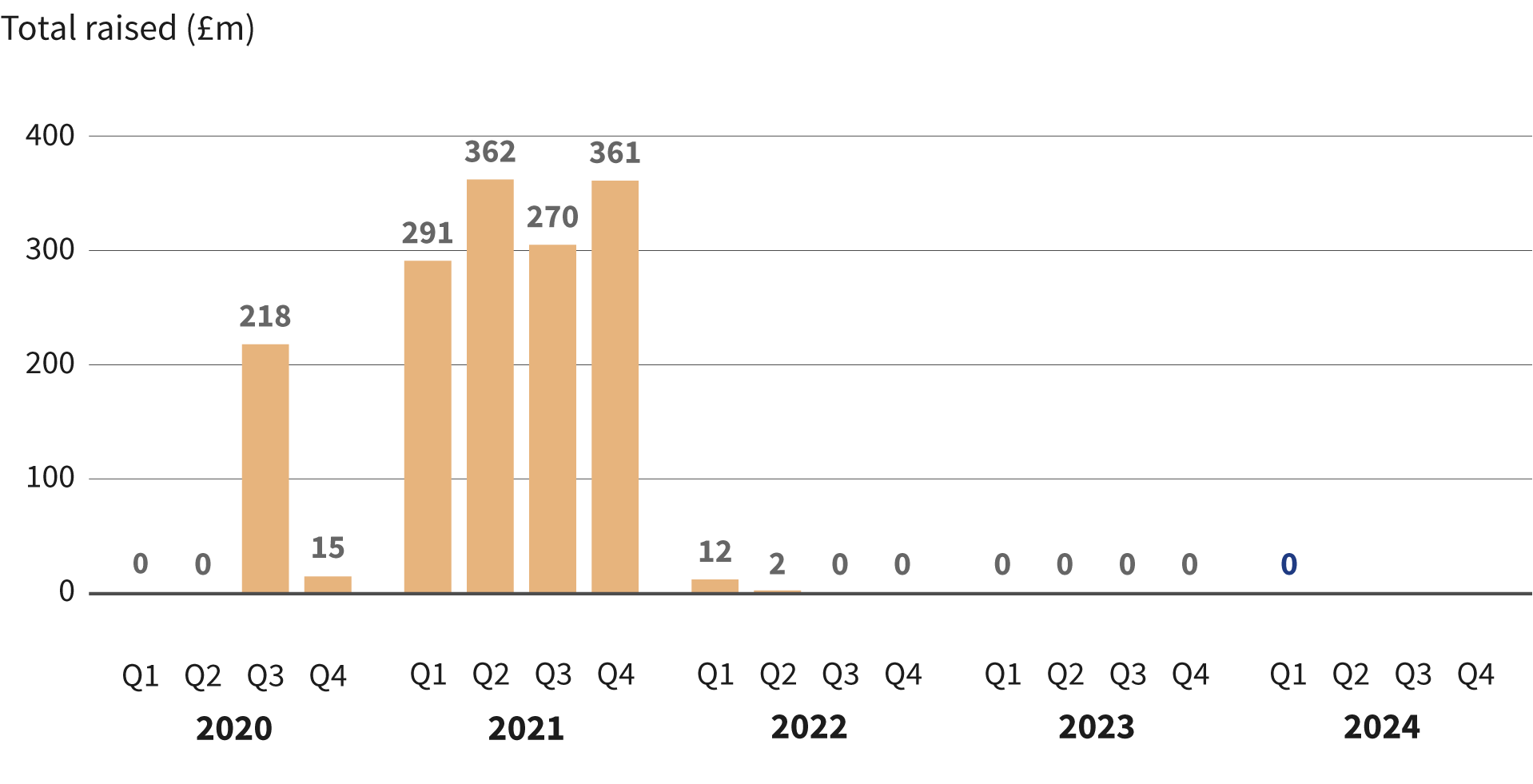
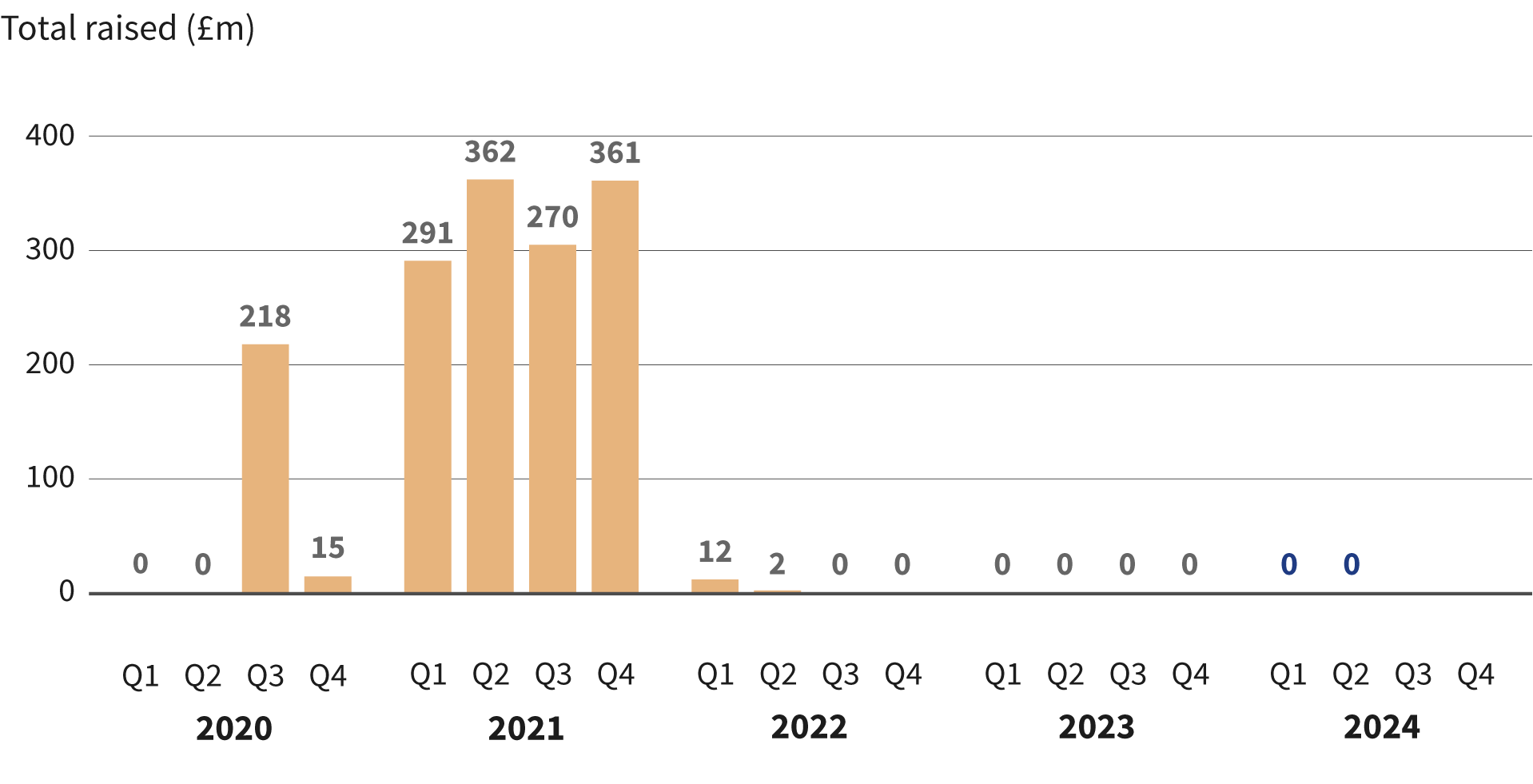
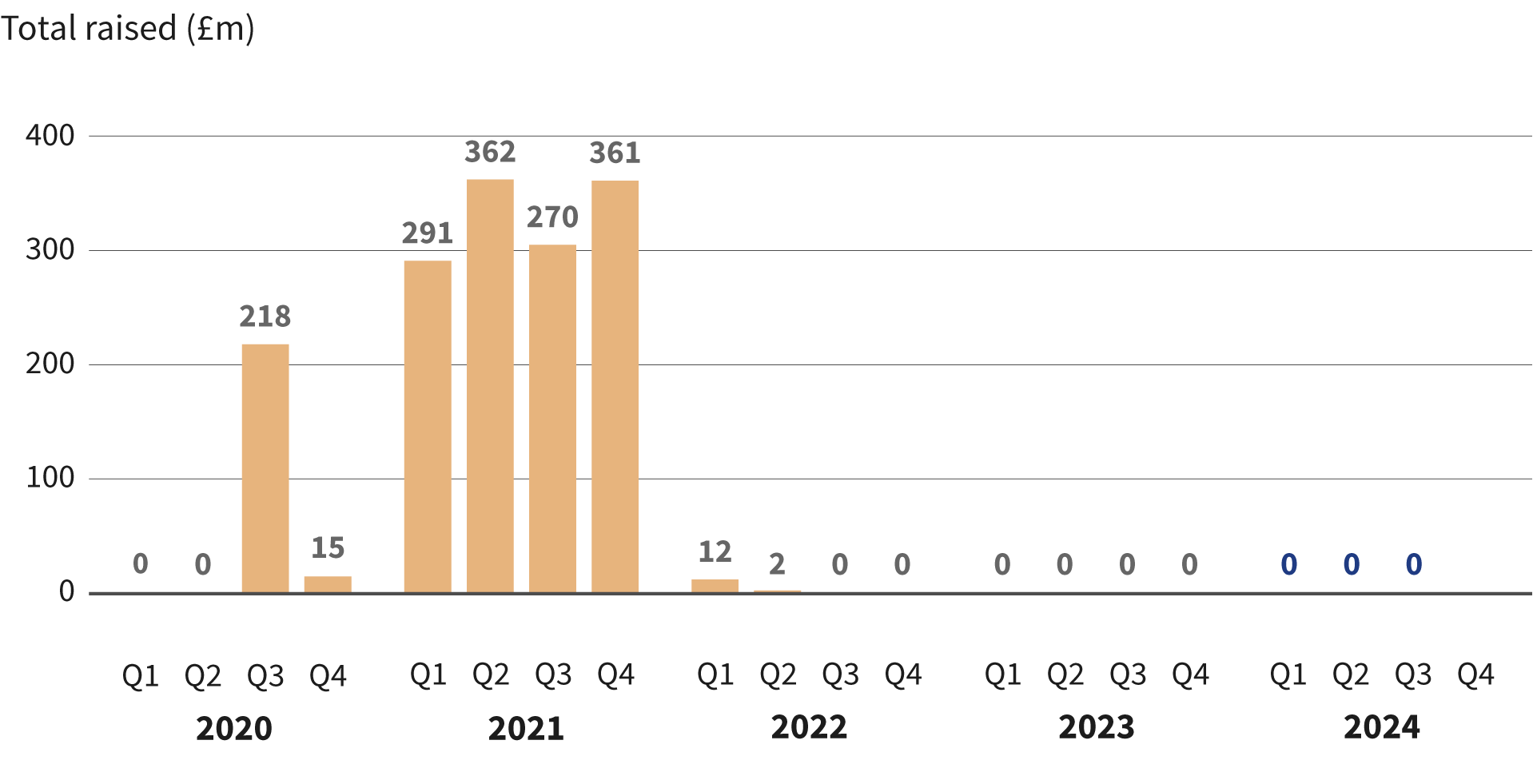
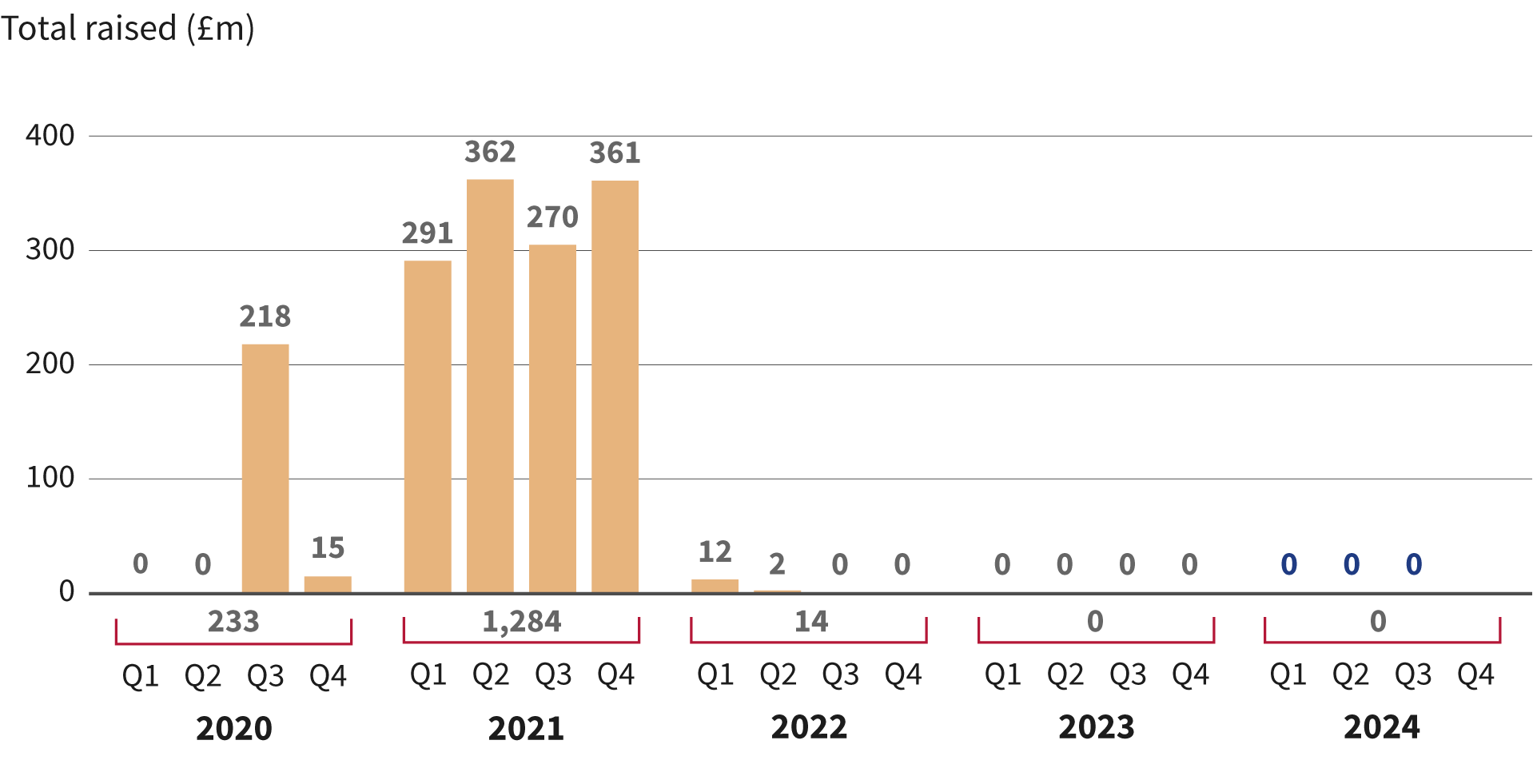
Q3 2024 represents the ninth consecutive quarter with no UK IPO activity since 2022.
The continuing absence of IPOs in 2024 highlights the difficulties that biotech businesses face in accessing public markets, including investor hesitance and insufficient liquidity for smaller companies, but also the relative abundance of private capital.
Total raised in IPO by quarter, for the past five years
International IPOs
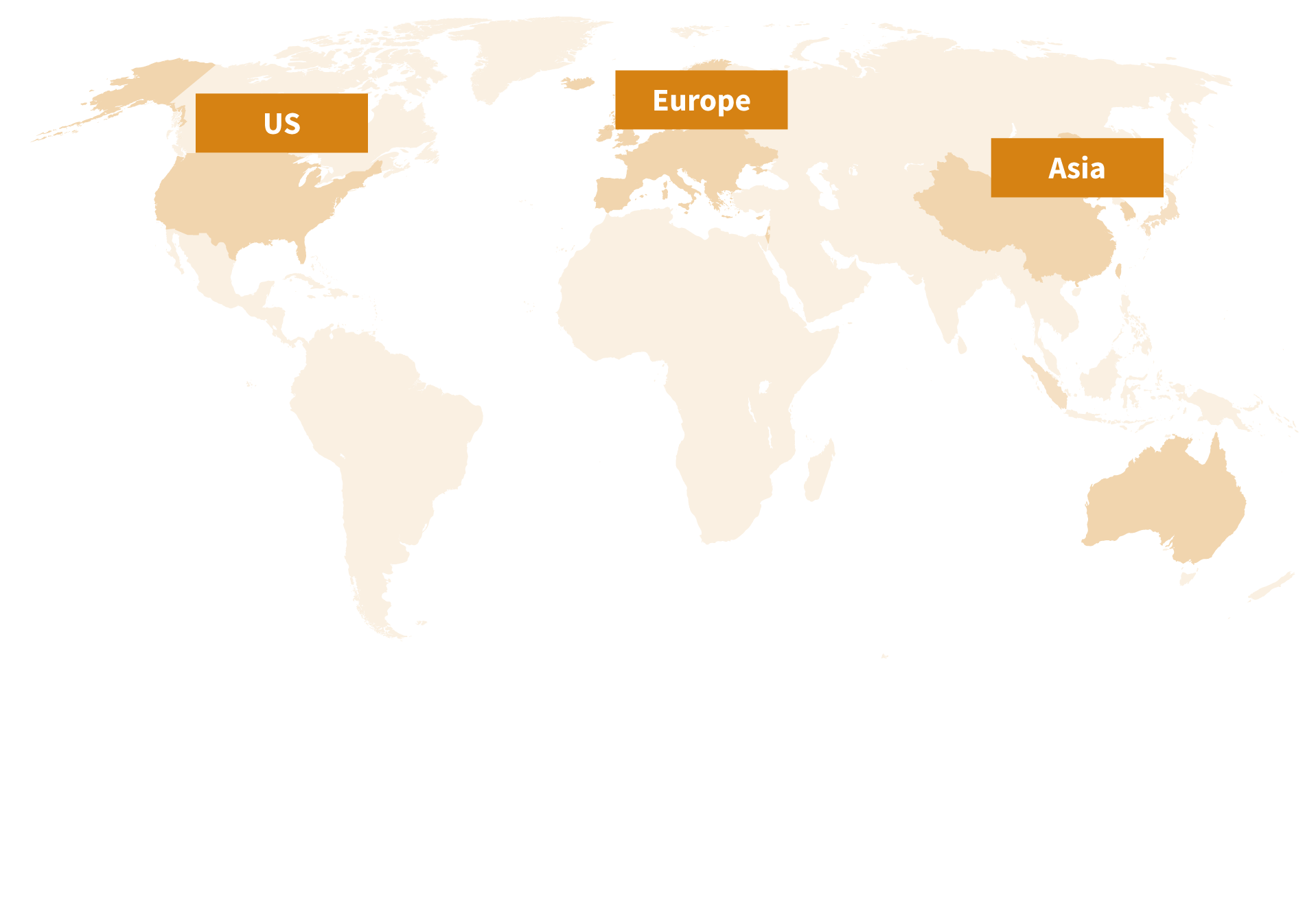
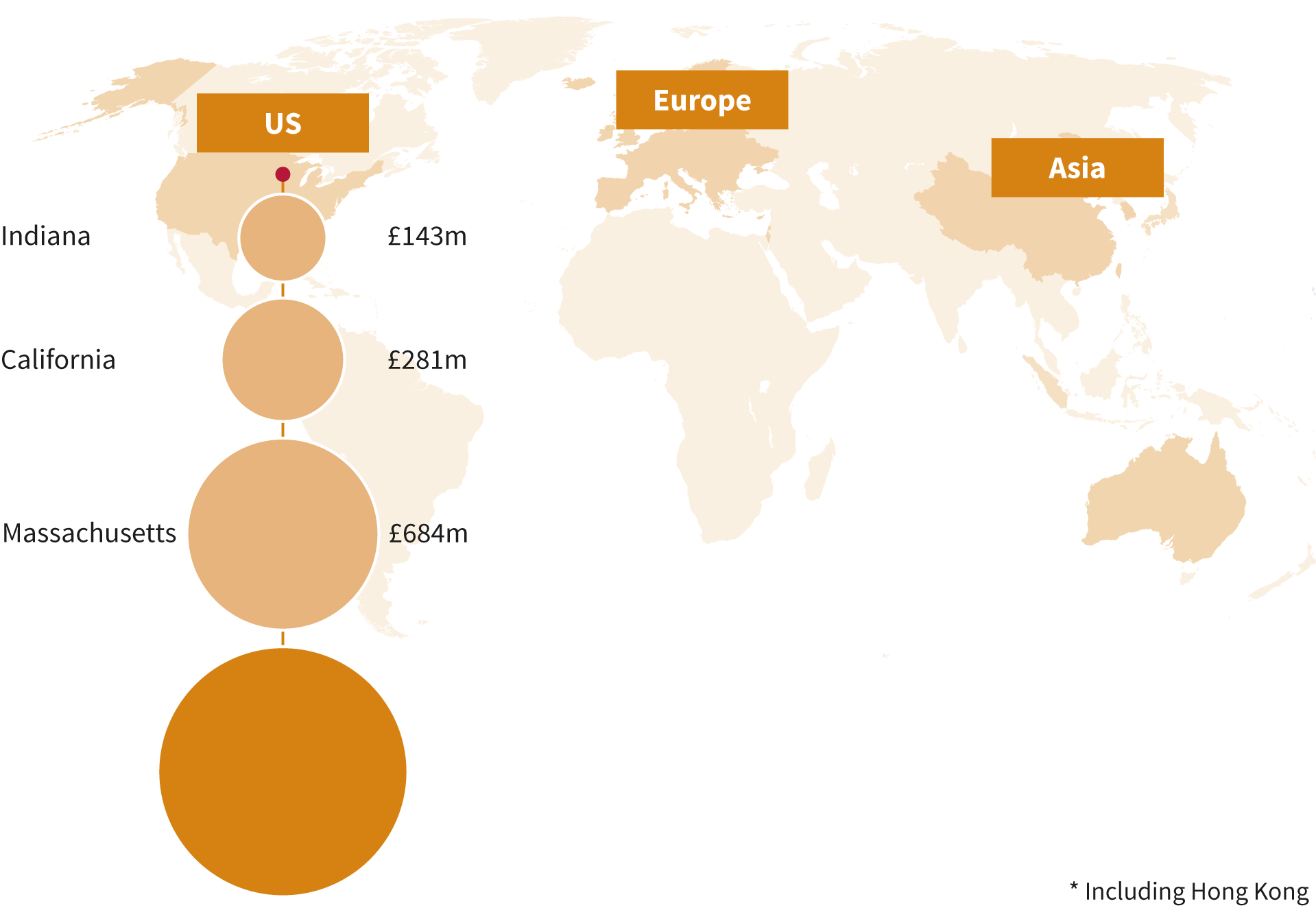
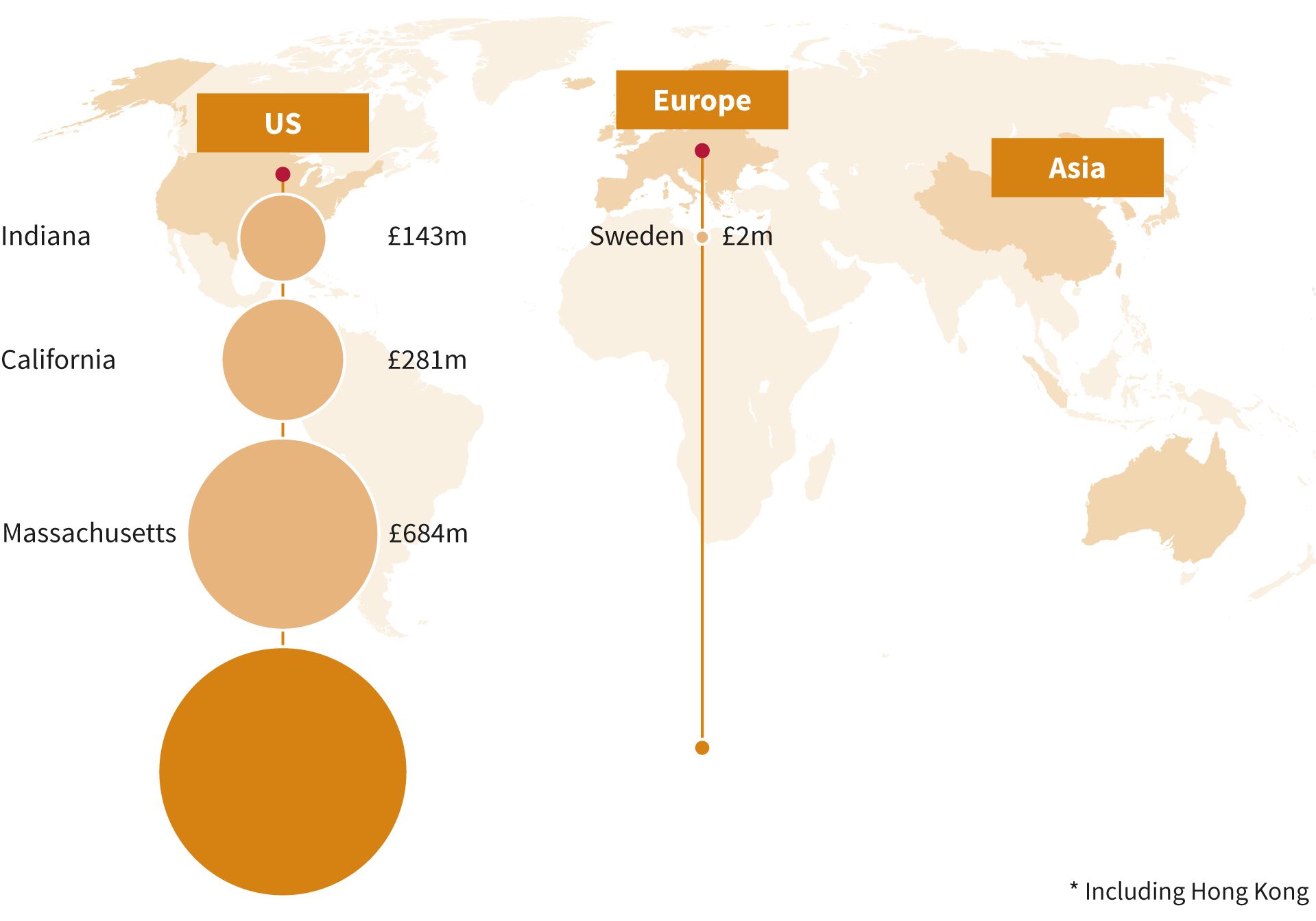
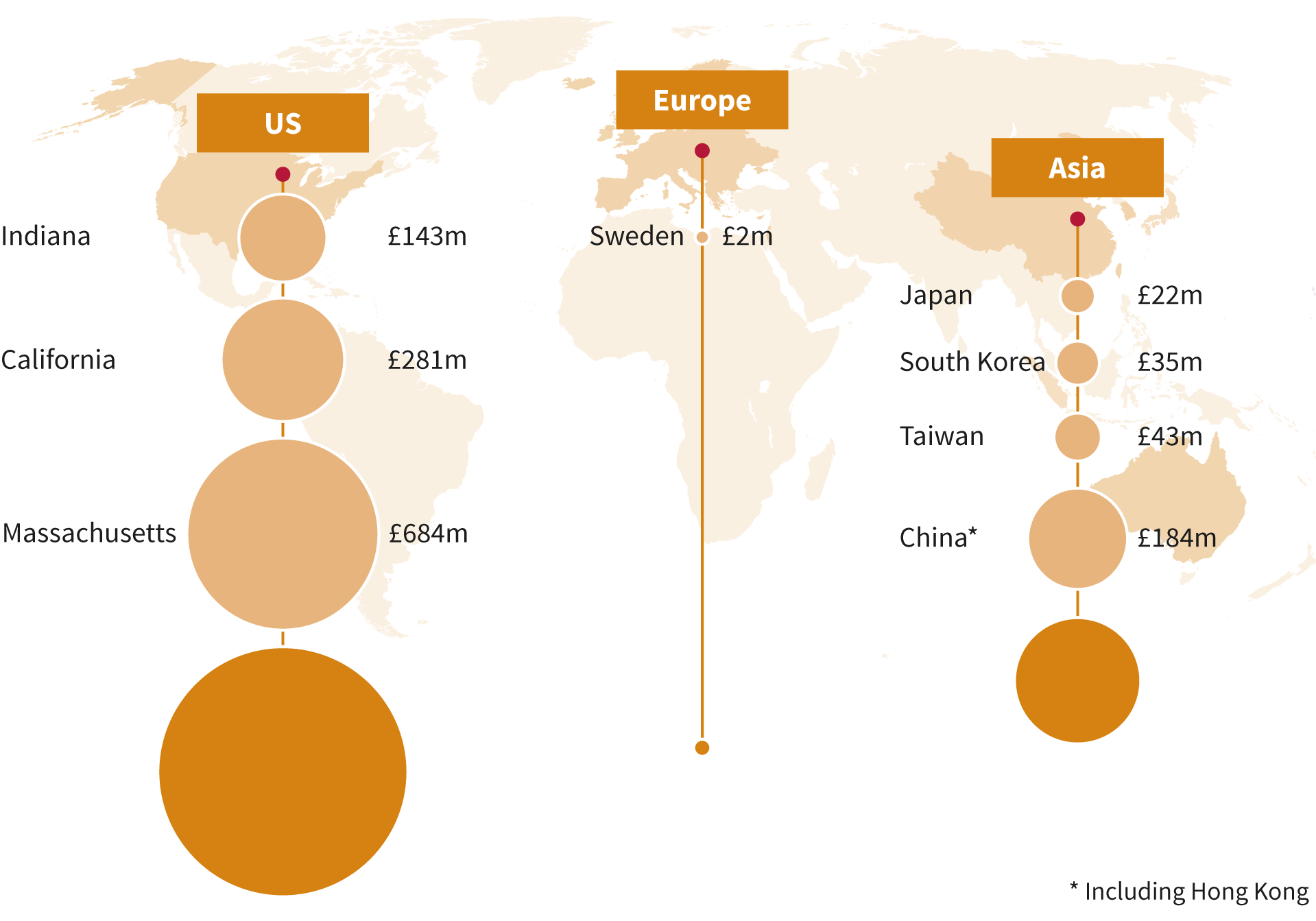
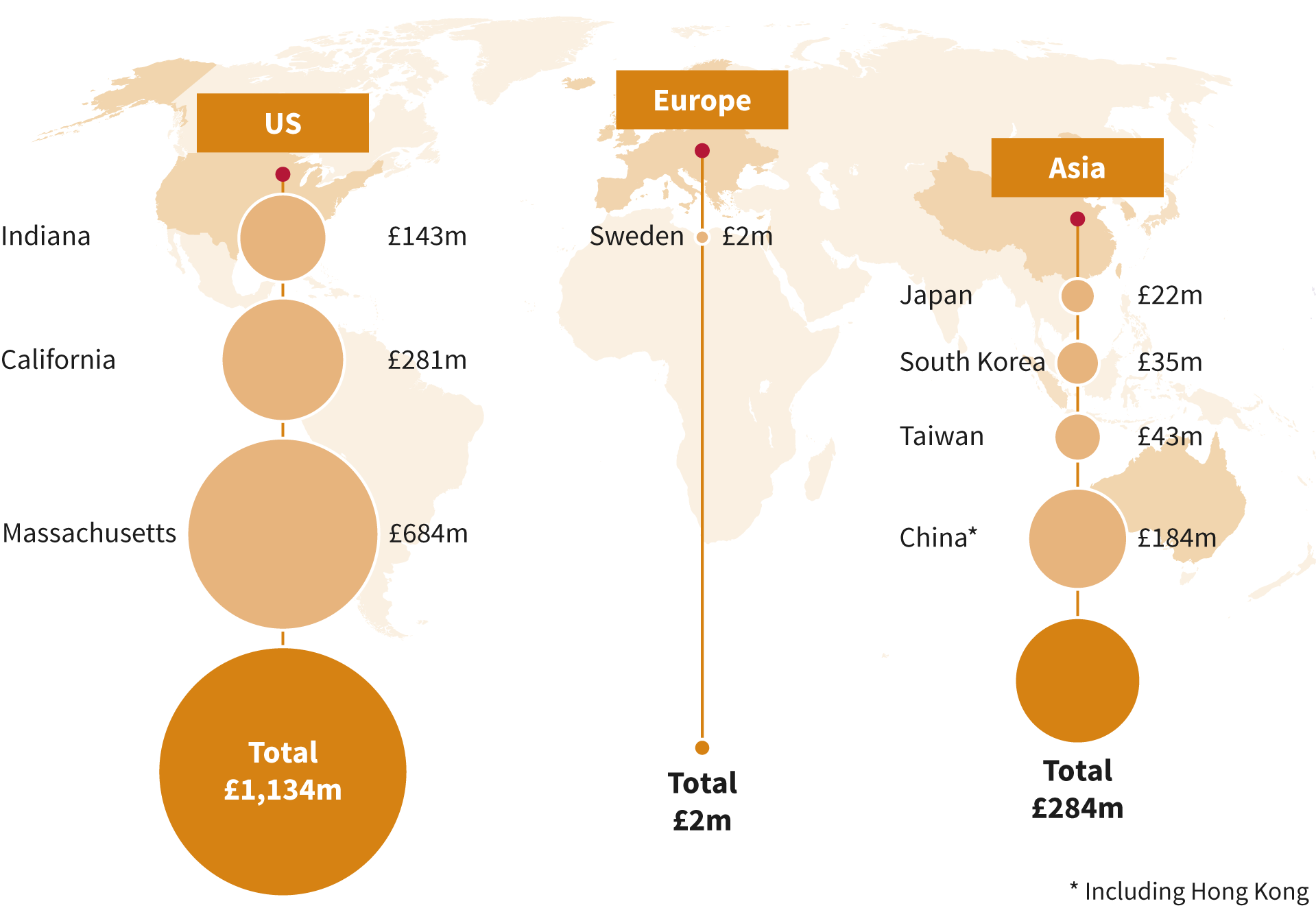
Q3 2024 shows a substantial concentration of IPOs in the US with a 16.4% increase from the previous quarter’s £974 million to £1.13 billion. The overall global investment reached £1.42 billion with the US and Asia leading the landscape. The lack of significant IPO activity in Europe reflects a larger trend of falling public listings and a lack of institutional investment support. Sweden remained the only European country to have an IPO in Q3 with NanoEcho raising £2 million on NASDAQ a 96.2% reduction from £53 million in the previous quarter.
Follow-on financings
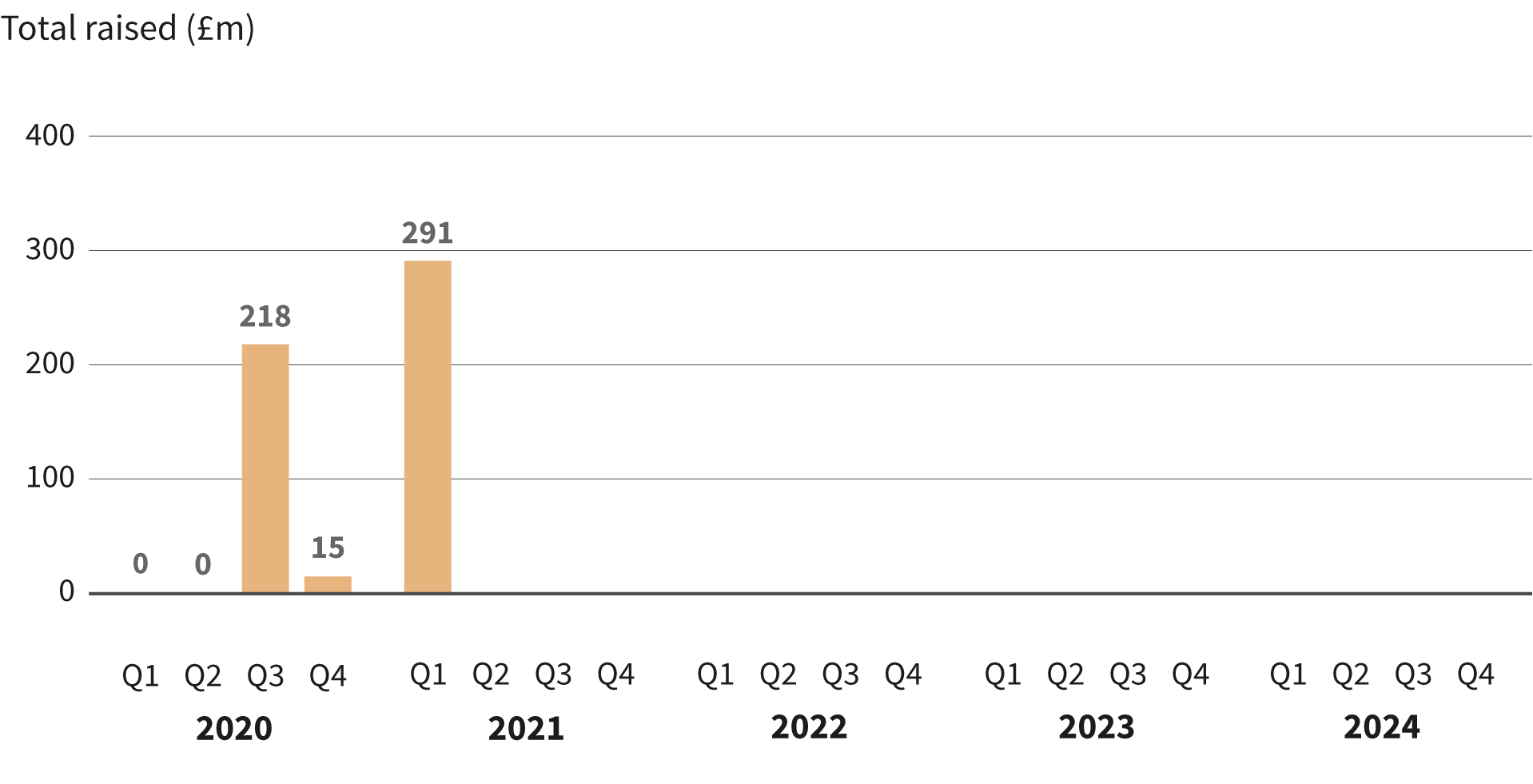
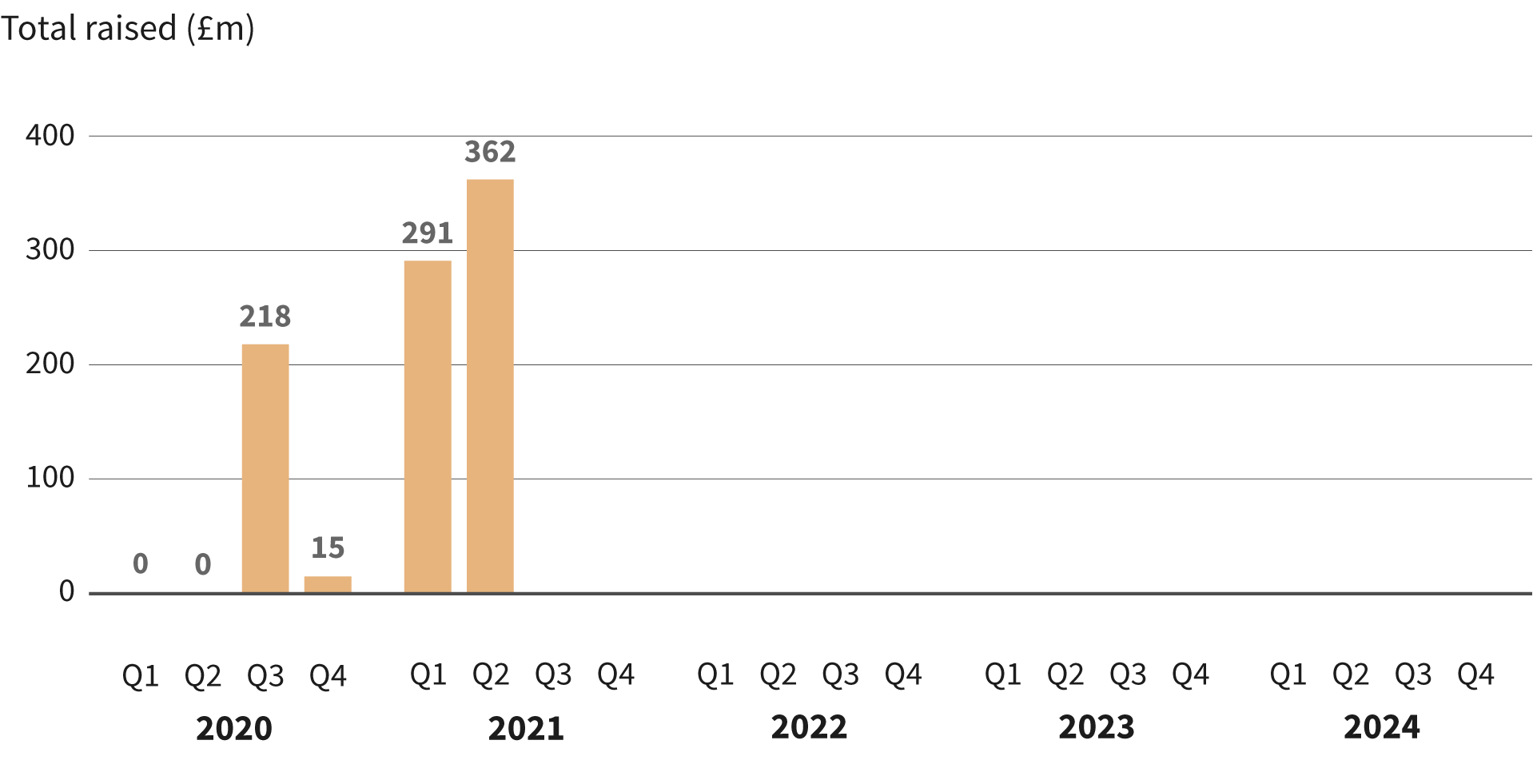
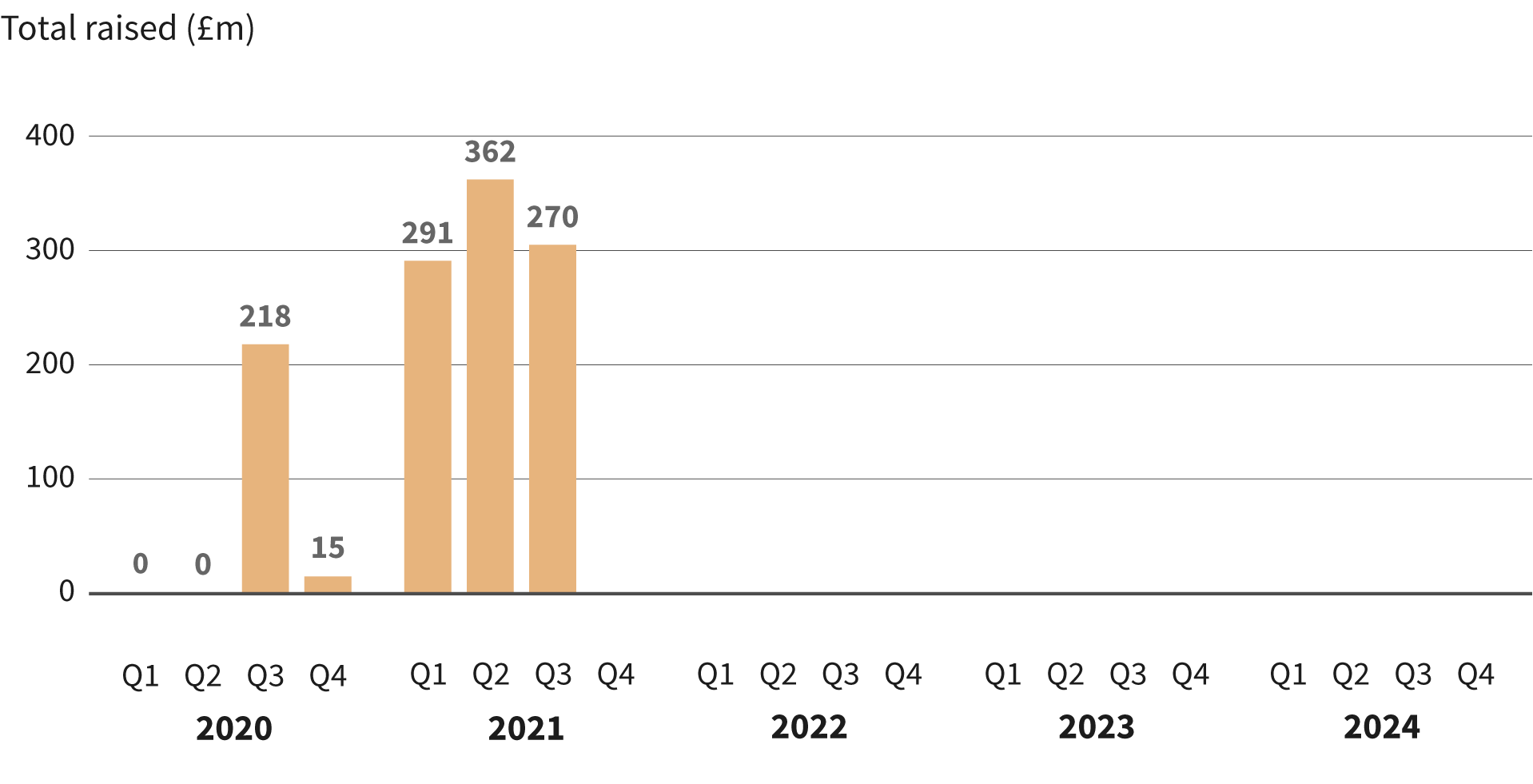
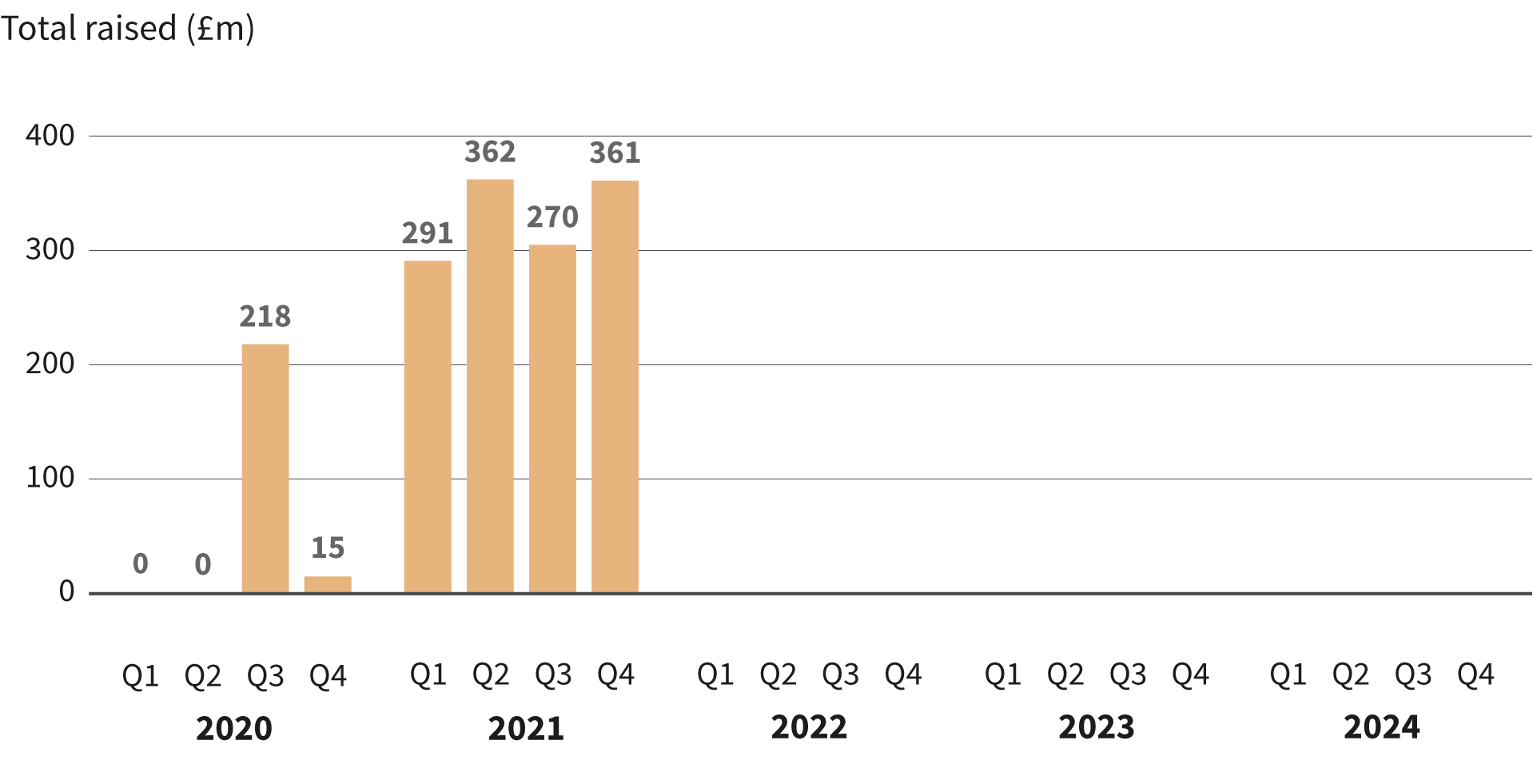
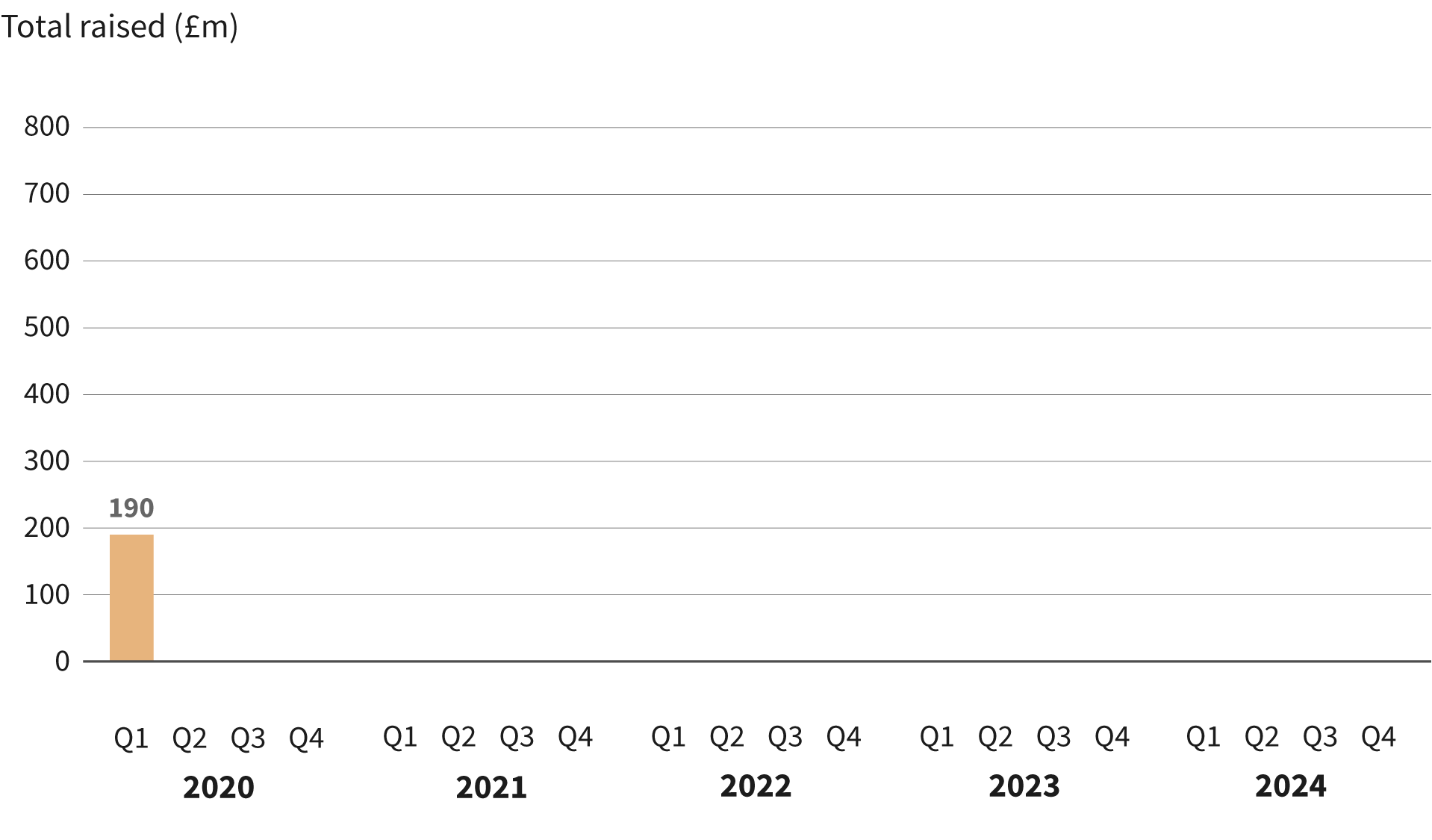
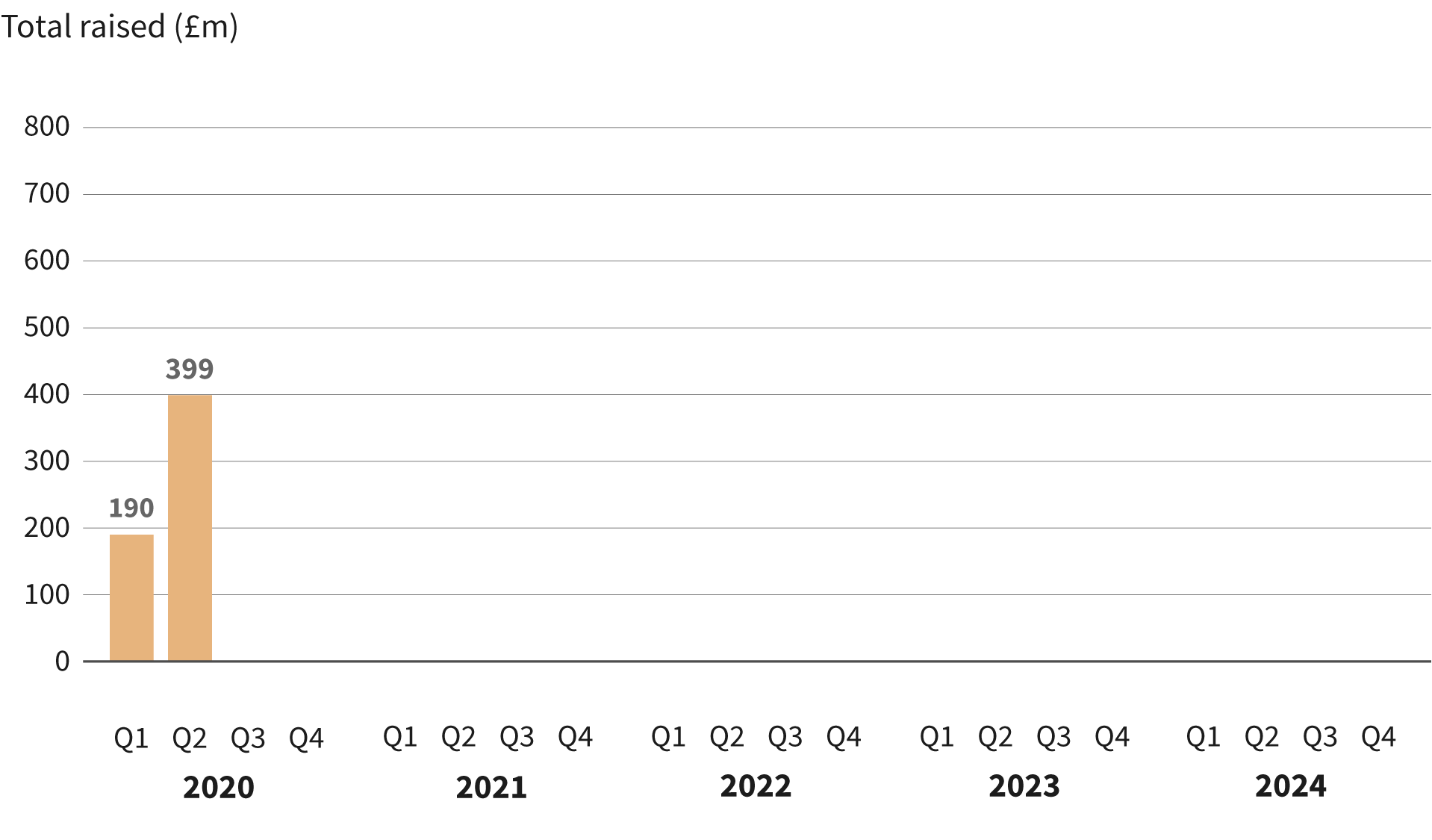
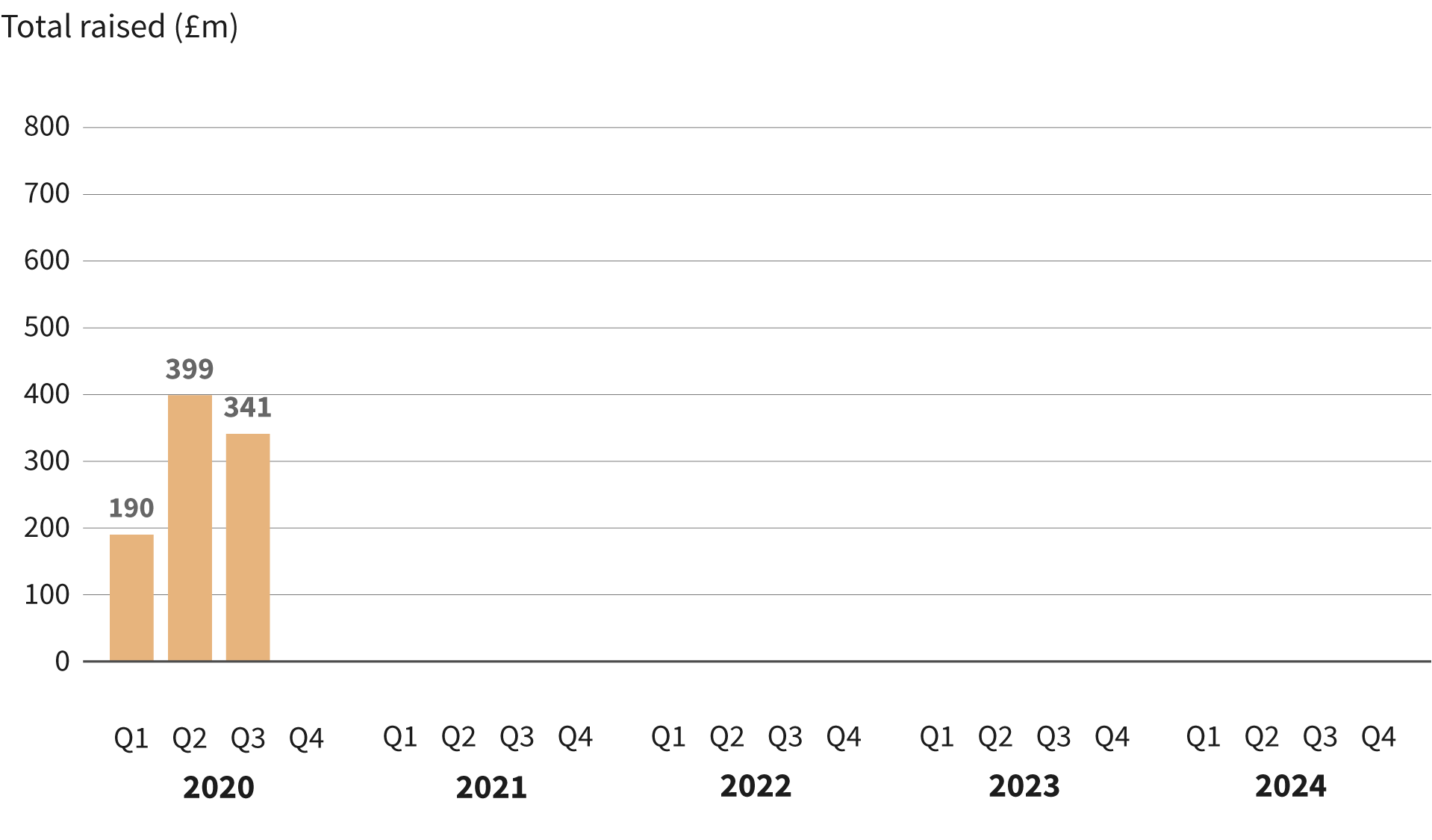
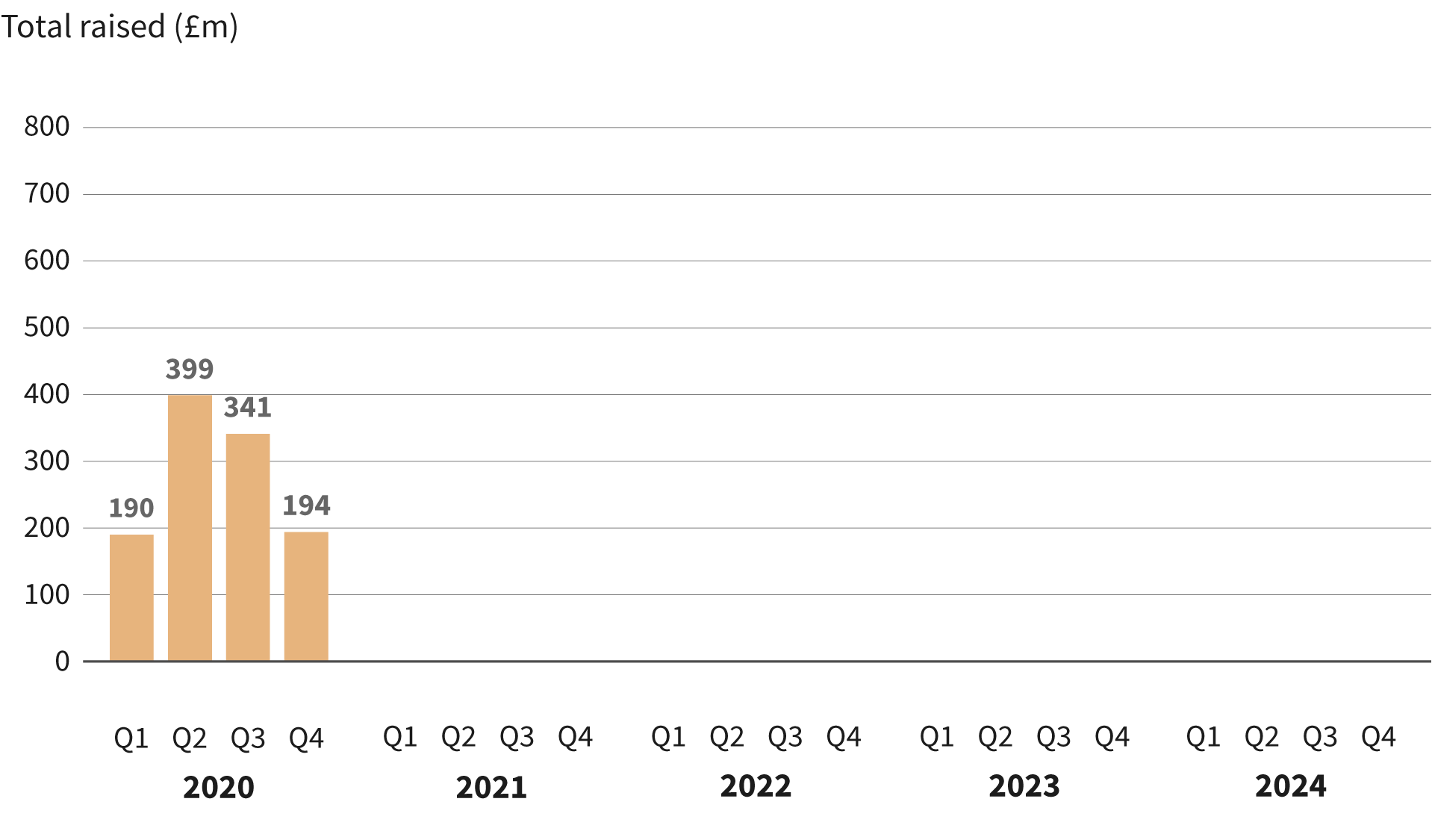
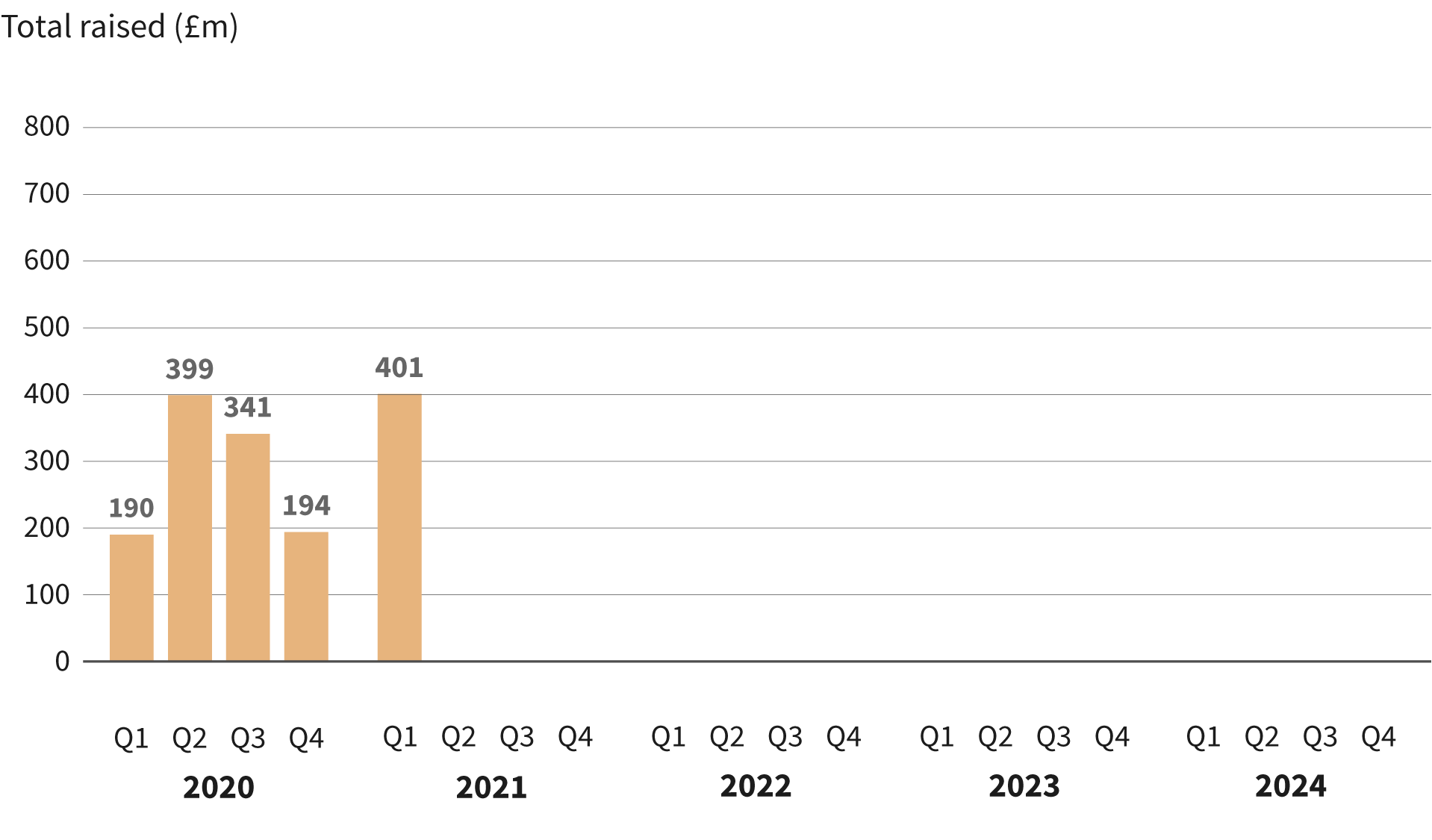
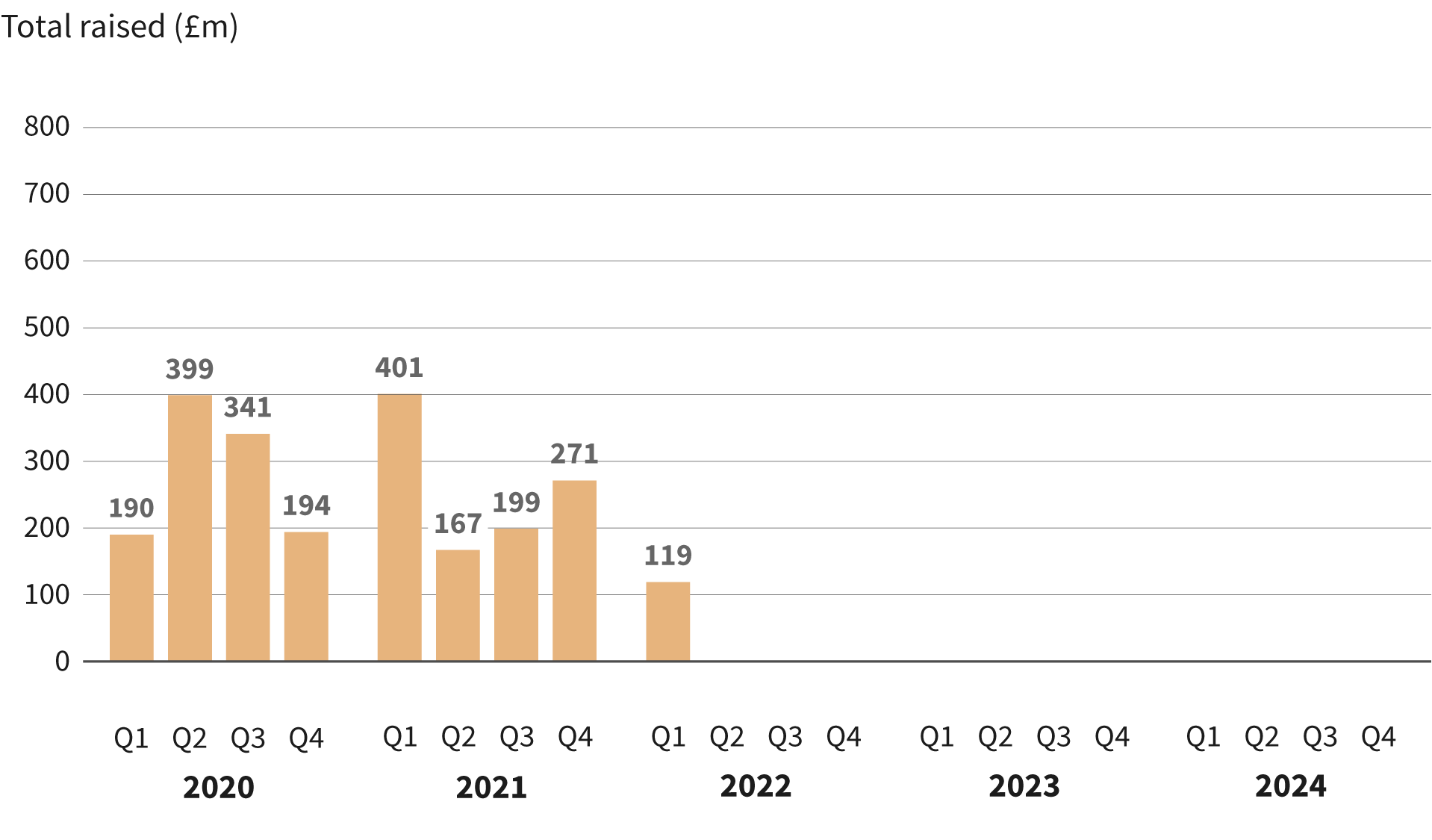
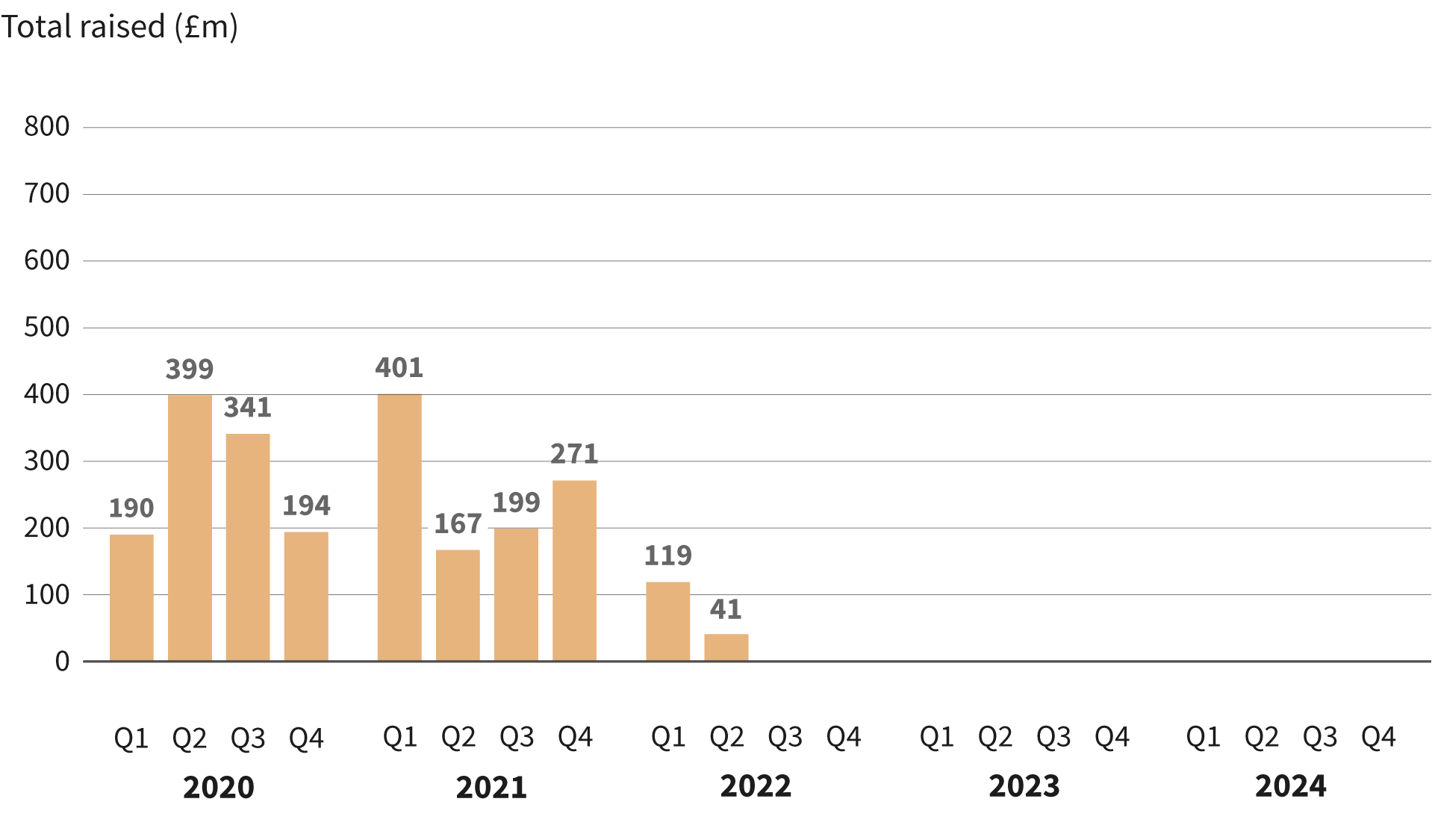
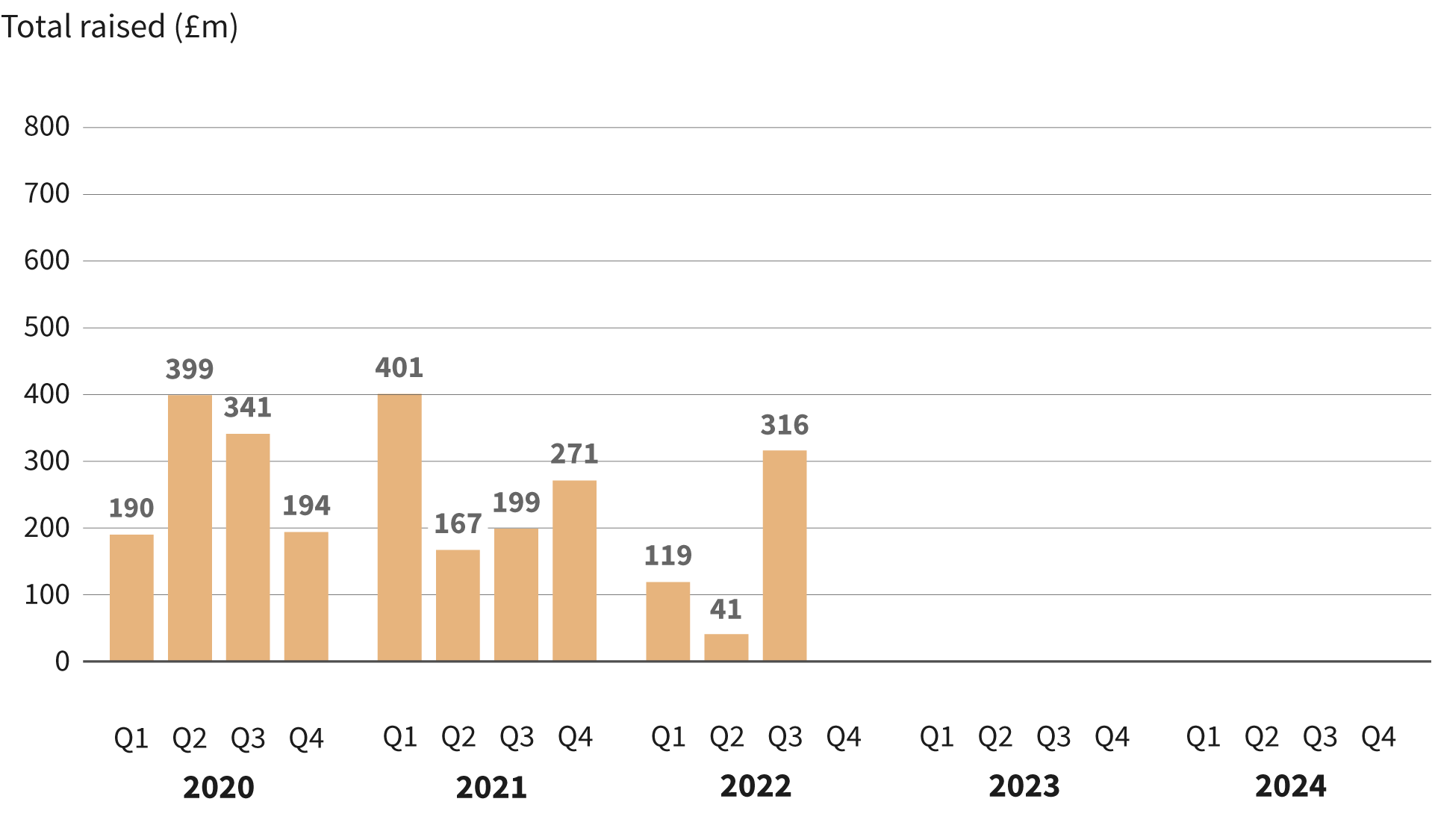
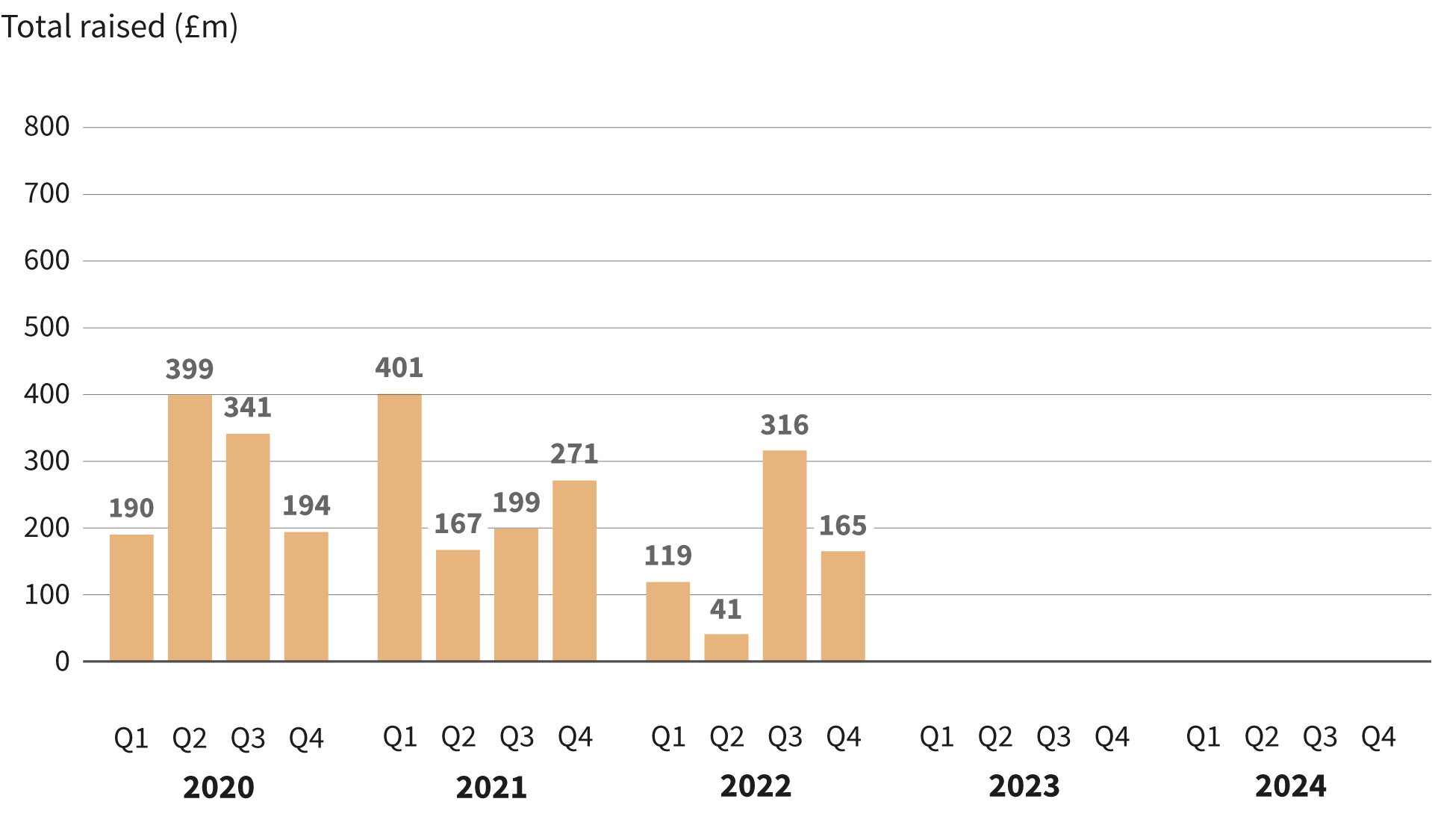
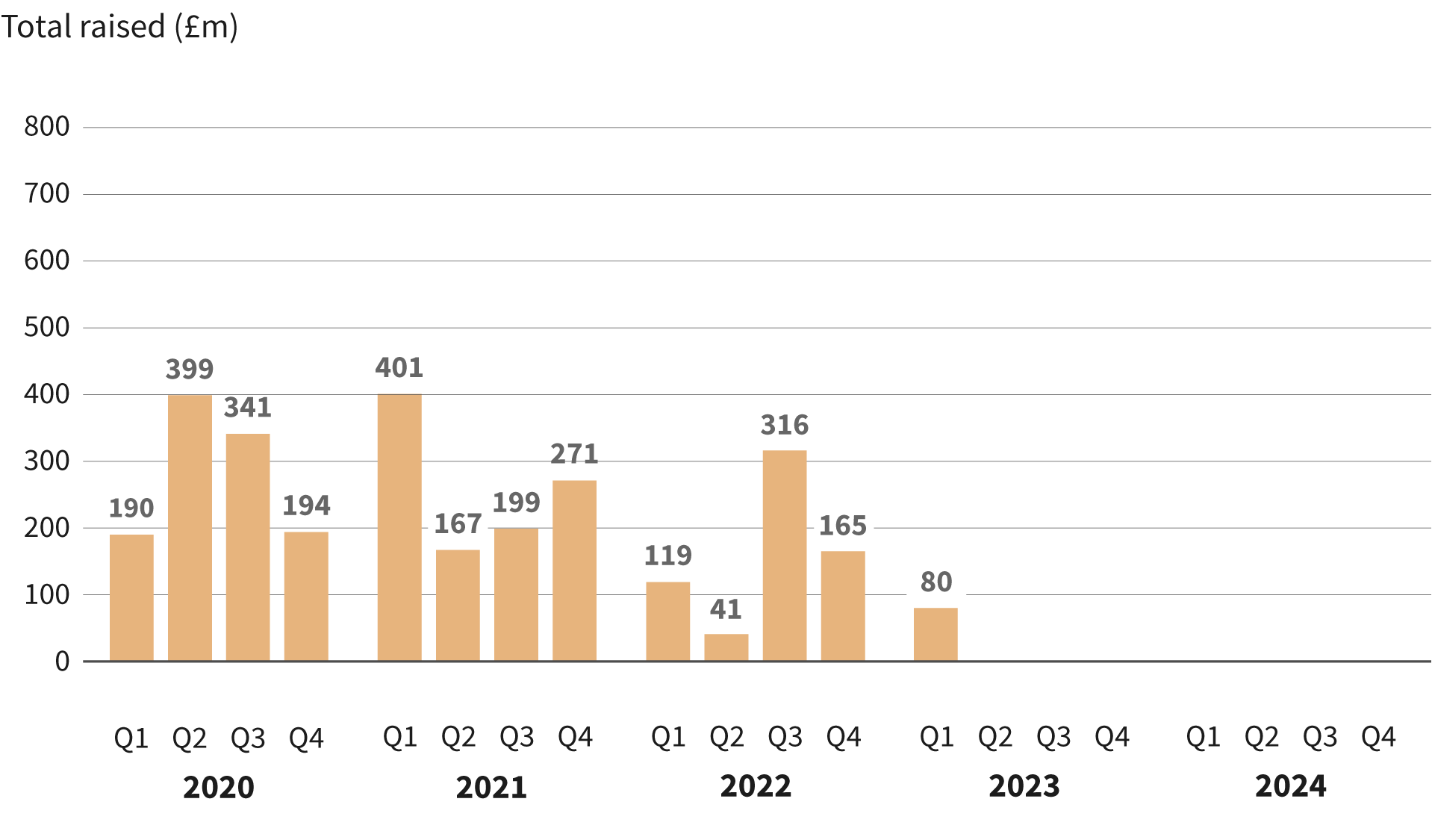
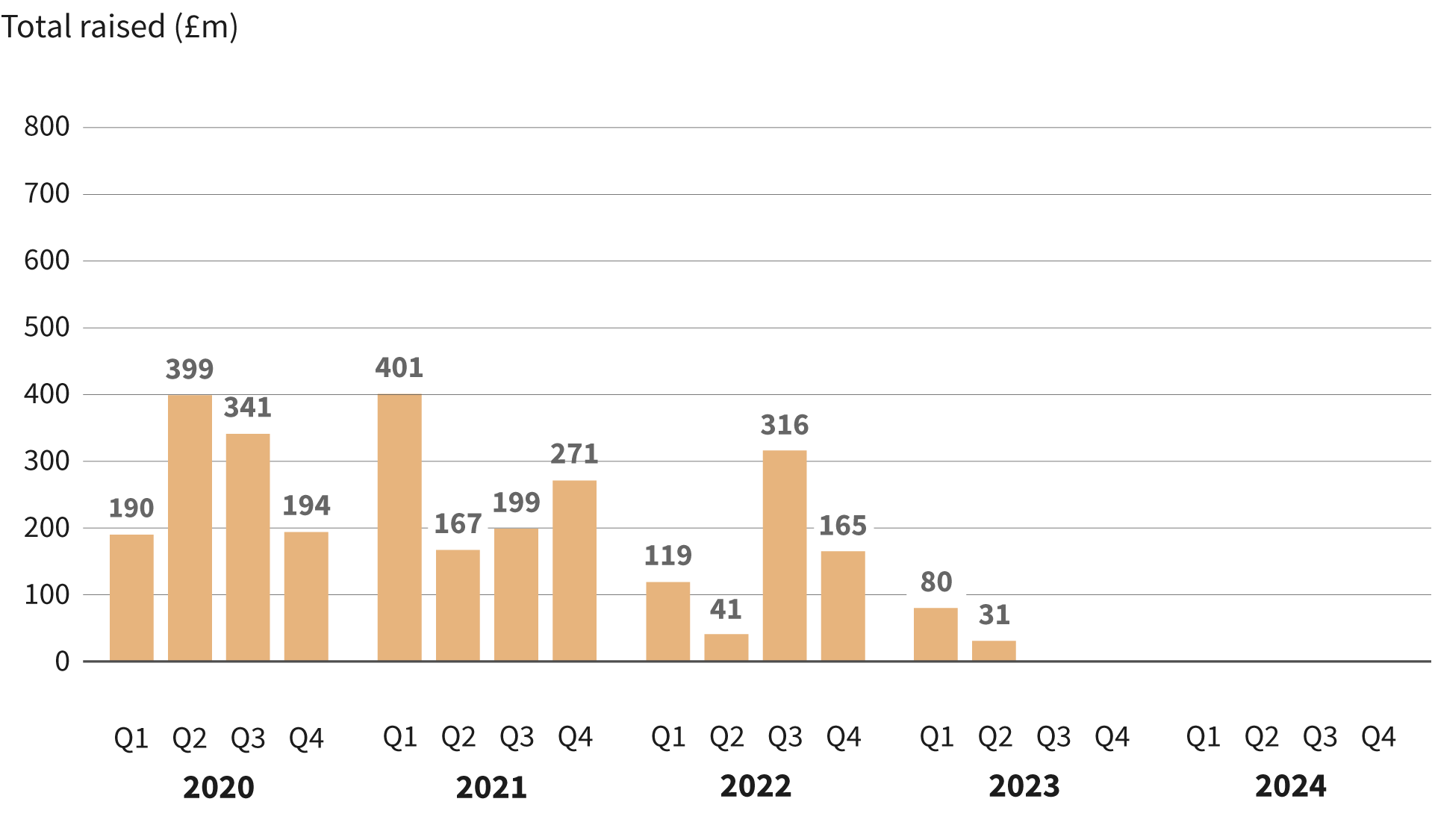
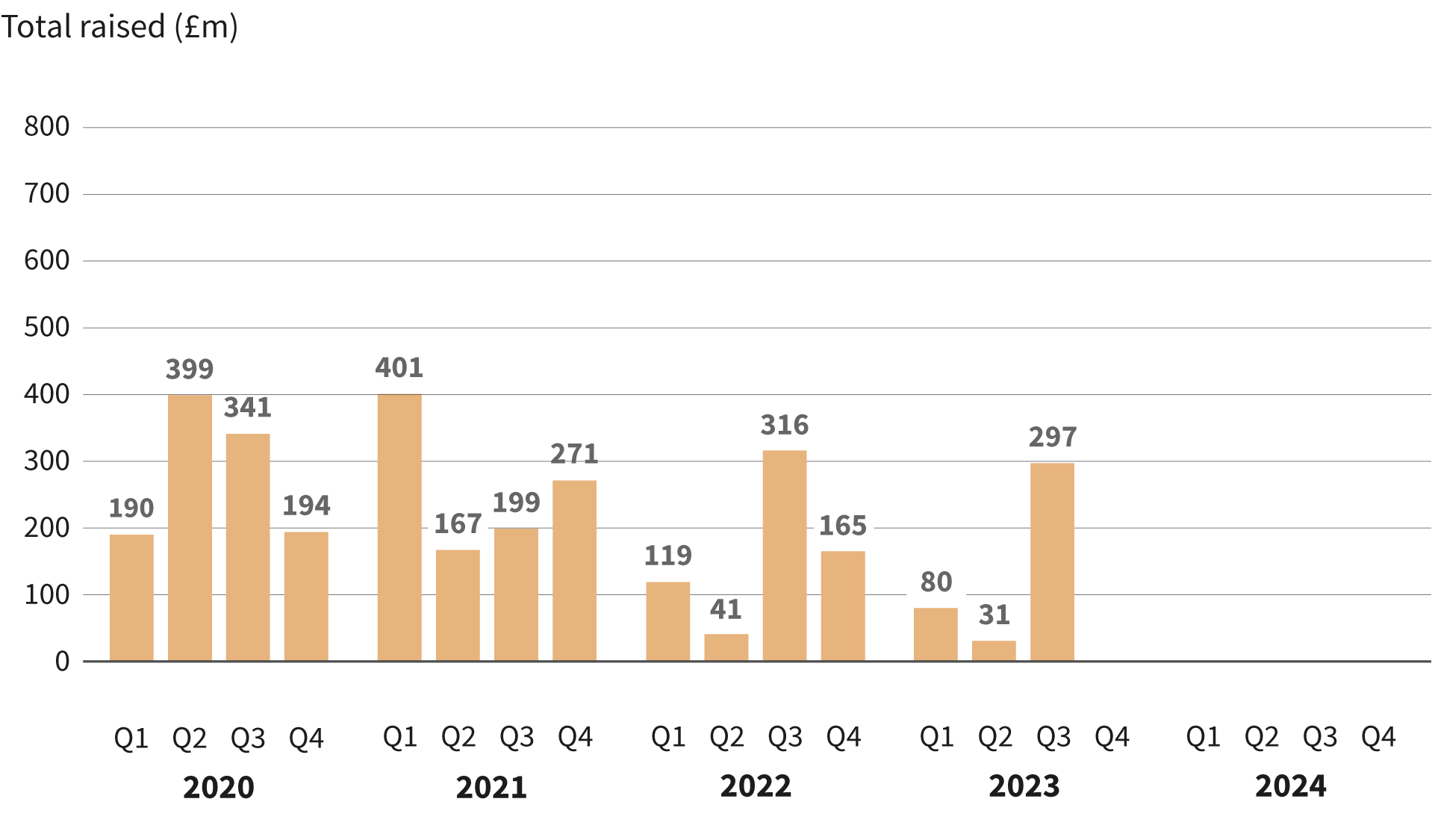
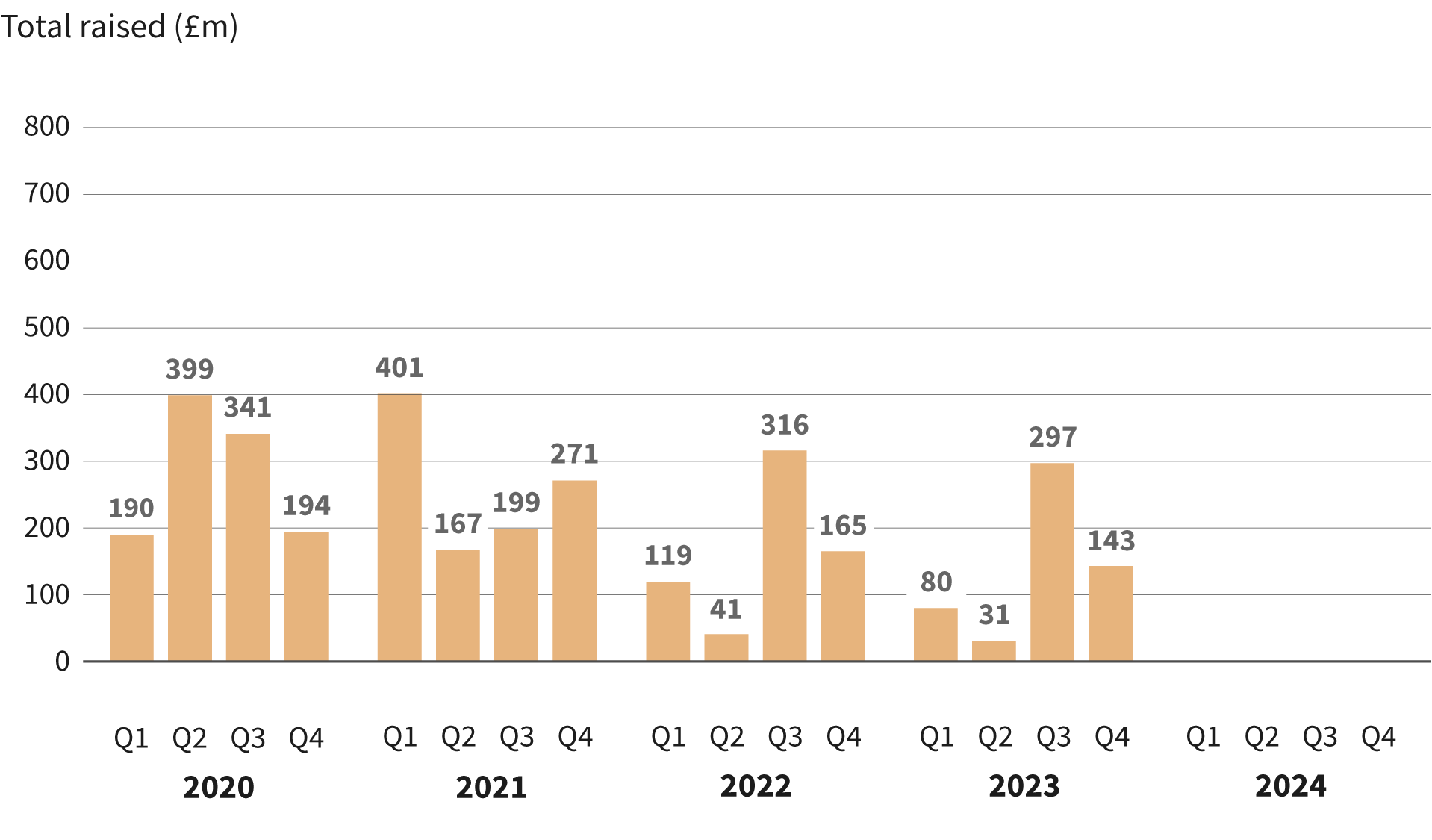
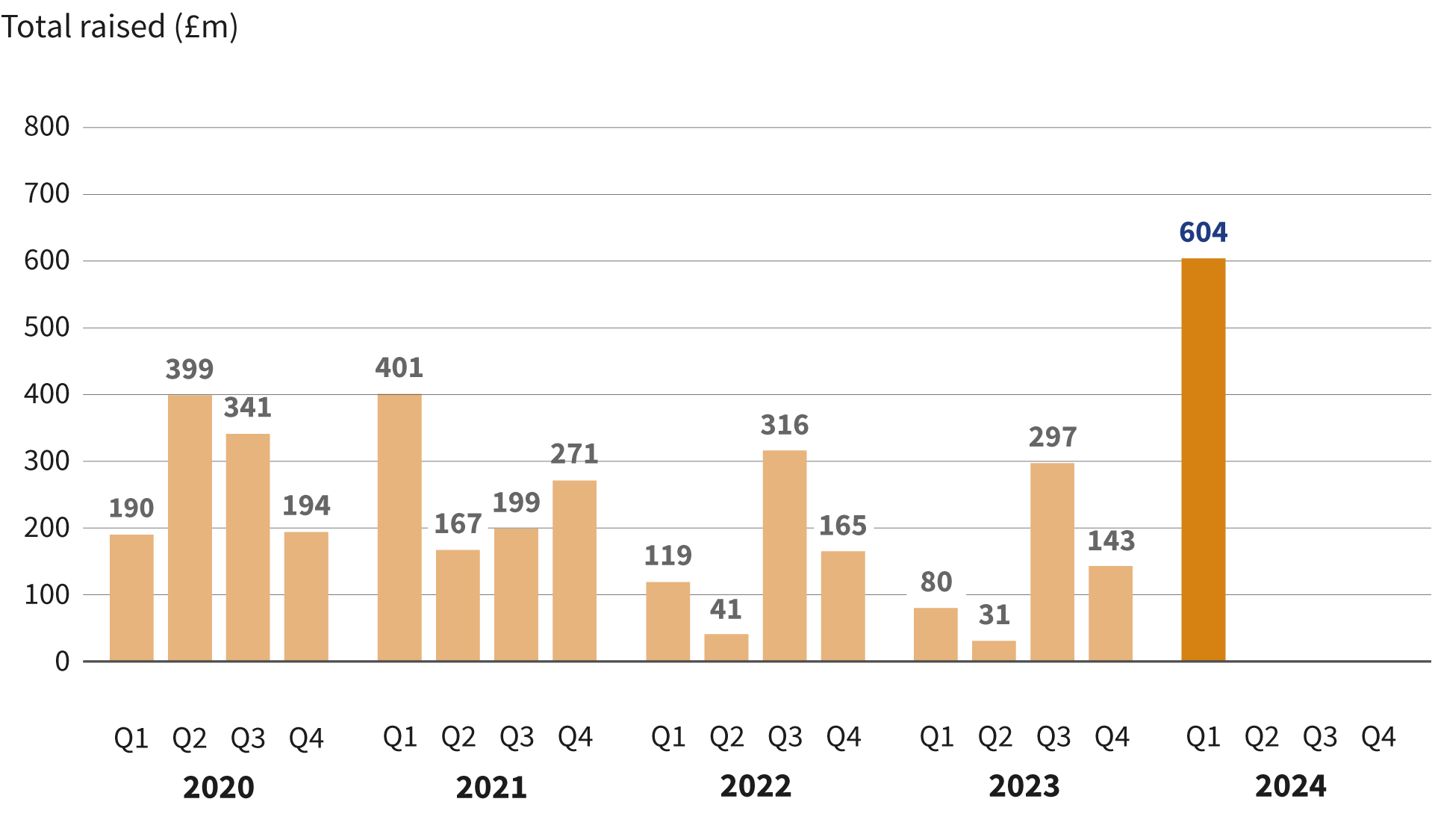
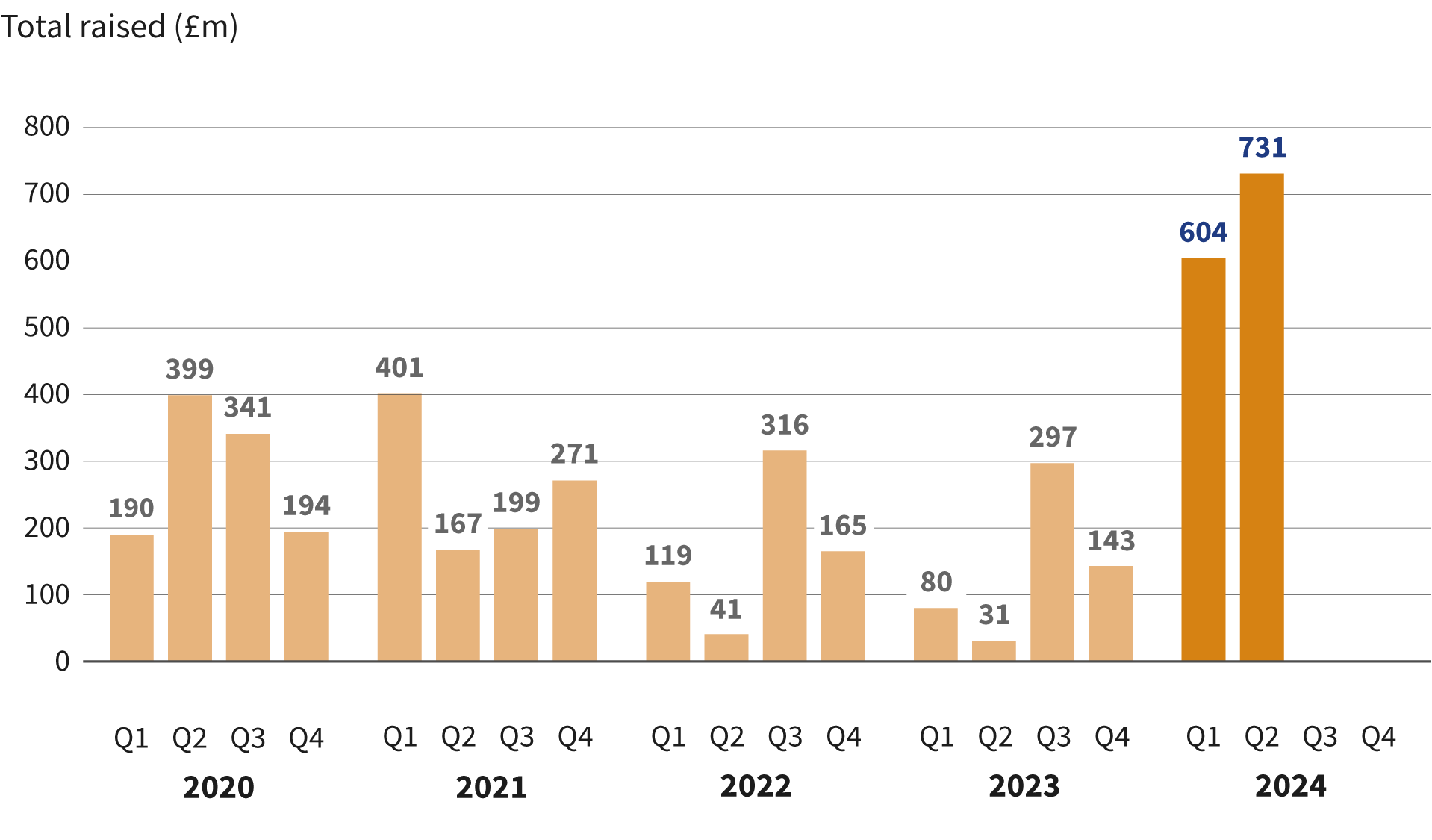
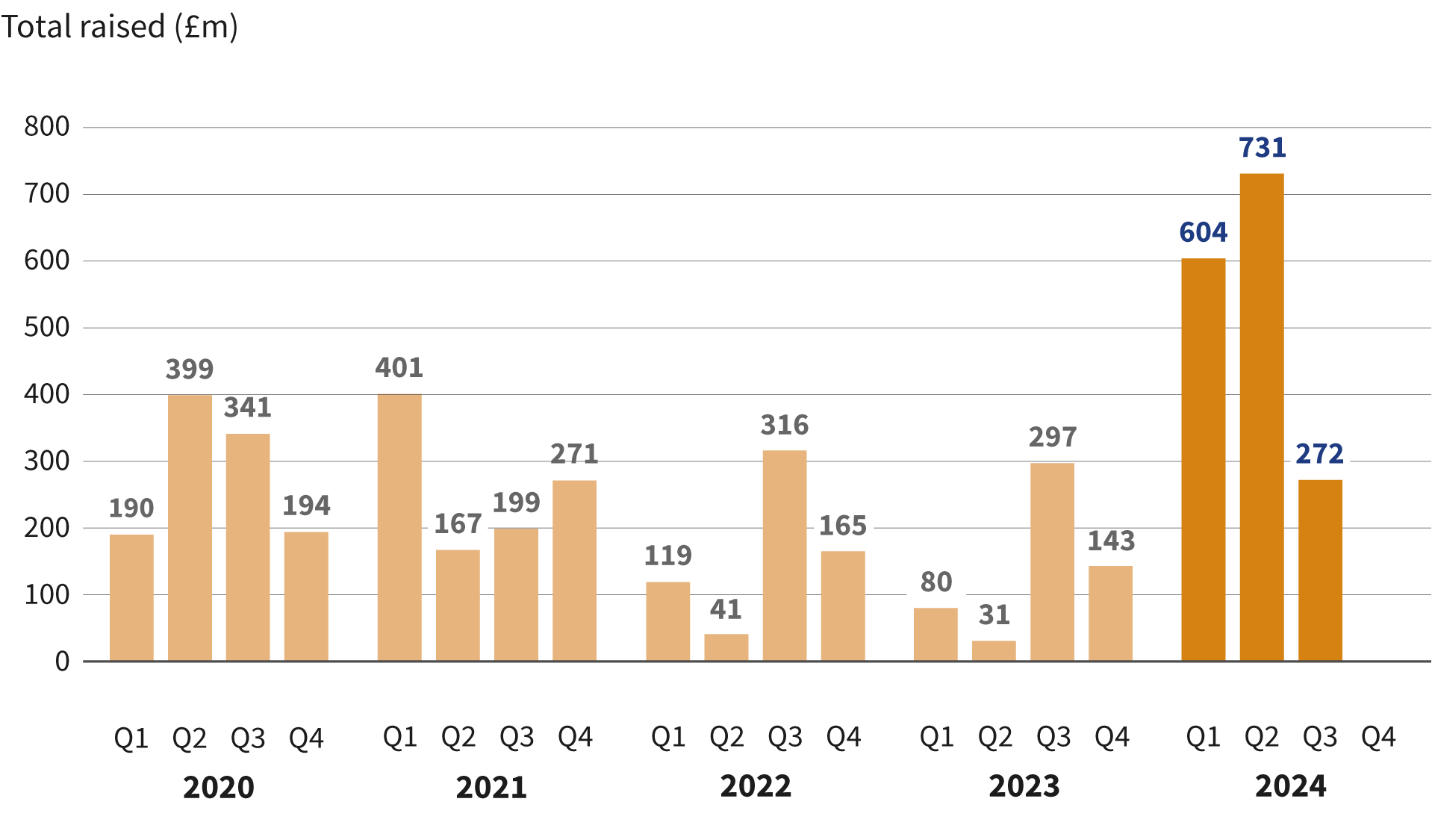
Follow-on financing in the UK reached a substantial £1.61 billion in 2024, representing a significant increase compared to the previous years.
This total is higher than any of the previous four years, suggesting a renewed investor interest in supporting the growth of already-quoted biotech firms. Follow-on financing was £272 million, which is 62.8% lower than the Q2 peak but nevertheless reflects steady investment activity. The total of £1.61 billion in the first three quarters of 2024 exceeds the £551 million seen in 2023, indicating an almost threefold increase in follow-on financing.
The follow-on activity already witnessed in 2024 suggests that even in a challenging market environment for IPOs, established biotech companies are still able to attract substantial capital to scale their operations and continue innovation. Combined with the surge in US companies listing, it gives hope that the IPO window may reopen soon for UK companies.
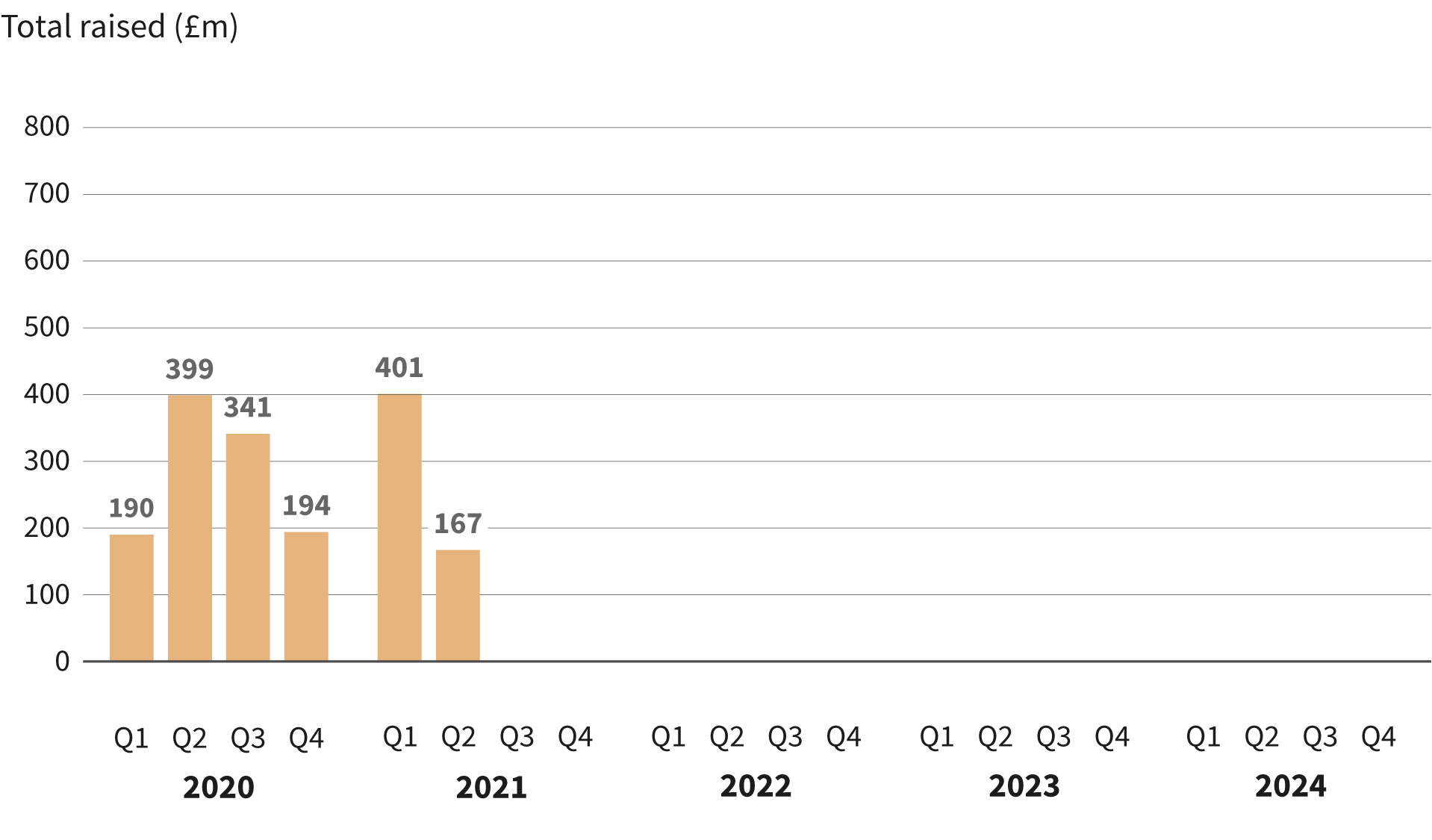
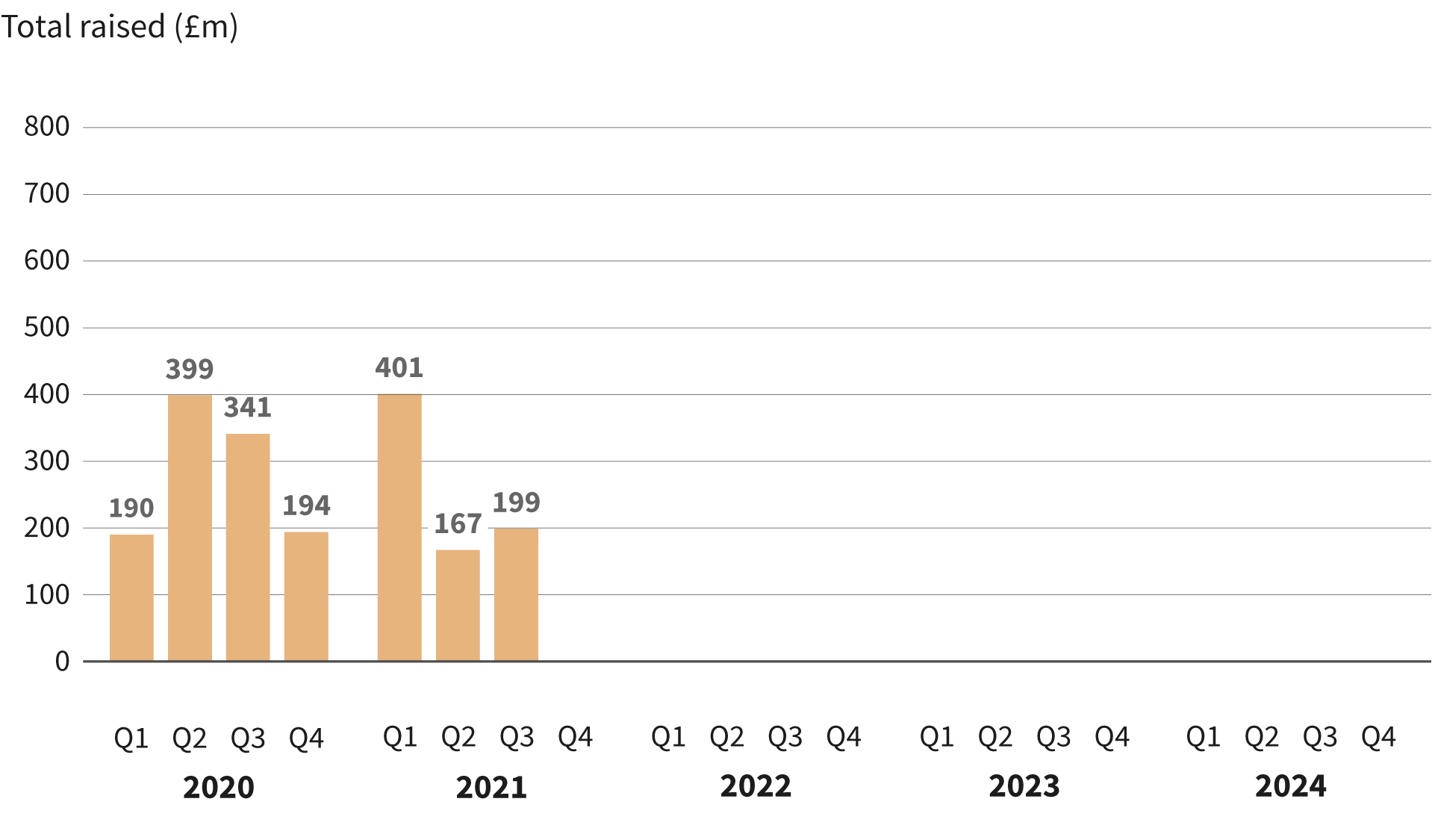
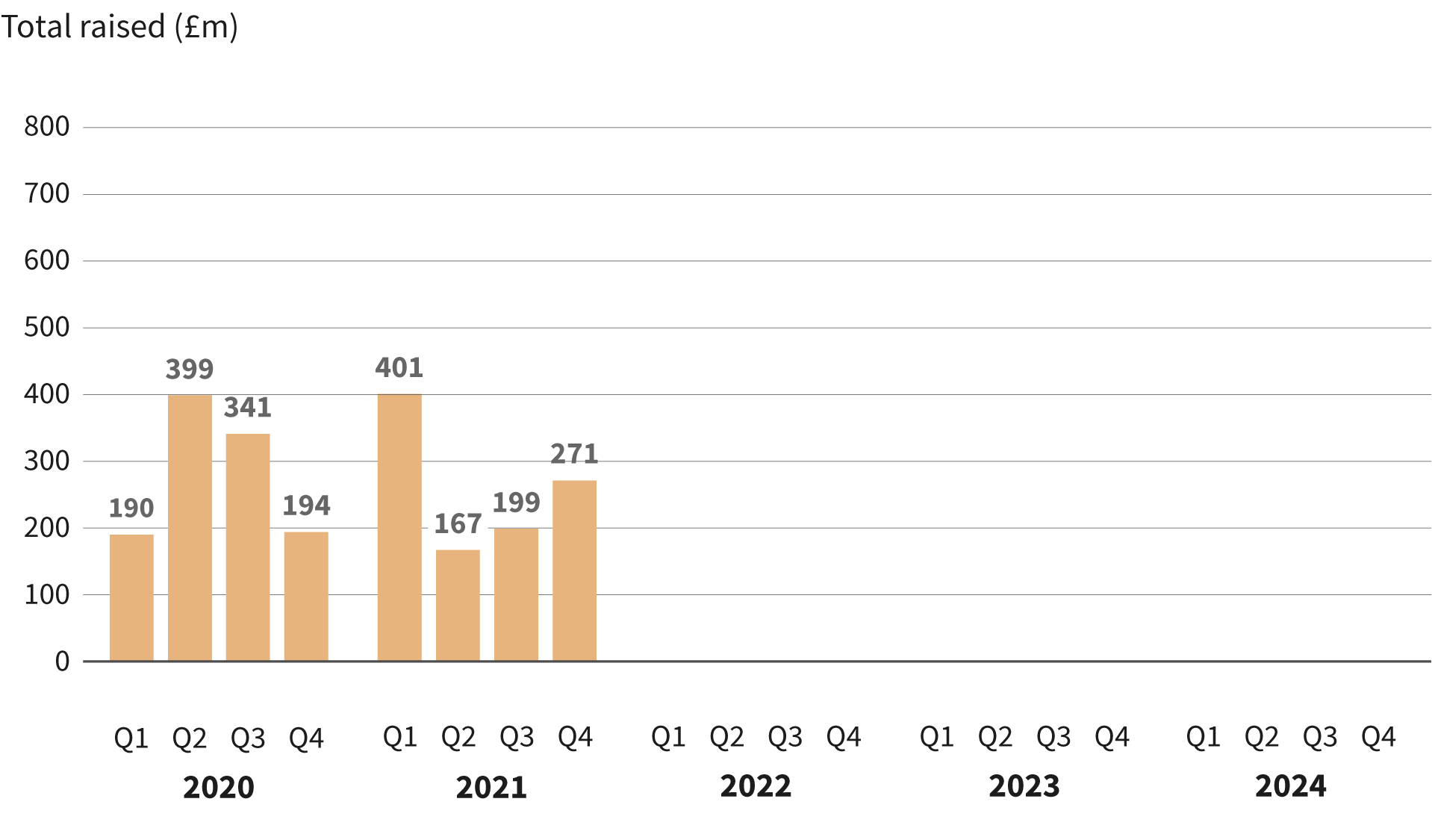
Total raised in follow-ons, shown by quarter in past five years
Top five UK biotech public follow-on deals
| Company | Date | Market | Amount (£m) |
|---|---|---|---|
| Centessa Pharmaceuticals | 13/09/2024 | NASDAQ | 172 |
| Oxford Nanopore | 01/08/2024 | LSE | 80 |
| Arecor | 18/07/2024 | AIM | 7 |
| BioDexa Pharmaceuticals | 23/07/2024 | NASDAQ | 4 |
| Virax Biolabs | 21/08/2024 | NASDAQ | 4 |
Centessa Pharmaceuticals led the UK follow-on deals with a substantial raise of £172 million on NASDAQ. This deal is the third largest follow-on offering among UK biotech companies in 2024.
Notably, Oxford Nanopore secured £80 million on the London Stock Exchange, marking the largest life sciences follow-on deal on a UK market in 2024. The presence of both UK-based and international exchanges like NASDAQ in these follow-on deals underscores the global nature of investor interest in UK biotech firms. It also highlights that while the UK market (LSE) is still an important platform for raising capital, many companies continue to look to international markets like NASDAQ for larger-scale funding opportunities.
International follow-ons
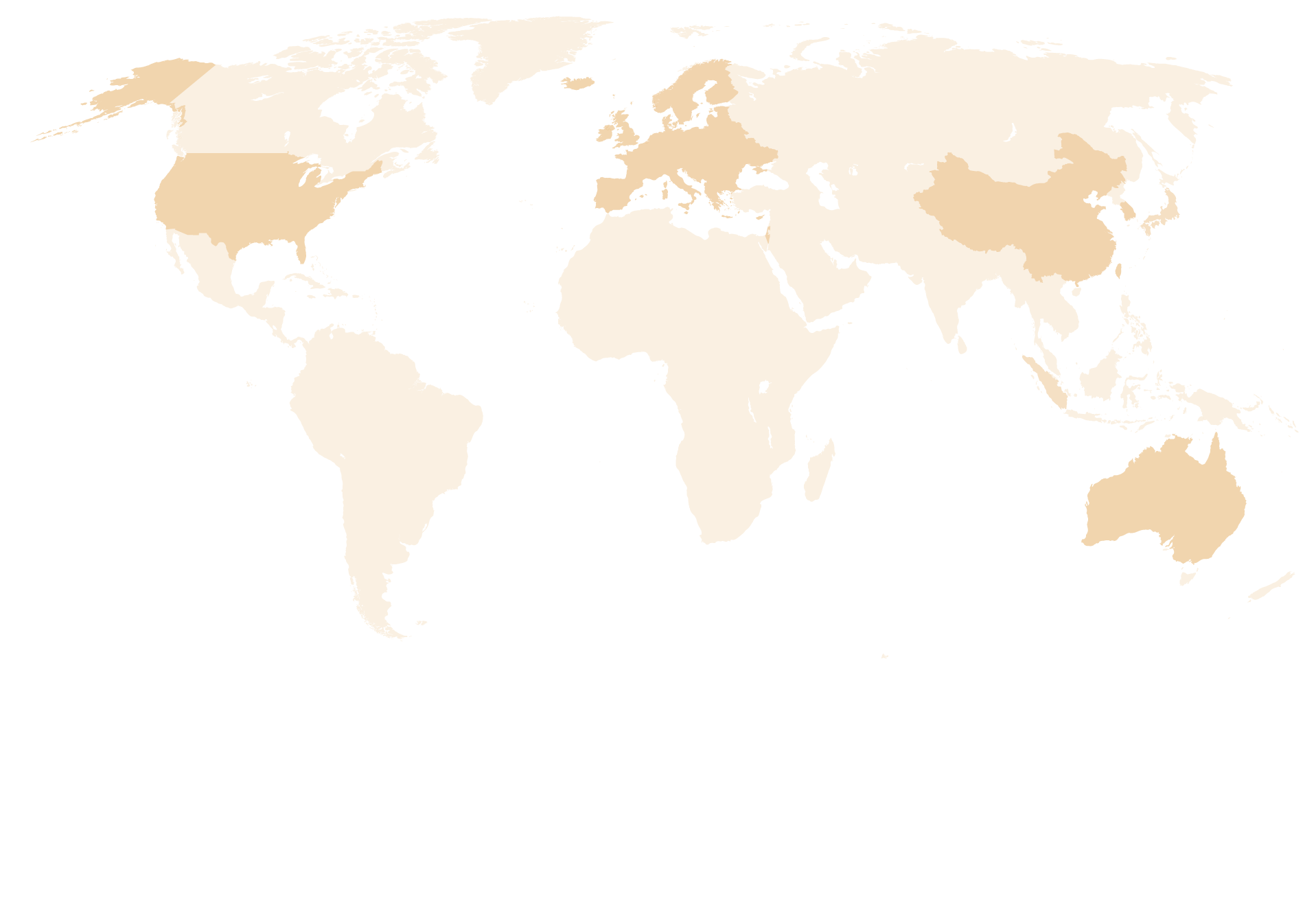
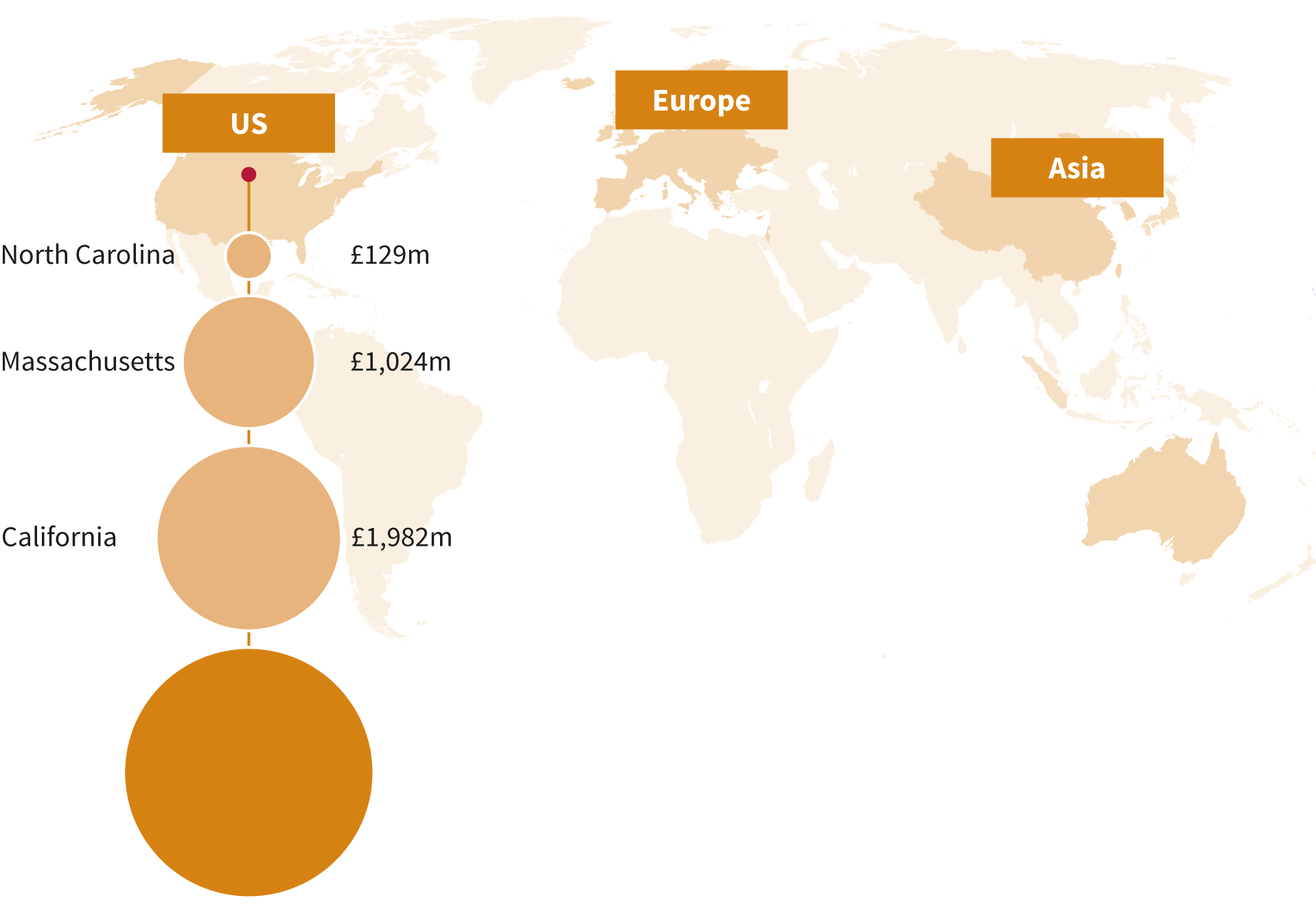
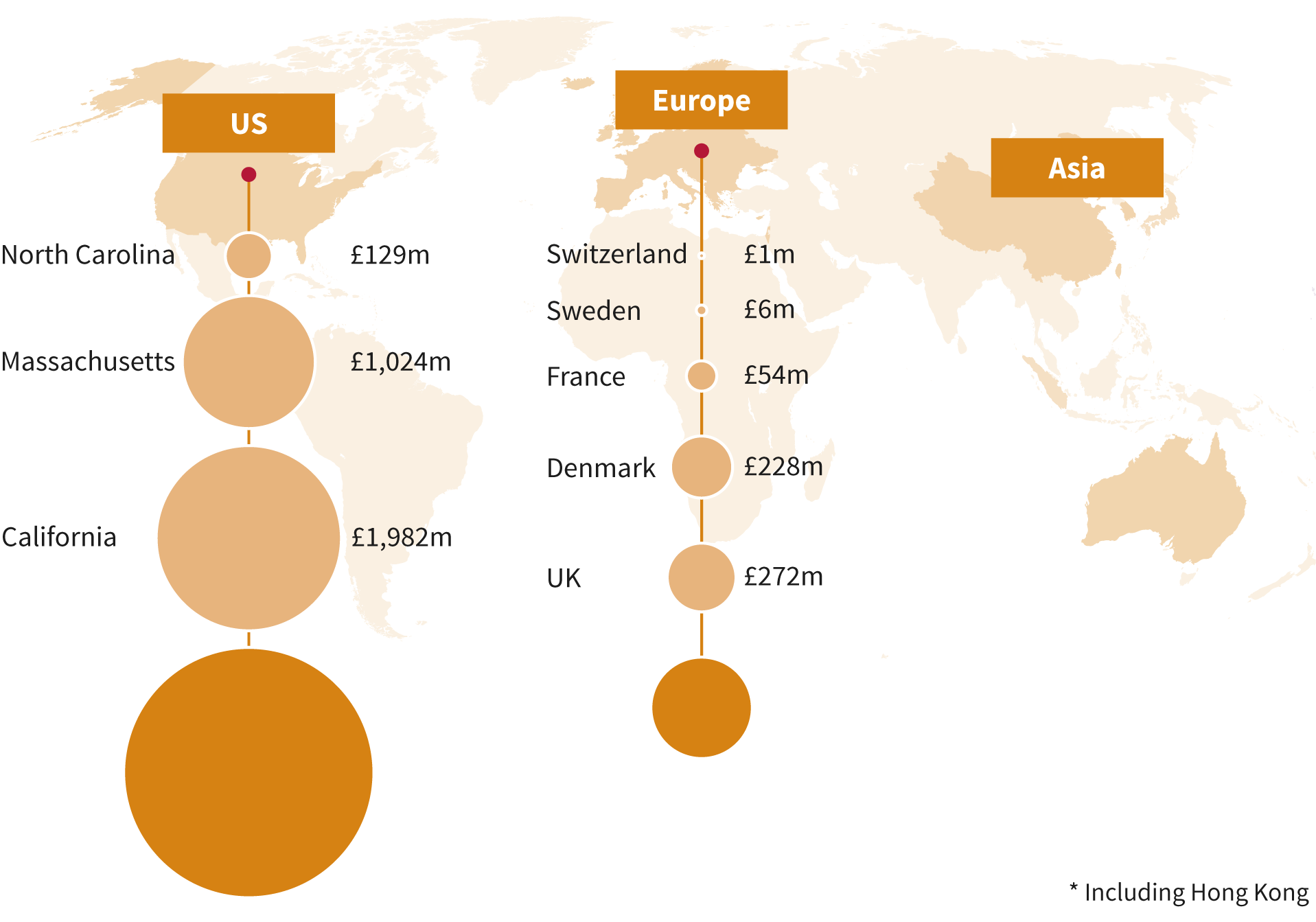
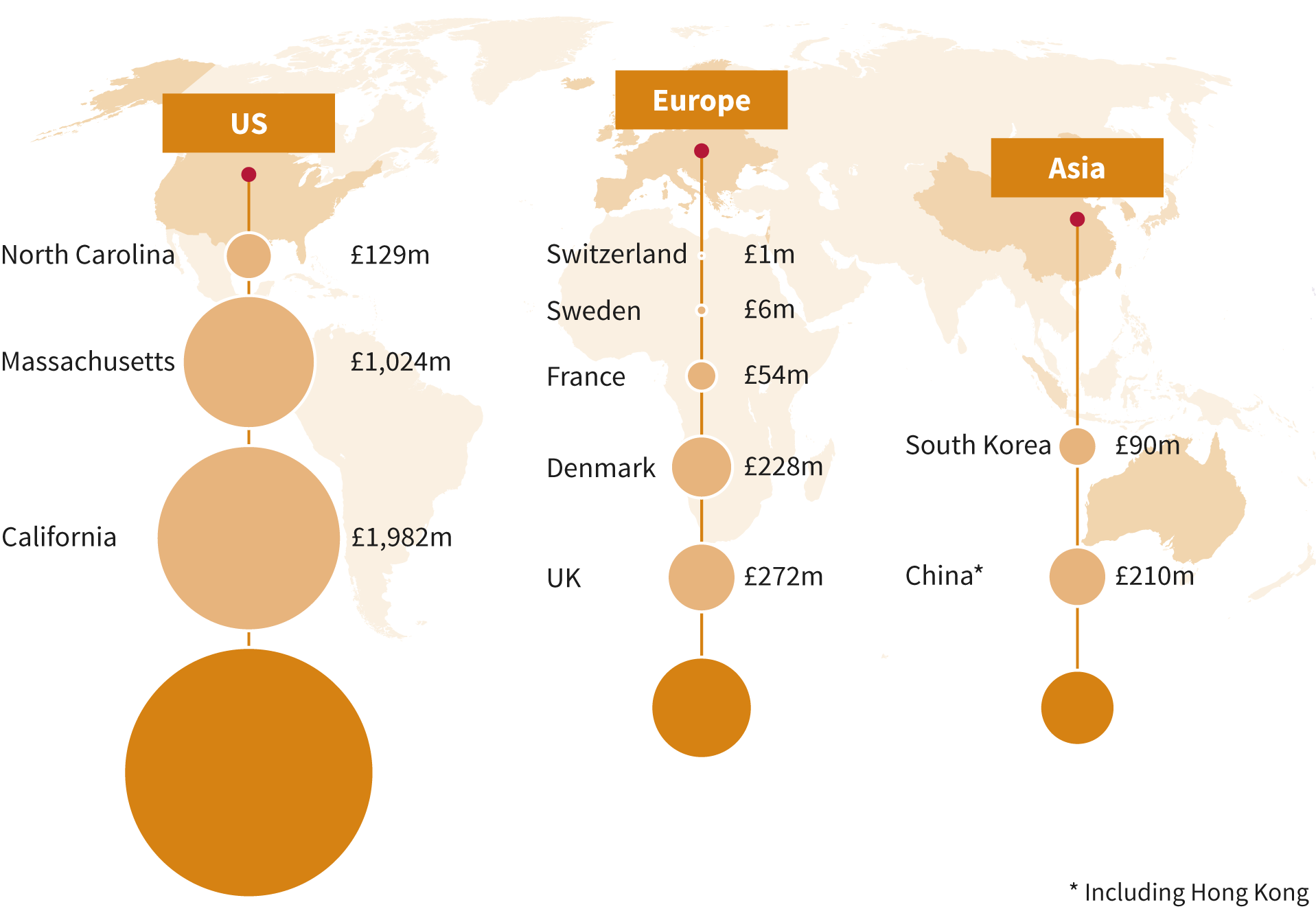
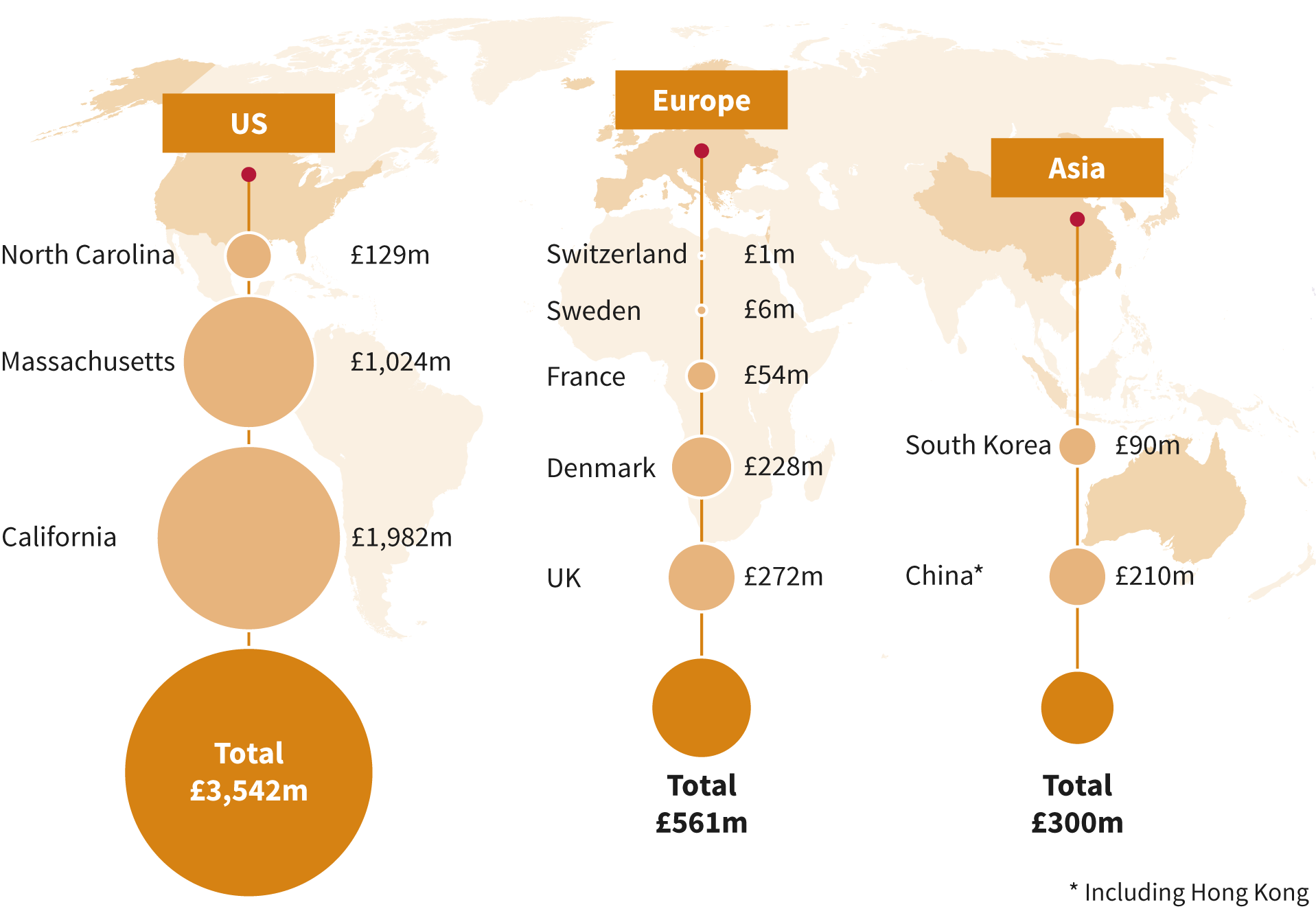
In contrast to the UK, there was a decline in follow-on financing globally, as the US saw a 46.9% decrease compared to the previous quarter. The US’s dominance in follow-on funding, particularly in states like California and Massachusetts, had a significant impact on the global total.
Europe’s follow-on funding, while significant, still lags far behind the US, with the UK’s £272 million being the highest in the region. This indicates that although there is substantial investor interest, European markets continue to compete with the scale of US investments.
Asia shows a growing commitment to biotech with £300 million in follow-on funding, driven primarily by China.
The global total of £4.4 billion in follow-on funding highlights the substantial resources available to biotech firms worldwide, but also reveals a concentration of these funds in key regions like the US.

Charts, maps and tables are based on BIA analysis of data from Beauhurst, h2Radnor, LSE and Pitchbook, 2024.